In the harsh desert environment of Dubai, maintaining airport runways is a constant battle against extreme heat, fine sand, and sudden dust storms. Temperatures can reach 54°C, while microscopic desert particles can quickly accumulate on critical surfaces and affect aviation safety.
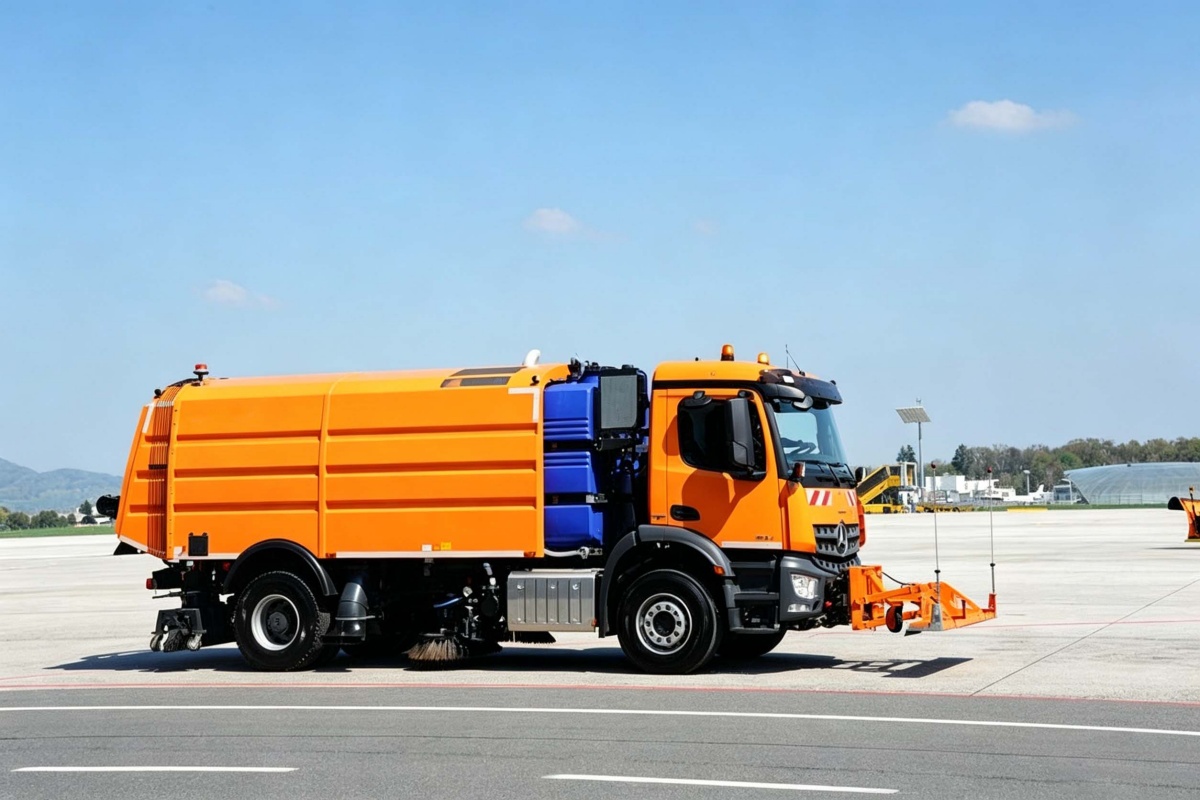
To address these challenges, the Aebi Schmidt ASC990 airport sweeper truck was designed with advanced airflow technology, wear-resistant components, and flexible cleaning capabilities. It represents a new generation of airport maintenance equipment engineered specifically for extreme climates.
Designed for Extreme Desert Conditions
Dubai’s desert environment creates unique challenges for runway maintenance.
Unlike ordinary dust, desert sand particles can be extremely fine, often measuring only 0.05–0.1 mm. These particles are lightweight, easily carried by wind, and capable of spreading across large areas after a sandstorm.
For airport operations, even a thin layer of sand can create problems:
- Reduced surface cleanliness
- Increased foreign object debris (FOD) risks
- Potential aircraft engine hazards
- Longer runway recovery times
The Schmidt ASC990 addresses these conditions through a powerful sweeping system designed to maintain performance under extreme temperatures and heavy dust loads.
High-Efficiency Airflow System for Fine Sand Removal
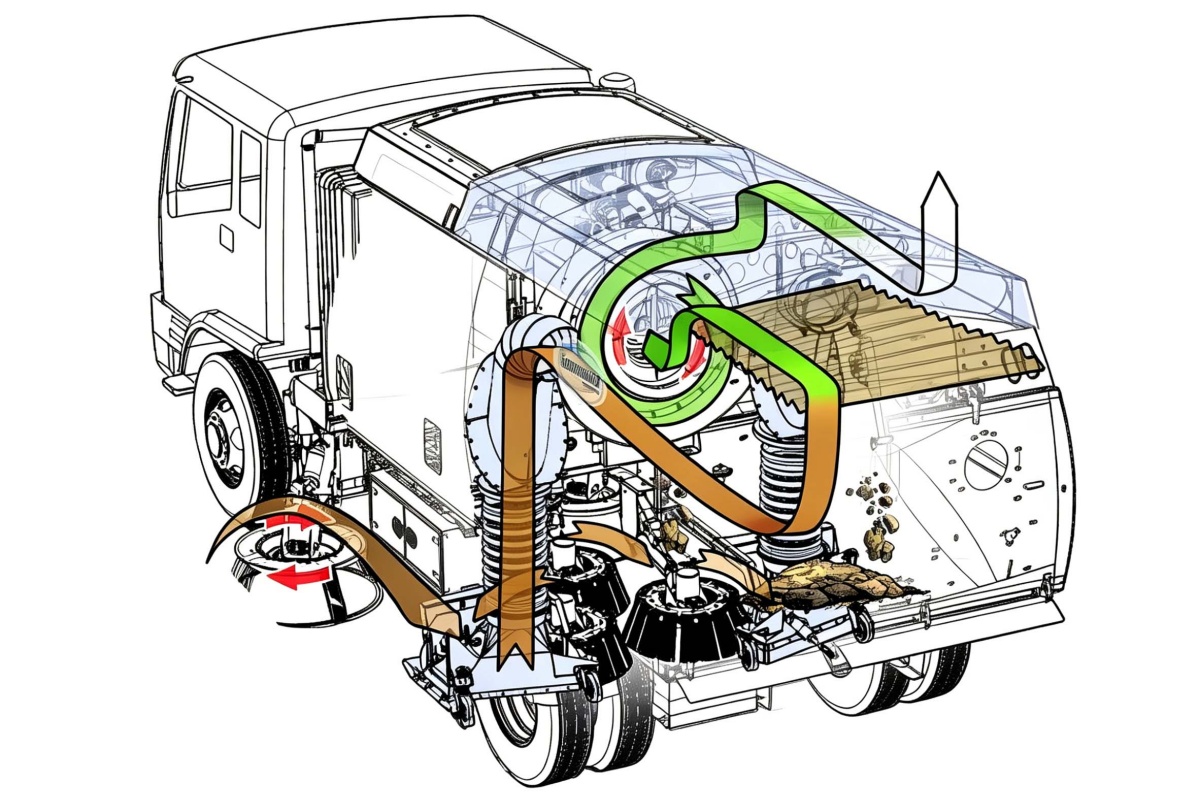
One of the key technologies behind the ASC990 airport sweeper truck is its optimized dual suction nozzle system.
The internal surfaces of the suction nozzles are treated through a specialized thermal vulcanization process, creating a highly durable and low-friction structure.
This design provides several advantages:
- Reduced internal wear
- Longer service life
- Smoother airflow movement
- More efficient particle collection
The optimized airflow system can generate approximately 32,000 m³/h of air volume, creating strong suction power capable of capturing extremely fine desert sand and dust.
For airports operating in desert climates, this level of performance is critical.
Handling 54°C Heat Without Compromising Performance
Operating equipment in Dubai’s summer conditions requires more than just powerful cleaning capability.
High temperatures can affect:
- Hydraulic systems
- Mechanical components
- Electronic controls
- Cooling efficiency
- Material durability
The Aebi Schmidt ASC990 is engineered to maintain reliable operation in extreme environments by combining robust mechanical design with optimized system performance.
Its ability to continue operating in intense heat allows airports to maintain regular cleaning schedules even during the hottest months.
Beyond Dry Sweeping: Integrated Liquid Recovery Capability
One of the advantages of the Schmidt ASC990 is its flexible cleaning configuration.
After a desert storm, airport surfaces may contain not only sand but also:
- Oil residues
- Vehicle fluids
- Runway contaminants
- Mixed surface debris
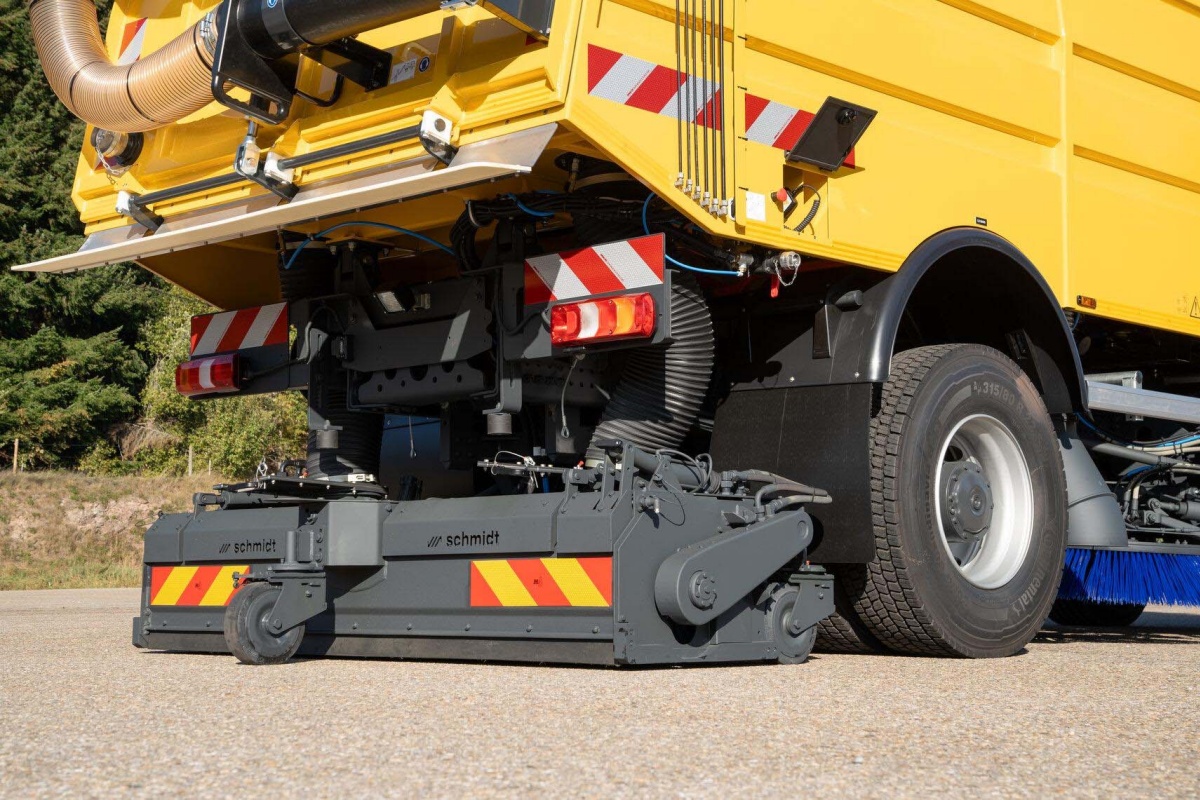
The machine supports a liquid recovery module, allowing operators to replace the suction nozzle system with a liquid cleaning attachment when required.
This creates a multi-purpose solution:
- Dry sand removal after dust storms
- Liquid spill recovery
- Surface cleaning operations
- Faster airport maintenance response
Instead of using separate machines for different cleaning tasks, one platform can handle multiple scenarios.
Why Fast Recovery Matters for Dubai Airports
For a major aviation hub like Dubai International Airport, downtime is extremely costly.
Following seasonal sandstorms, rapid runway cleaning is essential to restore normal flight operations.
The combination of:
- High-capacity suction
- Fine particle collection
- Extreme heat durability
- Multi-function cleaning capability
allows airport operators to significantly shorten recovery periods.
Advanced runway sweepers such as the ASC990 help ensure that airports can return to full operational capacity as quickly and safely as possible.
The Future of Airport Cleaning in Desert Regions
As global airports expand in regions with challenging climates, demand for specialized maintenance equipment continues to grow.
Future airport sweepers will increasingly focus on:
- Higher energy efficiency
- Intelligent monitoring systems
- Automated cleaning routes
- Better dust management technology
The experience of Dubai demonstrates that airport maintenance is no longer just about removing visible debris—it requires precision engineering capable of managing extreme environments.
Conclusion
The Schmidt ASC990 in Dubai represents the evolution of airport sweeping technology for desert conditions.
With its advanced dual suction nozzle system, powerful 32,000 m³/h airflow capability, low-friction wear-resistant design, and flexible liquid recovery function, it provides a comprehensive solution for extreme heat and fine sand challenges.
In an environment where temperatures reach 54°C and microscopic sand particles can impact aviation operations, reliable cleaning technology is not just an advantage—it is a necessity.