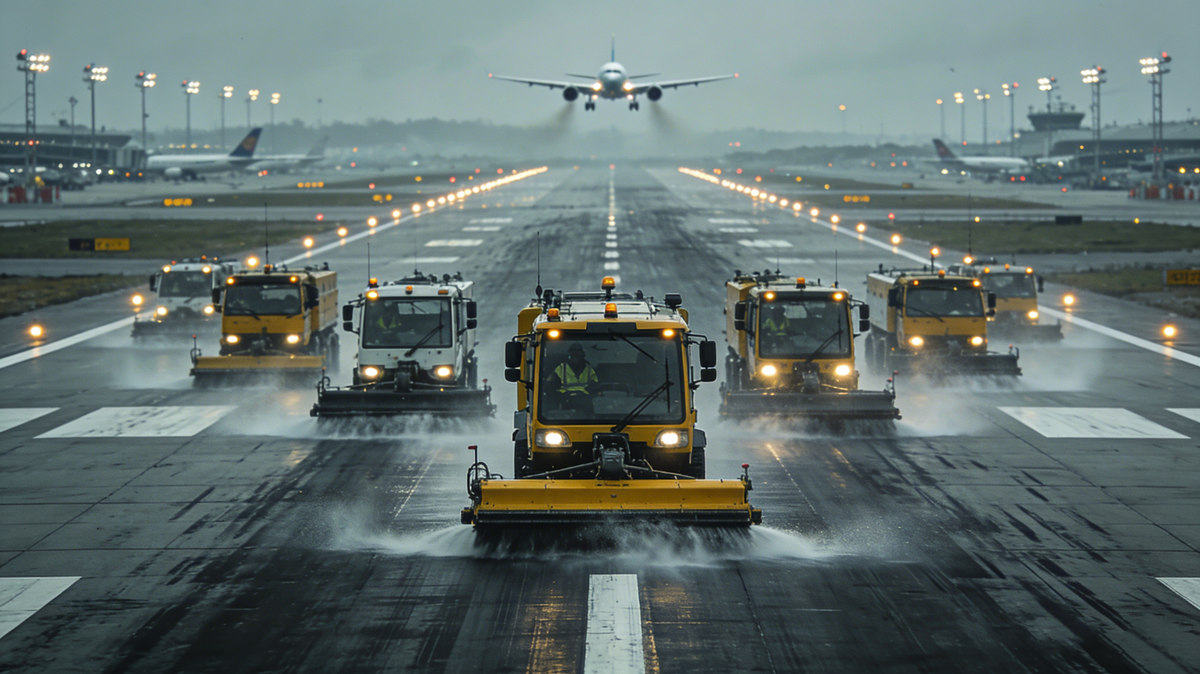
The seamless ballet of modern aviation relies on an invisible foundation of uncompruising safety protocols, extending far beyond the cockpit and control tower to the very surface upon which aircraft land and take off. Runway safety is paramount, and even the smallest piece of debris – a loose bolt, a fragment of tire, a stray piece of gravel – known as Foreign Object Debris (FOD), poses a potentially catastrophic risk. Jet engines, operating at immense suction forces and temperatures, are incredibly vulnerable to ingesting FOD, which can cause millions of dollars in damage or, in the worst cases, lead to engine failure and loss of life. Preventing FOD-related incidents is a relentless, around-the-clock endeavor, and at the forefront of this critical mission stand specialized airport sweeper trucks. These are not merely municipal sweepers transplanted onto the airfield; they are highly engineered machines designed and operated to meet exceptionally strict safety standards that govern every aspect of aviation ground operations. Their function transcends simple cleaning; they are vital components in the intricate safety ecosystem safeguarding billions of passengers and trillions of dollars in aviation assets annually.
I. The Imperative of Impeccable Surfaces: Understanding FOD Risks and Regulatory Mandates
The consequences of FOD on an active runway or taxiway are severe and multifaceted. Beyond the direct threat of engine ingestion, FOD can cause tire blowouts, damage delicate aircraft sensors and landing gear, create hazardous ricochets, or even puncture fuel tanks. Regulatory bodies like the Federal Aviation Administration (FAA) in the United States, the European Union Aviation Safety Agency (EASA), and the International Civil Aviation Organization (ICAO) globally, mandate rigorous FOD control programs as a non-negotiable element of airport certification and operation. These mandates translate into specific requirements:
- Continuous Surveillance and Removal: Airports must implement procedures for frequent and systematic inspection and removal of FOD from all movement areas.
- Documented Procedures: Comprehensive FOD management plans detailing inspection frequencies, cleaning methods (manual and mechanical), reporting protocols, and training requirements must be established and maintained.
- Performance Metrics: Airports are often required to track FOD findings and incidents, demonstrating the effectiveness of their control programs.
The sheer scale and critical nature of the task necessitate highly efficient mechanical solutions, making airport sweeper trucks indispensable tools for achieving and maintaining the mandated levels of surface cleanliness and safety.
II. Engineering for the Extreme: Design Features Meeting Aviation Standards
Airport sweeper trucks are purpose-built machines, incorporating a suite of specialized features designed explicitly to operate safely and effectively within the demanding and sensitive airport environment, adhering strictly to aviation-specific regulations:
- Certified Ground Support Equipment (GSE): Unlike municipal sweepers, airport sweepers fall under the classification of GSE. This means their design, construction, and operation must comply with specific aviation standards, such as FAA Advisory Circular 150/5210-20 (Ground Vehicle Operations on Airports) or equivalent EASA regulations. Compliance ensures compatibility with airfield operations.
- Explosion-Proofing and Intrinsically Safe Systems: Given the ever-present risk of fuel vapors near aircraft and refueling operations, airport sweepers often require explosion-proof electrical systems and components. This includes sealed wiring, spark-resistant materials, and intrinsically safe circuitry to prevent any potential ignition source, a requirement rarely needed for standard road sweepers.
- High-Visibility Markings and Lighting: Unmistakable identification is crucial. Sweepers feature high-visibility paint schemes (often bright yellow or orange), prominent airport-specific markings, and enhanced lighting packages, including high-intensity strobes and beacon lights, ensuring maximum visibility to pilots, controllers, and other ground vehicles, day and night, in all weather conditions.
- Robust Communication Systems: Seamless integration into the Air Traffic Control (ATC) environment is non-negotiable. Sweepers are equipped with certified two-way radios (often multiple channels for ground control, apron control, and company operations) and must adhere strictly to ATC instructions and airfield movement protocols. Drivers require specific radio communication training and phraseology.
- Magnetic Collection Systems: Beyond standard brooms and vacuum systems, many airport sweepers incorporate powerful electro-magnetic bars or magnetic sweeper heads. These are exceptionally effective at retrieving ferrous FOD – nuts, bolts, washers, metal fragments – which pose a significant ingestion risk to engines and are difficult for conventional sweeping systems to capture reliably.
- Advanced Filtration for Hazardous Materials: Airports must contend with potential hazardous materials, including de-icing fluid residues, fuel spills, or hydraulic fluid leaks. Sweeper filtration systems are designed to handle these safely, often incorporating HEPA filtration or other specialized media to prevent hazardous particles or vapors from being recirculated into the airfield environment during the sweeping process.
- Durability and All-Weather Performance: Airport sweepers operate year-round, facing extreme temperatures, jet blast, de-icing chemicals, and precipitation. Their construction uses heavy-duty materials, corrosion-resistant coatings, and components engineered for reliability under constant stress. Systems are designed to function effectively in wet, icy, or snowy conditions that might incapacitate a standard sweeper.
III. Precision Cleaning Technology: Beyond Basic Sweeping
The technology onboard modern airport sweeper trucks goes far beyond simple mechanical brooms, incorporating sophisticated systems designed for maximum FOD removal efficiency:
- Multi-Stage Debris Collection: A typical high-performance airport sweeper integrates several collection mechanisms simultaneously:
- Primary Brooms: Heavy-duty, often hydraulically driven, main brooms dislodge debris embedded in pavement grooves or compacted on surfaces.
- Powerful Vacuum Systems: High-volume, high-suction vacuum systems immediately capture dislodged debris, especially fine particles and lightweight materials, preventing them from becoming airborne hazards.
- Magnetic Systems: As mentioned, dedicated magnetic systems target ferrous metals.
- Side Brooms: Effectively direct debris towards the main collection path.
- Dust Suppression: While capturing debris is primary, controlling dust clouds is critical for visibility and preventing contaminants from entering aircraft engines or sensitive airport equipment. Advanced sweepers use integrated water spray systems (with carefully controlled droplet size) or surfactant-based dust control applied directly at the broom interface, minimizing airborne particles without saturating the surface excessively.
- Debris Management and Capacity: Given the potentially large volume of debris collected (especially after storms or construction), hoppers are designed for significant capacity and efficient, often automated, emptying. Systems ensure secure containment during transit to prevent spillage back onto the airfield.
IV. Operational Protocols: Integrating Sweepers into the Air Traffic System
Operating heavy machinery on an active airfield demands meticulous adherence to procedures designed to prevent conflicts with aircraft and ensure personnel safety:
- Airfield Driving Permit (ADP): Sweeper operators must hold a valid ADP, requiring comprehensive training on airfield layout, signage, markings, lighting, communication protocols, and right-of-way rules (aircraft always have absolute priority).
- Coordination with Air Traffic Control (ATC): No sweeper enters a movement area (runways, taxiways) without explicit clearance from ATC. Operations are constantly coordinated, often squeezed into brief windows between aircraft movements or during scheduled runway closures. Operators must understand and respond instantly to ATC instructions.
- Vehicle Escort Procedures: In many situations, especially on active runways, sweeper operations require a dedicated escort vehicle equipped with a radio. This escort maintains communication with ATC, provides an extra set of eyes for the sweeper operator, and enhances overall visibility.
- Runway Inspection Coordination: Sweeping often occurs immediately after or in conjunction with formal runway inspections conducted by airport operations vehicles. The sweeper follows the inspection vehicle, clearing any FOD identified during the inspection.
- Strict Speed Limits and Defined Routes: Speed limits on movement areas are rigorously enforced. Sweepers operate along predefined routes and patterns to maximize coverage efficiency while minimizing time spent in critical areas.
V. Rigorous Maintenance and Calibration: Ensuring Peak Performance and Reliability
Given their critical safety role, airport sweeper trucks are subject to exceptionally stringent maintenance regimes far exceeding typical fleet vehicle standards:
- Pre- and Post-Operational Inspections: Comprehensive inspections are mandated before every shift (checking lights, brakes, hydraulics, brooms, filters, fluid levels, communication gear) and after operations (checking for damage, fluid leaks, ensuring hopper security).
- Preventive Maintenance Schedules: Adherence to aggressive, manufacturer-recommended preventive maintenance schedules is mandatory. This includes frequent fluid changes, filter replacements, hydraulic system checks, structural inspections, and thorough cleaning to remove corrosive de-icing fluids or other contaminants.
- Specialized Technician Training: Maintenance personnel require specific training on the unique systems of airport sweepers, including explosion-proof electrical systems, high-pressure hydraulics, and specialized collection mechanisms. Documentation of all maintenance is meticulously kept.
- System Calibration: Critical systems, particularly magnetic collection bars and advanced filtration monitoring, may require periodic calibration to ensure they are operating at peak specified efficiency.
VI. Operator Training and Certification: The Human Element
Even the most advanced sweeper is only as effective as its operator. Airport sweeper drivers undergo specialized, intensive training programs:
- Comprehensive GSE Operation Training: Covering the specific make and model of sweeper, including all controls, safety systems, emergency procedures, and operational limitations.
- Airfield Driver Training: Extensive coursework and practical testing on airfield rules, regulations, signage, markings, lighting, communication procedures, and aircraft right-of-way.
- FOD Awareness Training: Deep understanding of FOD risks, types of debris, common sources, and the critical importance of their role in mitigation.
- Security Awareness: Training on airport security protocols, recognizing suspicious activities, and reporting procedures.
- Recurrent Training: Mandatory periodic refresher courses to maintain certification and stay updated on procedural changes or new equipment.
VII. The Broader Impact: Enabling Safe and Efficient Global Aviation
The contribution of airport sweeper trucks to the global aviation system is profound, though often operating in the background. By relentlessly enforcing strict safety standards through advanced engineering, meticulous operation, and rigorous maintenance, these specialized vehicles directly mitigate one of the most persistent and dangerous threats on the airfield. Their effectiveness underpins:
- Reduced Risk of Catastrophic Incidents: Minimizing FOD directly translates to a lower risk of engine failures, tire blowouts, and other potentially disastrous events.
- Enhanced Aircraft Availability and Reduced Maintenance Costs: Preventing FOD damage keeps aircraft operational and avoids costly engine repairs or component replacements, saving airlines millions annually.
- Operational Efficiency: Clean runways and taxiways allow for predictable aircraft movements and minimize delays caused by FOD discoveries requiring runway inspections or closures.
- Regulatory Compliance and Certification: Enabling airports to meet and exceed the stringent FOD control requirements mandated by aviation authorities worldwide.
- Passenger and Crew Safety: Ultimately, the most critical impact – ensuring the safety of everyone traveling or working within the aviation environment.
The relentless pursuit of runway cleanliness facilitated by these sophisticated machines exemplifies the multi-layered approach to aviation safety. Just as the sweeper truck is indispensable for FOD control on the airfield, its counterparts, including specialized garbage trucks designed for airport waste handling under strict security and safety protocols, play equally vital roles in maintaining the overall hygiene, safety, and seamless functionality of these complex transportation hubs. Each specialized vehicle, operating under its own stringent standards, contributes indispensably to the safe, efficient, and reliable movement of people and goods across the globe.