Built to Last & Fully Tailored: Top-tier garbage, sweeper and sewer trucks crafted for unrivaled durability. A trusted choice for municipal governments across the globe.
How Does a Hook Loader Garbage Truck Upper Body Work?
Understanding the Purpose of a Hook Loader Garbage Truck Upper Body
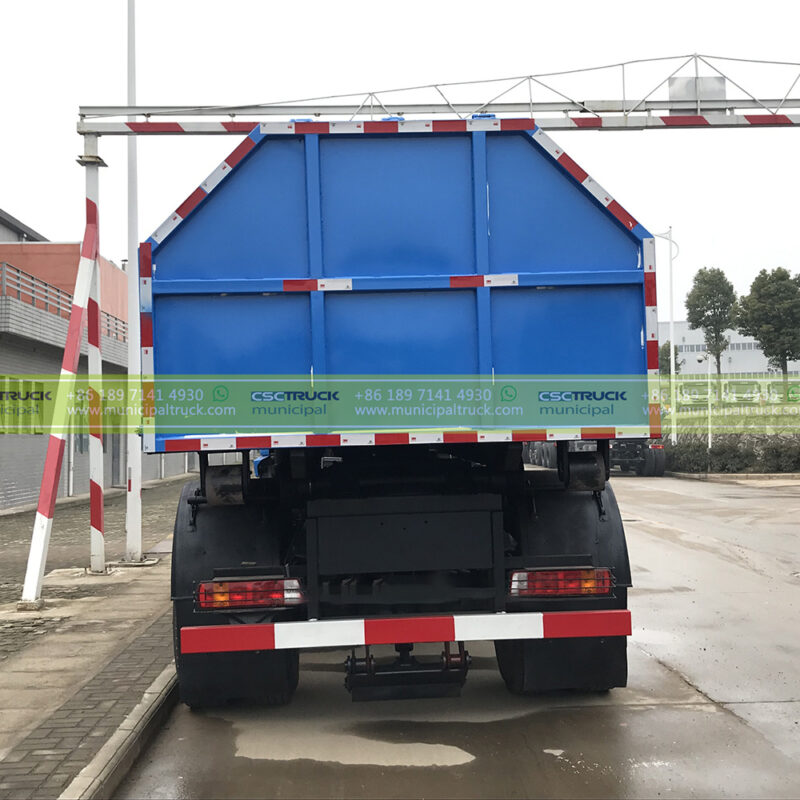
The hook loader garbage truck upper body is the defining system that transforms a standard truck chassis into a highly adaptable waste-handling machine, because unlike fixed-body refuse vehicles, this upper body is designed to lift, transport, and deposit interchangeable containers with speed and precision. Its role is not limited to simple loading and unloading, but instead extends into route flexibility, reduced manual handling, and improved fleet efficiency, which is why hook loader systems have become increasingly popular in modern municipal and industrial waste operations where versatility matters as much as capacity.
Core Structural Components of the Upper Body
The upper body of a hook loader garbage truck is engineered as a unified structure where every component contributes to safe and controlled container movement.
Main Frame and Mounting Structure
The reinforced steel frame is securely mounted to the truck chassis and acts as the foundation for all lifting forces generated during operation. This structure is designed to distribute stress evenly across the vehicle, preventing frame deformation while maintaining stability when lifting fully loaded containers.
Hydraulic Hook Arm Assembly
The hook arm is the most visible and dynamic part of the upper body, extending and retracting to engage containers through a standardized hook point. Its geometry allows containers to be drawn smoothly onto the truck bed or lowered back to the ground with controlled motion.
Hydraulic System and Power Transmission
Hydraulics are the driving force behind the hook loader upper body, converting engine power into precise mechanical movement.
Power Take-Off and Hydraulic Pump
A power take-off unit transfers energy from the vehicle’s engine to a hydraulic pump, which then supplies pressurized fluid to the lifting cylinders. This arrangement allows the hook loader to operate while stationary, providing consistent lifting power without excessive engine strain.
Hydraulic Cylinders and Control Valves
Multiple cylinders manage lifting, tilting, and sliding motions, while directional control valves regulate fluid flow to ensure smooth transitions. These systems work together to prevent sudden movements that could destabilize the load or damage the container.
Loading and Unloading Operation Sequence
The working process of a hook loader garbage truck upper body follows a precise sequence designed to maximize safety and efficiency.
Container Engagement and Retrieval
The operator aligns the truck with the container, extends the hook arm, and secures the hook point. Once engaged, the arm retracts, pulling the container onto the rails of the truck body while maintaining balanced weight distribution.
Transport and Discharge
During transport, locking mechanisms secure the container in place, preventing shifting or vibration. At the disposal site, the upper body tilts the container backward to allow gravity-assisted unloading, after which the container is returned smoothly to the ground.
Safety Systems Integrated into the Upper Body
Safety is a fundamental consideration in hook loader design, especially given the heavy loads and moving components involved.
Mechanical Locks and Load Sensors
Mechanical locking systems hold the container firmly during transit, while load sensors monitor weight limits to prevent overloading. These features protect both the vehicle and the operator from unsafe operating conditions.
Emergency Stop and Stability Controls
Emergency stop functions allow immediate shutdown of hydraulic movement if irregular behavior is detected. Stability controls help maintain balance during lifting, particularly on uneven surfaces.
Operational Advantages for Municipal Waste Management
The hook loader upper body offers significant benefits that extend beyond basic waste collection.
Flexible Container Use
Interchangeable containers allow a single vehicle to handle different waste streams, from general refuse to construction debris, reducing the need for multiple specialized trucks.
Improved Route Efficiency
Faster loading and unloading cycles enable operators to complete routes more efficiently, minimizing downtime and improving overall service coverage.
Integration Within Modern Sanitation Fleets
The hook loader garbage truck upper body represents a strategic approach to waste management, combining mechanical intelligence with operational flexibility. When deployed as part of an integrated fleet, it works alongside vehicles such as the garbage truck and sweeper truck, creating a coordinated sanitation system that supports cleaner streets, optimized resource use, and more resilient municipal services through thoughtful engineering and practical design.