Understanding the Operating Principle of a Self-Tipping Garbage Truck Body
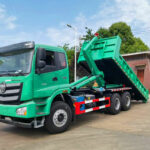
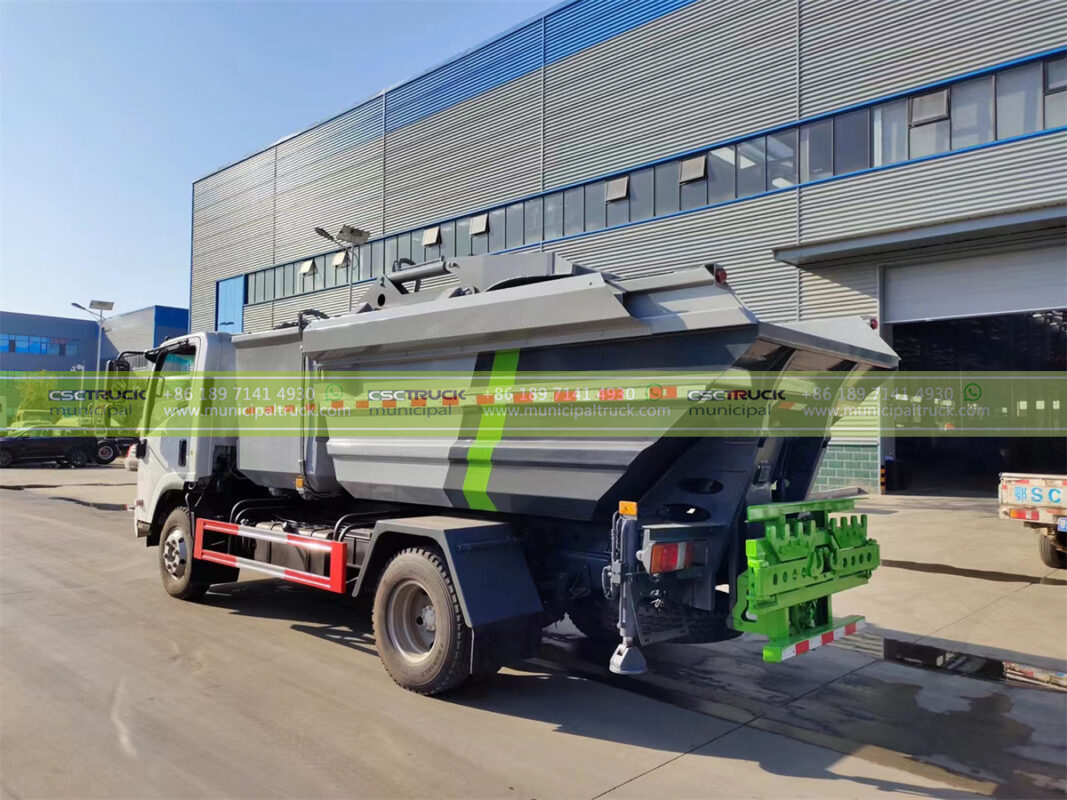
A self-tipping garbage truck body is designed to simplify waste unloading by using controlled mechanical movement rather than manual handling or external lifting equipment, making it a practical solution for municipalities, construction sites, and industrial facilities where speed and safety matter. Unlike compactor or hook loader systems, the self-tipping body focuses on gravity-assisted discharge, using hydraulic force to raise and tilt the body so that waste slides out smoothly. Its operation appears simple on the surface, but behind that simplicity is a carefully coordinated system of hydraulics, structural engineering, and operator control that ensures reliability under heavy daily use.
Hydraulic Power and Lifting Mechanics
At the heart of the self-tipping garbage truck body is its hydraulic lifting system, which provides the controlled force required to raise the body safely.
Power Take-Off and Hydraulic Pump
The lifting process begins with a power take-off unit that draws energy from the truck’s engine and transfers it to a hydraulic pump. This pump generates pressurized hydraulic fluid, which is then directed to the lifting cylinders. Because the system is engine-driven, it delivers consistent lifting power even when the truck is stationary at a disposal site.
Hydraulic Cylinders and Vertical Motion
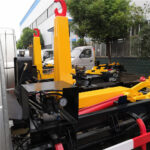
One or more hydraulic cylinders are mounted between the chassis and the body, extending upward to lift the front or rear of the body depending on design. These cylinders are engineered to handle heavy loads, allowing the body to rise smoothly and steadily without sudden movement, which is critical for maintaining vehicle stability during tipping.
Body Structure and Tipping Geometry
The physical design of the self-tipping body plays a major role in how effectively and safely it operates.
Reinforced Body Construction
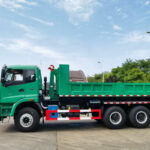
The body is built from high-strength steel panels with reinforced floors and sidewalls to withstand repeated loading and unloading cycles. These reinforcements ensure that the body maintains its shape even when handling dense or unevenly distributed waste.
Optimized Tipping Angle
The tipping angle is carefully calculated to allow waste to slide out completely without sticking or requiring manual intervention. A properly designed angle ensures efficient discharge while minimizing stress on hinges, cylinders, and mounting points.
Control Systems and Operator Interaction
While hydraulic components provide power, the operator controls how that power is applied during each tipping cycle.
Cab-Mounted Control Levers
Operators typically manage tipping functions through simple control levers or switches inside the cab, allowing them to raise, hold, or lower the body with precision. These controls are designed for intuitive use, reducing the likelihood of operator error during unloading.
Safety Interlocks and Monitoring
Many self-tipping systems include interlocks that prevent tipping unless the vehicle is stationary and properly positioned. Visual indicators or alarms may also alert the operator to unsafe conditions, such as excessive tilt or unstable ground.
Unloading Process and Gravity-Assisted Discharge
The defining feature of a self-tipping garbage truck body is how it uses gravity to complete the unloading process efficiently.
Controlled Waste Release
As the body tilts, waste naturally slides toward the open rear or side gate, exiting the body without the need for mechanical pushing or compaction. This gravity-assisted method reduces mechanical complexity and wear on moving parts.
Return and Reset Operation
Once unloading is complete, the hydraulic system retracts the cylinders, lowering the body back into its resting position. Locks or latches secure the body for transport, ensuring stability as the truck returns to service.
Role Within a Modern Sanitation Fleet
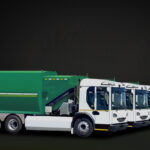
The self-tipping garbage truck body offers a balance of simplicity, durability, and operational efficiency, making it a valuable asset in many waste management scenarios. When integrated into a broader fleet, it complements other vehicles such as the garbage truck and sweeper truck, supporting flexible waste handling, reduced unloading time, and cleaner operational environments through a straightforward yet robust tipping mechanism designed for real-world demands.