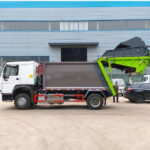
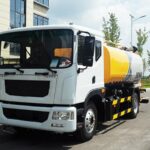
How Does a Water Spray Truck Upper Tank Control Work?
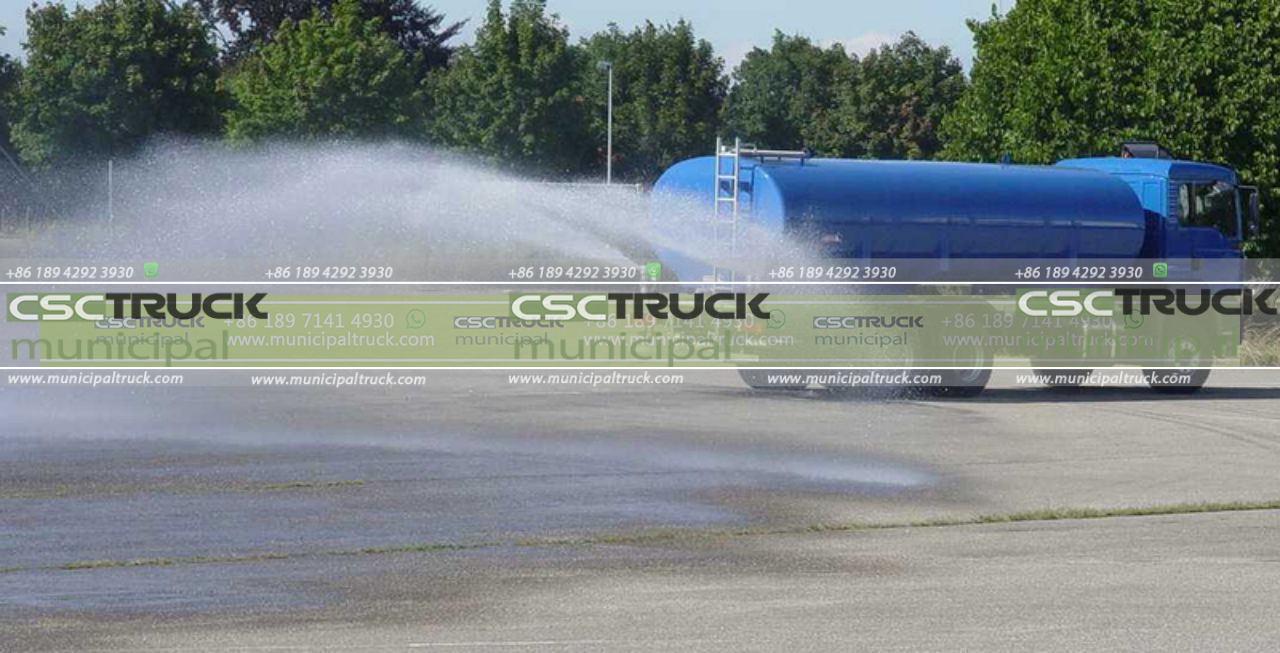
The upper tank on a water spray truck is far more than a passive reservoir—it’s the command center for efficient fluid deployment. These sophisticated control systems harmonize hydraulics, electronics, and mechanical engineering to deliver precise water volumes across applications from dust suppression to pandemic disinfection. Understanding this orchestration reveals how modern municipalities achieve unprecedented resource efficiency and operational reliability.
Anatomy of the Upper Tank System
The upper tank integrates multiple subsystems working in concert:
Structural Integrity: FDA/USDA-compliant polyethylene or stainless steel tanks (1,000–8,000L capacity) resist chemical corrosion and hydraulic shock.
Baffle Networks: Internally welded wave-dampening baffles reduce fluid surge forces by 70% during sudden stops or turns, maintaining vehicle stability.
Access & Safety: OSHA-mandated overflow vents, 500mm manways for inspection, and grounded anti-static linings prevent vapor ignition during foam operations.
The Silent Sentry: Continuous Level Monitoring
Real-time water volume tracking enables proactive resource management and prevents pump cavitation.
Sensor Technologies
Ultrasonic Transducers: Mounted overhead, these emit 40–200 kHz pulses measuring fluid distance within ±2mm accuracy. Advanced models compensate for foam or condensation.
Hydrostatic Pressure Sensors: Submersible probes at the tank base correlate water column weight to volume. Calibrated for fluid density changes when adding foam concentrates.
Capacitance Probes: Detect dielectric constant shifts between air and water, ideal for detecting low-level conditions before pumps run dry.
Control Logic: Data feeds into the Programmable Logic Controller (PLC), triggering low-level alarms at 15% capacity and auto-shutdown at 5% to protect pumps. Integration with GPS fleet systems routes trucks to refill stations based on real-time usage.
Flow Control Valves: Precision Water Routing
Electro-mechanical valves function as the system’s “traffic directors,” determining flow paths and volumes.
Main Isolation Valves: Pneumatic butterfly valves (DN50–DN150) enable instant flow cutoff during emergencies. Rated for 10 million cycles at 10 bar pressure.
Proportional Control Valves: Electronically modulated valves adjust orifice size based on CAN bus signals. Maintain ±3% flow accuracy during speed changes on road sweeper truck pre-wetting operations.
Zone Distribution: Multi-port manifolds split flow to roof cannons, bumper sprays, or undercarriage systems. In sprinkler truck configurations, priority valves divert water to firefighting monitors during emergencies.
Pilot-Operated Relief Valves: Dump excess pump output to tank at 20–100 bar thresholds, preventing hose rupture.
Proportional-Integral-Derivative (PID) Controllers: Continuously compare actual pressure (via inline transducers) with operator-setpoints. Adjust pump RPMs within 0.5 seconds of deviation.
Accumulator Tanks: Nitrogen-charged bladders absorb pressure spikes from valve closures, extending component life by 30%.
Pump Interface Dynamics
The tank-pump handshake balances demand with mechanical capabilities.
Demand-Sensitive Priming: Self-priming centrifugal pumps use tank-level data to prevent dry starts. Vacuum-assisted systems prime in <45 seconds at 3m lift height.
Power Management: Engine-mounted PTOs modulate hydraulic flow to pumps based on nozzle requirements. Reduces fuel consumption by 18% versus fixed-RPM systems.
Filtration Integration: Dual-stage filters (100µ pre-filter + 50µ final filter) protect nozzles with auto-backflush cycles activated by differential pressure sensors.
Intelligent Control Systems & Future Evolution
Modern upper tanks are evolving into networked “fluid computers” with predictive capabilities.
Telematics Integration:
Sensors detect viscosity changes signaling chemical depletion, auto-ordering supplies via IoT.
LiDAR-scanned road geometry data adjusts spray volume for curves or inclines.
AI algorithms cross-reference weather data with dust particle sensors, triggering preemptive suppression cycles.
CSCTRUCK Municipal’s iTANK Platform: This next-gen system uses machine learning to optimize water use across fleet operations. On hybrid sprinkler truck units, it dynamically reallocates water between street washing and fire reserve compartments based on real-time threat analysis. Recent deployments feature digital twin simulation for training operators in virtual environments, reducing real-world water waste during skill development. The integration of hydrogen fuel cell auxiliaries also powers control systems with zero emissions during stationary operations—a critical advance for indoor deployments in logistics hubs or underground parking. As municipalities face tightening water budgets and expanding service mandates, these intelligent tank systems transform spray trucks from blunt instruments into surgical tools for urban environmental management.