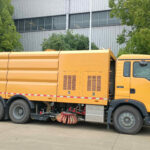
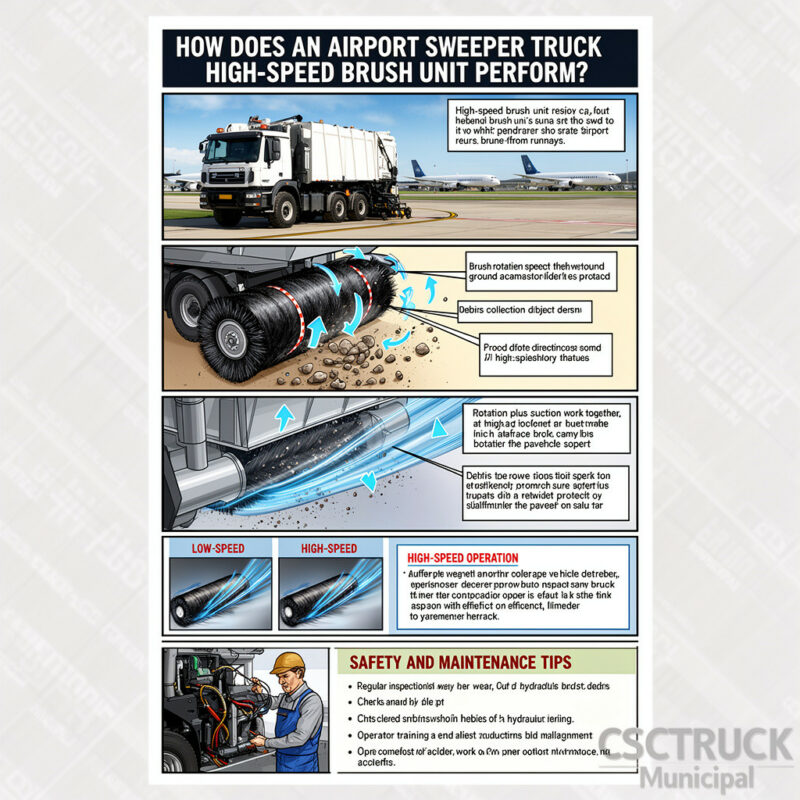
On the vast, meticulously maintained expanses of an active airfield, where the margin for error approaches zero, the relentless whir of an airport sweeper truck is a constant symphony of safety. At the heart of its critical mission – Foreign Object Debris (FOD) elimination – lies the high-speed brush unit. This isn’t merely a rotating broom; it’s a precision-engineered system operating under extreme demands, transforming raw power into controlled, high-velocity contact capable of dislodging everything from minuscule nuts and bolts to wind-blown litter and fragmented rubber, all while navigating the unique challenges of sensitive tarmac surfaces and the uncompromising safety protocols of the aviation environment. Understanding the intricate performance of this unit reveals the sophisticated engineering dedicated to keeping runways, taxiways, and aprons pristine and hazard-free.
The Hydraulic Heart: Generating Controlled Power for Demanding Speeds
The sheer kinetic energy required to spin large-diameter brushes densely packed with specialized filaments at operational velocities far exceeding those of typical road sweeper truck brushes necessitates an exceptionally robust and responsive power source. Hydraulic power remains the undisputed champion for this application, engineered for relentless performance.
- High-Pressure, High-Flow Pumps & PTO: Mounted on the sweeper truck chassis, a dedicated, high-capacity hydraulic pump is driven by the vehicle’s main engine via a heavy-duty Power Take-Off (PTO). This pump is specifically engineered for sustained high flow rates and pressures, often operating comfortably above 3,000 PSI, to deliver the immense volume of hydraulic fluid needed to achieve and maintain the required brush rotational speeds. Unlike standard sweepers, airport units often incorporate sophisticated load-sensing systems that dynamically adjust pump output based on the resistance encountered by the brush, optimizing efficiency and reducing unnecessary heat generation during lighter cleaning tasks or when traversing smoother sections.
- Precision Fluid Management & Conditioning: Specialized hydraulic fluid, formulated for exceptional thermal stability, anti-wear properties, and resistance to oxidation under continuous high-load operation, circulates through reinforced hoses and manifolds. Given the critical nature of airport operations and the intense duty cycle, filtration is paramount. Multi-stage filtration systems, including high-pressure and return-line filters, continuously remove microscopic contaminants arising from component wear or ingested dust, protecting sensitive valves and motors. A large-capacity reservoir allows for thermal expansion and fluid reserve, while powerful heat exchangers (often integrated with the engine cooling system) are essential to dissipate the substantial heat generated by transmitting hundreds of horsepower to the brushes.
- Directional & Flow Control Valves: Electronically or pilot-operated directional control valves, precisely actuated by the operator, manage the flow of pressurized fluid to the brush drive motors, enabling start, stop, and crucially, rapid direction reversal for clearing jams. Proportional flow control valves are key to performance, allowing the operator to finely tune the fluid volume reaching the motors, thereby directly and responsively controlling the rotational speed of the brushes across a wide range – a critical factor for adapting to different debris types and surface conditions without scattering material.
High-Torque Motors & Direct Drive: Translating Fluid Power to Rotational Force
Mounted directly onto the brush assembly’s structural frame, hydraulic motors act as the vital transducers, converting hydraulic energy into the powerful, high-speed mechanical rotation essential for effective FOD removal.
- Low-Speed, High-Torque (LSHT) Design: Airport brush units utilize specialized LSHT hydraulic motors, distinct from high-speed motors requiring gear reduction. These motors generate massive amounts of torque directly at the output shaft, capable of overcoming the significant inertia of a large brush spinning at high RPM and the substantial friction encountered when scrubbing tarmac laden with compacted debris or damp vegetation. Robust internal designs like gerotor or geroller configurations are favored for their exceptional torque density, durability under shock loads, and smooth operation across the speed range.
- Direct Drive Configuration & Robust Mounting: Efficiency and reliability are maximized through direct drive. The hydraulic motor’s output shaft is rigidly coupled to the brush core shaft using heavy-duty splined couplings or flanged connections. This eliminates the power losses, maintenance points, and potential failure modes associated with chains, belts, or intermediate gearboxes. The motor housing itself is securely bolted to a massively constructed frame designed to absorb the tremendous reaction torque generated during operation and dampen vibrations, ensuring structural integrity and long component life.
- Integrated Torque Management & Safety: The hydraulic system inherently provides torque control and overload protection. Torque output is proportional to the hydraulic pressure supplied. If the brush encounters an immovable obstruction, system pressure spikes rapidly. Strategically placed pressure relief valves instantly divert fluid flow, preventing pressure from reaching levels that could damage the motor, shaft, couplings, or frame. This hydraulic “fuse” is a critical safety feature, offering a forgiving buffer compared to rigid mechanical drives and protecting the unit during inevitable encounters with larger, unforeseen objects.
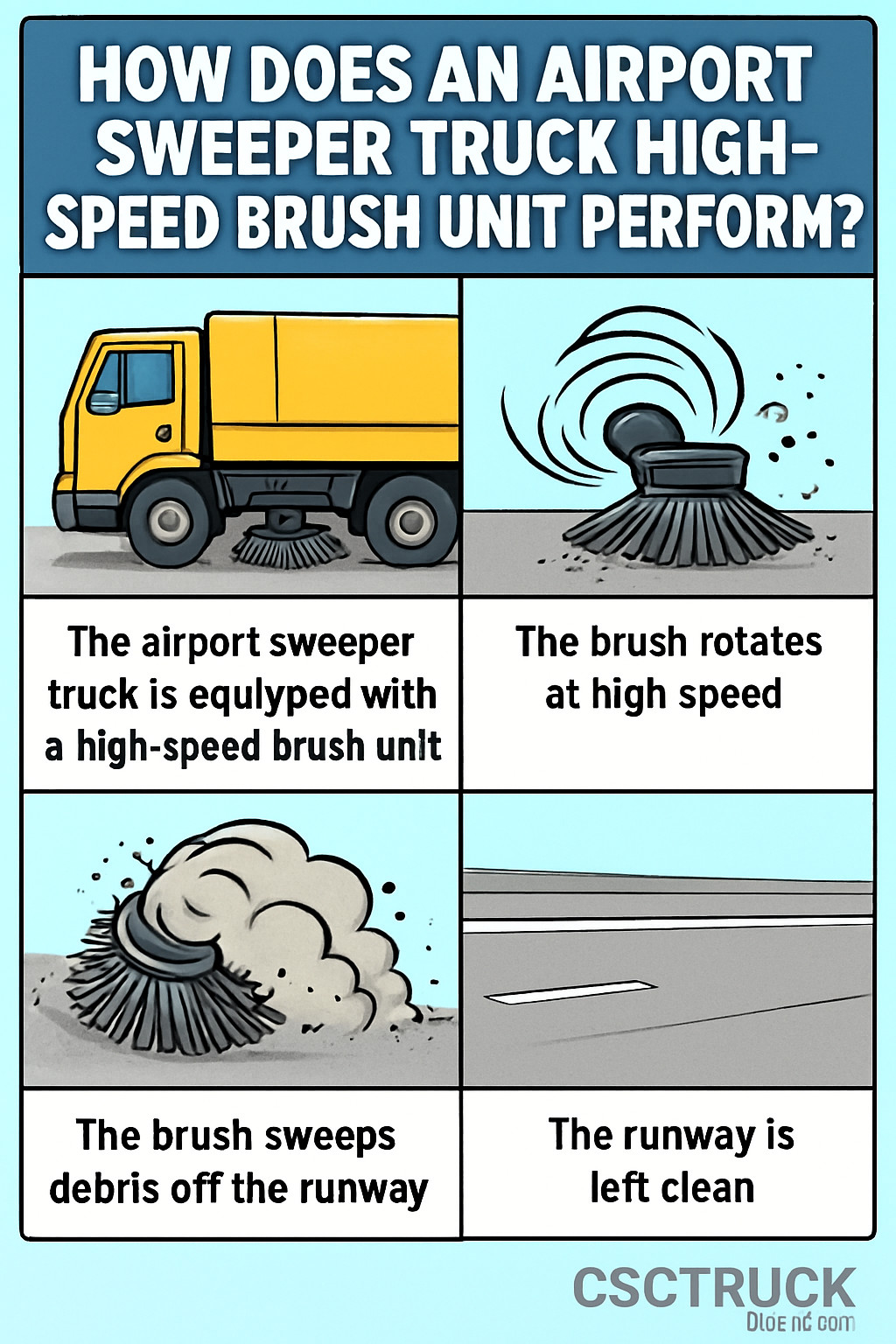
Brush Unit Performance: Mechanics of Debris Dislodgement and Ejection
The core function of the high-speed brush unit is not just to spin, but to effectively dislodge debris from the tarmac surface and propel it towards the collection system. This involves complex interactions of force, material science, and aerodynamics.
- Aggressive Contact & Material Dislodgement: High rotational speed (typically ranging from 150 to over 300 RPM, significantly faster than most sweeper truck brushes for roads) combined with precisely calibrated bristle stiffness and density creates the aggressive scrubbing action needed to pry loose embedded debris like stones, metal fragments, or chunks of rubber. The filaments physically impact and scrape the surface, overcoming adhesion forces and friction. The angle of the bristle blocks relative to the core and the direction of rotation are carefully engineered to maximize this dislodging force while minimizing material scattering perpendicular to the direction of travel.
- Harnessing Centrifugal Force for Ejection: Once debris is dislodged, the primary force responsible for moving it away from the brush contact zone and into the path of the collection system (usually a high-velocity air system or conveyor) is centrifugal force. The high rotational velocity generates immense outward acceleration, flinging debris upwards and rearwards in a controlled trajectory. The brush design, including filament length, flexibility, and tip configuration, is optimized to efficiently transfer this kinetic energy to the debris particles. This creates a dynamic “curtain” of ejected material directed towards the hopper intake.
- Mitigating Matting & Adhesion: A significant challenge, especially with wet leaves, grass clippings, or mud, is material adhering to the brush itself (“matting”), drastically increasing load and reducing cleaning efficiency. The high rotational speeds and specific filament materials used in airport brushes (often smoother polymers or specialized coatings) help minimize retention. Brush reversing capability is a vital operational tool, allowing the operator to quickly clear accumulated material by briefly spinning the brush in the opposite direction. Some advanced systems employ automated reversal cycles triggered by load sensors.
Operator Control & Situational Adaptation: Precision at the Cab
The raw power of the brush unit must be harnessed with precision by the operator, requiring intuitive and responsive control systems tailored to the dynamic airport environment.
- Ergonomic Cab Interface & Core Functions: The operator manages the brush unit from the sweeper truck cab using dedicated controls integrated into the dashboard or armrest console. Essential functions include Brush Engage/Disengage, Rotational Speed Control (continuously variable via a lever or dial), Direction Selection (Forward/Reverse), and often Brush Height Adjustment. These controls are positioned for easy access without requiring the operator to take their eyes off the sweeping path or surrounding aircraft movement, demanding exceptional ergonomics.
- Real-Time System Monitoring & Feedback: Sophisticated airport sweepers provide operators with critical real-time data. Hydraulic pressure gauges or digital displays showing motor pressure are essential indicators of brush load. A sudden spike signals potential jamming or excessive contact pressure, prompting immediate operator intervention (e.g., lifting the brush, reducing speed, or reversing). Monitoring brush speed ensures it remains within the optimal operating range for the current task and surface condition.
- Integrated Safety & Operational Logic: Modern units incorporate intelligent safety interlocks and operational logic. Brush engagement may be prevented unless the unit is correctly lowered, or automatically disengaged if the truck exceeds a safe sweeping speed. Systems might also automatically adjust brush pressure or speed based on the truck’s ground speed to maintain consistent cleaning intensity. Preset operational modes allow quick selection of optimized settings for specific tasks like runway cleaning versus apron sweeping.
Rigorous Maintenance & Reliability Protocols: Ensuring Unfailing Operation
The high-stakes environment of an active airfield demands near-perfect reliability from the brush unit. This necessitates stringent, proactive maintenance regimes far exceeding typical sweeper truck requirements.
- Hydraulic System Vigilance: The lifeblood of the system requires meticulous care. Regular hydraulic fluid sampling and analysis is critical to detect contamination or degradation early. Fluid changes adhere to strict schedules based on operating hours and conditions. Hoses, fittings, and manifolds undergo frequent visual inspections for leaks, abrasion, or fatigue. Filter elements are replaced religiously, and cooler efficiency is constantly verified to prevent overheating, which rapidly degrades fluid and components.
- Brush, Bearing & Structural Integrity Checks: Bristle wear is closely monitored; worn or broken filaments drastically reduce cleaning efficiency and can become FOD themselves. Segmented brush designs facilitate replacing only worn sections. Bearings supporting the core shaft endure immense radial and thrust loads; regular greasing per precise schedules, along with checks for play, unusual noise, or heat, are essential. The entire structural frame, motor mounts, and shaft couplings undergo periodic thorough inspections for cracks, stress fractures, loose fasteners, or misalignment, any of which could lead to catastrophic failure under load.
- Precision Balancing & Alignment: Dynamic balancing of the complete brush assembly (core, bristle blocks, couplings) is paramount, especially at high operating speeds. An unbalanced brush generates destructive vibrations that accelerate bearing failure, damage motors, fatigue the frame, and create an unsafe operating environment. Precise shaft alignment between the hydraulic motor and the brush core must be meticulously maintained to prevent premature coupling, seal, and bearing wear.
Engineering Excellence: Tailoring Performance for Aviation Safety
The performance of the high-speed brush unit reflects continuous engineering innovation specifically targeted at the unique demands of airport FOD control, setting it apart from conventional road sweeper truck systems.
- Optimized for Tarmac Sensitivity & FOD Types: Unlike road sweepers dealing with coarse aggregate and dirt, airport brushes interact with carefully prepared tarmac surfaces that must not be damaged. Brush filament materials (high-grade polymers like polyamide), stiffness, and operating pressures are calibrated for aggressive debris removal without gouging or excessively scouring the pavement. The focus is on lifting small, hard objects (metal, stones) and organic matter without creating secondary debris.
- Debris Containment & Scatter Minimization: Preventing dislodged debris from being scattered outside the collection path is critical near aircraft and engines. Brush design (filament angle, tip shape) and precise control of rotational speed relative to the sweeper’s forward velocity are meticulously engineered to ensure dislodged material is primarily ejected rearward and upwards into the powerful suction zone of the sweeper’s air system or onto its conveyor. High brush speeds enhance centrifugal ejection but require careful calibration to avoid creating projectiles.
- Reliability, Redundancy & Advanced Diagnostics: Airport operations demand maximum uptime. Brush units incorporate robust components with higher safety margins, enhanced sealing against jet fuel, deicing fluid, and weather, and often feature redundant systems (e.g., dual hydraulic circuits). Integration of vibration sensors, temperature monitors, and telematics provides real-time health data and enables predictive maintenance, alerting technicians to potential issues before they cause failures, ensuring the airport sweeper truck is always mission-ready. Leaders in this specialized field, such as CSCTRUCK Municipal, invest heavily in R&D to push these boundaries. Their focus encompasses developing next-generation brush units with even more efficient and powerful hydraulic drives using advanced LSHT motor designs, integrating sophisticated sensor networks for real-time performance optimization and automated adjustment to varying debris loads, and pioneering novel brush filament materials offering unparalleled wear resistance and debris release properties specifically for the harsh airport environment. This relentless pursuit of engineering excellence ensures that the high-speed brush unit remains a sophisticated, reliable, and increasingly intelligent guardian of aviation safety, transforming powerful rotation into the meticulous cleanliness required on the world’s runways.