Built to Last & Fully Tailored: Top-tier garbage, sweeper and sewer trucks crafted for unrivaled durability. A trusted choice for municipal governments across the globe.
How Strong Is a Rear Loader Garbage Truck Compaction Unit?
Understanding the Strength of a Rear Loader Garbage Truck Compaction Unit
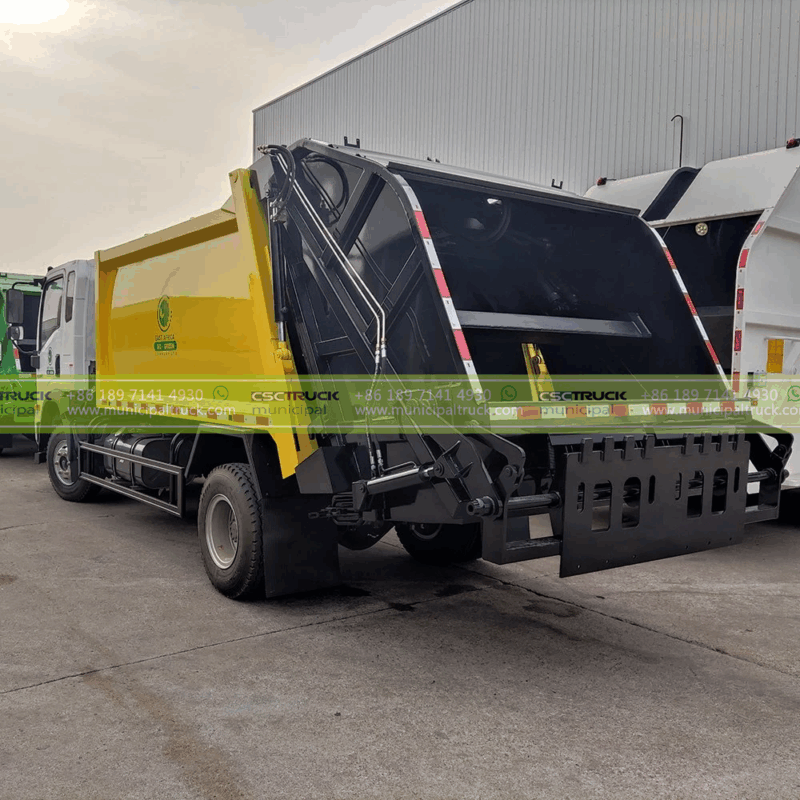
When people ask how strong a rear loader garbage truck compaction unit really is, they are often picturing brute force alone, but true strength in this context is a combination of hydraulic power, structural durability, controlled pressure, and long-term reliability under constant use. A rear loader compaction unit is designed not just to crush waste, but to do so repeatedly, safely, and consistently while handling unpredictable loads that vary in size, density, and composition throughout every collection route. Its strength is therefore measured not only by how hard it can compact waste in a single cycle, but by how well it maintains performance over thousands of cycles in demanding urban environments.
Hydraulic Force as the Core Source of Compaction Strength
At the heart of any rear loader compaction unit lies its hydraulic system, which provides the raw force required to compress waste efficiently.
Hydraulic Pressure and Cylinder Capacity
Rear loader compactors rely on high-pressure hydraulic cylinders that generate substantial linear force, often measured in tons of pushing power, to drive the packer blade forward. This pressure allows the unit to compress loose household waste, bulky commercial refuse, and mixed materials into a dense, stable load that maximizes the truck’s carrying capacity.
Consistent Power Delivery
Strength is not just about peak force but also about consistency. Well-designed hydraulic systems maintain steady pressure throughout each compaction cycle, ensuring that waste is compressed evenly rather than in uneven layers that could reduce usable space or strain structural components.
Packer Blade Design and Mechanical Advantage
The packer blade is the component that directly applies compaction force to the waste, and its design has a major influence on overall strength.
Blade Shape and Surface Area
Modern rear loader packer blades are shaped to balance penetration and distribution, allowing them to push waste forward while spreading pressure across a wide surface. This design prevents localized stress points and enables the compactor to handle irregular objects without losing effectiveness.
Mechanical Leverage
The geometry of the packer arm and linkage system creates mechanical advantage, multiplying the force generated by the hydraulic cylinders. This leverage allows the compaction unit to achieve high compression levels without requiring excessively large or energy-intensive components.
Structural Strength of the Compaction Chamber
A compaction unit is only as strong as the structure that contains and supports the force being applied.
Reinforced Steel Construction
Rear loader compaction chambers are typically built from high-strength steel plates with reinforced floors, sidewalls, and wear zones. These materials are selected to resist deformation, abrasion, and fatigue caused by repeated compaction cycles and abrasive waste materials.
Weld Quality and Stress Distribution
The strength of the unit also depends on weld integrity and how stress is distributed across the body. Well-engineered designs spread compaction forces evenly, reducing the risk of cracking or distortion over long service lives.
Compaction Ratios and Real-World Performance
One practical way to evaluate the strength of a rear loader compaction unit is by examining its achievable compaction ratio.
Understanding Compaction Ratios
Compaction ratios describe how much waste volume can be reduced, with common rear loader units achieving ratios between 3:1 and 6:1 depending on waste type. Higher ratios indicate stronger, more efficient compaction, allowing more material to be carried per trip.
Handling Diverse Waste Streams
Strength is also reflected in versatility. A robust compaction unit can handle soft organic waste, rigid packaging, and occasional bulky items without stalling, jamming, or suffering damage, maintaining consistent performance across diverse collection routes.
Durability Under Continuous Daily Use
Rear loader garbage trucks are designed for repeated operation, often completing hundreds of compaction cycles per day, which makes durability a key aspect of strength.
Wear Components and Longevity
Components such as wear plates, sliders, and seals are engineered to withstand constant friction and pressure. Their durability ensures that compaction strength does not degrade quickly, even under heavy daily workloads.
Maintenance and Strength Retention
Regular maintenance, including hydraulic fluid management and inspection of structural components, plays a vital role in preserving compaction strength over time. A well-maintained unit retains its original performance far longer than one that is neglected.
Safety Systems That Control Compaction Power
Strength without control can be dangerous, which is why rear loader compaction units include safety mechanisms that regulate how force is applied.
Pressure Relief and Load Monitoring
Pressure relief valves prevent hydraulic systems from exceeding safe limits, protecting both the equipment and the operator. Load monitoring systems help ensure that compaction force remains within design parameters, even when handling unusually dense waste.
Controlled Cycle Operation
Modern compaction units allow operators to control cycle timing and force application, ensuring that strength is applied deliberately rather than abruptly, which improves safety and reduces mechanical stress.
Strength Within a Complete Municipal Sanitation Fleet
The strength of a rear loader garbage truck compaction unit is best understood within the context of an integrated municipal fleet, where reliable compaction supports fewer trips, lower fuel consumption, and cleaner streets. When working alongside complementary vehicles such as the garbage truck and sweeper truck, a strong and dependable compaction unit becomes a cornerstone of efficient waste management, delivering consistent performance, operational confidence, and long-term value through carefully engineered power and durability.