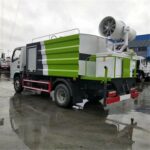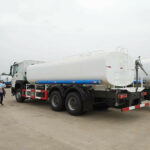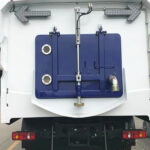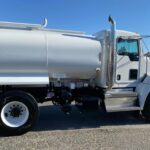
In a landmark advancement for environmental management and public health protection across Southern Africa, a significant fleet of state-of-the-art water spray trucks has been formally commissioned for road dust control operations. Engineered to address the pervasive challenge of particulate pollution in mining corridors, arid agricultural zones, and rapidly expanding urban peripheries, these specialized vehicles represent a critical investment in sustainable infrastructure resilience. Their deployment aligns rigorously with national imperatives to mitigate respiratory health epidemics linked to airborne silica and soil particles, while simultaneously enhancing road safety through improved visibility and surface stabilization. This strategic initiative underscores a profound commitment to ecological stewardship and socioeconomic progress, positioning South Africa at the forefront of integrated dust suppression technology adoption within emerging economies.
Engineering Excellence: Technical Specifications of the Deployed Fleet
The newly operational trucks incorporate revolutionary engineering tailored for Africa’s diverse terrains and climatic extremes. Each unit integrates multi-stage filtration systems capable of processing brackish or recycled water—a necessity in water-stressed regions.
Dynamic Spray Modulation Technology
Patented nozzle arrays autonomously calibrate droplet size (50–200 microns) and spray trajectory based on real-time wind velocity, humidity, and particulate density sensor inputs. This ensures optimal particle coagulation and settlement efficiency while reducing water consumption by up to 40% compared to conventional systems.
Robust Mobility Architecture
High-clearance chassis with all-terrain suspension and reinforced undercarriages withstand corrugated gravel roads prevalent in mining districts. The 15,000-liter tanks incorporate anti-slosh baffling for stability on inclines, while eco-compliant Tier-4 engines minimize carbon footprint during extended operational cycles.
Integrated Telematics Ecosystem
IoT-enabled performance dashboards transmit operational metrics—including water usage rates, route efficiency, and dust reduction KPIs—to centralized municipal command centers. Predictive maintenance algorithms preempt mechanical failures, maximizing fleet availability during dry seasons.
Addressing South Africa’s Critical Dust Management Imperatives
Uncontrolled particulate matter—particularly PM10 and PM2.5 emissions from unpaved transport routes—poses severe multidimensional threats. In mining-intensive provinces like Limpopo and North West, fugitive dust contaminates groundwater, reduces agricultural yields, and accelerates machinery depreciation. Urban fringe settlements face exacerbated asthma and TB incidence rates linked to chronic dust exposure. Traditional suppression methods, reliant on manual labour or outdated equipment, prove economically unsustainable and ecologically inadequate. These advanced spray trucks deliver precision-targeted mitigation, forming a core component of South Africa’s Integrated Air Quality Management Plan. Their operational scope spans:
- Industrial Zones: Containing mine tailings dispersion along haulage networks.
- Agricultural Belts: Preventing topsoil loss and crop contamination during harvesting.
- Urban Expansion Areas: Protecting vulnerable communities near construction hotspots.
Strategic Alliance Driving Sustainable Infrastructure Development
The deployment originates from a pioneering procurement partnership between CSCTRUCK Municipal, a global leader in environmental vehicles, and a major South African industrial conglomerate. This collaboration transcends transactional supply agreements, embedding knowledge transfer and localized capacity building. Key facets include:
- Technology Co-Innovation: Joint R&D initiatives adapting spray systems for Kalahari dust profiles.
- Skills Development: Technical academies training 120+ local engineers in advanced fleet maintenance.
- Circular Economy Integration: Utilizing recycled mining wastewater in suppression operations, reducing freshwater dependency.
- Community Governance Models: Establishing district-level committees to prioritize deployment routes based on health impact data.
Catalyzing Long-Term Environmental and Economic Transformation
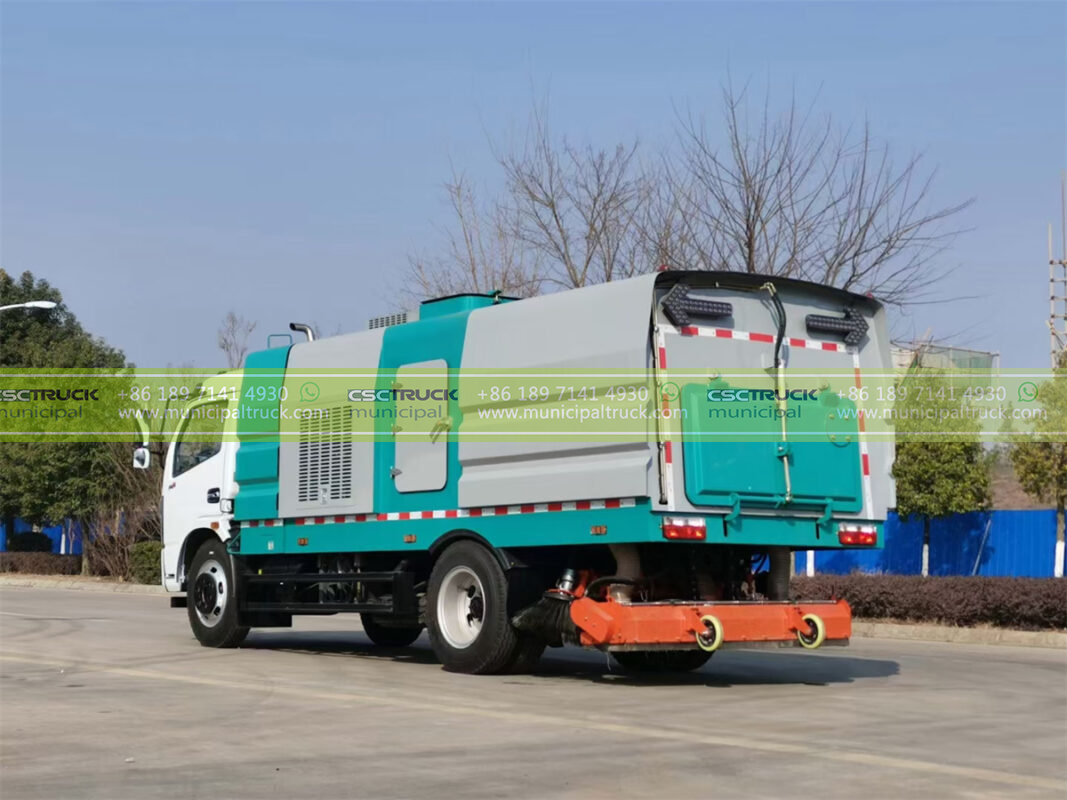
The integration of these water spray trucks establishes foundational infrastructure for scalable ecological modernization. Their operational synergy with sweeper truck fleets—removing sediment post-suppression—creates a closed-loop dust management matrix, reducing resuspension risks by over 60%. This systemic approach generates cascading benefits: extended road lifespan lowers municipal maintenance budgets; improved air quality reduces public health expenditures; and compliance with global ESG benchmarks attracts sustainable investment. Future phases will incorporate AI-driven dispersion modeling, enabling preemptive deployment before dust events. As a replicable model for arid and semi-arid regions globally, this initiative exemplifies how strategic industrial partnerships and technological innovation converge to build healthier, more resilient communities—transforming environmental challenges into engines of inclusive prosperity.