Understanding the Function of a Skip Loader Garbage Truck Arm System
The skip loader garbage truck arm system is the central mechanism that allows this type of vehicle to lift, transport, and unload skip containers efficiently, and its operation depends on a carefully coordinated set of mechanical, hydraulic, and human-controlled elements working together as one system. Unlike fixed-body refuse trucks, skip loaders rely heavily on arm movement accuracy, lifting balance, and controlled force, because every loading cycle involves suspended weight and dynamic motion. Understanding what controls this arm system requires looking at how power is generated, how movement is directed, and how safety is maintained throughout each stage of operation.
Hydraulic Power as the Primary Driving Force
At the core of the skip loader arm system is hydraulic power, which provides the strength and precision needed to lift heavy containers repeatedly throughout the workday.
Power Take-Off and Hydraulic Pump
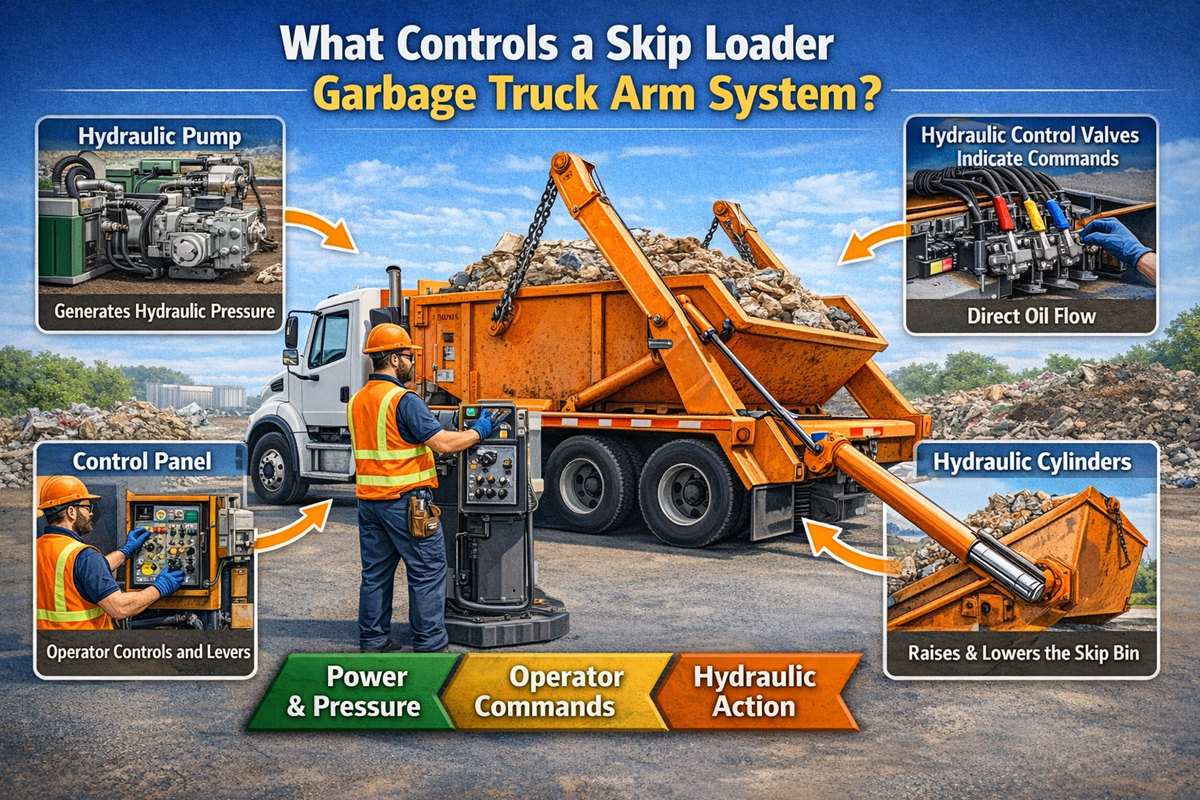
The system begins with a power take-off unit that transfers engine output to a hydraulic pump, converting mechanical energy into pressurized hydraulic fluid. This pressurized fluid becomes the driving force behind every arm movement, from lifting and lowering to tilting and positioning the skip container onto the truck body.
Hydraulic Cylinders and Fluid Control
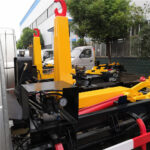
Multiple hydraulic cylinders are positioned along the arm structure, each responsible for a specific motion such as extension, elevation, or rotation. The flow of hydraulic fluid into these cylinders determines both speed and force, allowing the arm to move smoothly even under heavy loads.
Directional Control Valves and Flow Regulation
While hydraulic pressure provides power, control valves determine how that power is used.
Directional Control Valves
Directional valves guide hydraulic fluid to specific cylinders based on operator input, ensuring that movements occur in the correct sequence. These valves allow the arm to lift vertically, pivot inward, or tilt the container with controlled precision.
Flow Control and Speed Regulation
Flow control valves regulate how quickly hydraulic fluid enters the cylinders, preventing sudden or jerky movements. This controlled motion is essential for maintaining vehicle stability and protecting both the arm structure and the container during lifting operations.
Mechanical Structure and Load Distribution
The physical design of the arm system plays a major role in how control is maintained during operation.
Reinforced Arm Framework
The arm itself is built from high-strength steel sections designed to handle repeated stress without deformation. Reinforced pivot points and bushings help distribute loads evenly, reducing wear and extending service life.
Load Geometry and Balance
The geometry of the arm ensures that weight is drawn toward the truck’s center of gravity as the container is lifted. This design reduces tipping risk and improves overall control, especially when operating on uneven surfaces.
Safety Systems That Regulate Arm Operation
Because skip loader arms handle heavy loads in open environments, safety controls are integrated at multiple levels.
Load Sensors and Pressure Relief Valves
Load sensors monitor lifting force and prevent the arm from exceeding safe weight limits, while pressure relief valves release excess hydraulic pressure to protect system components. These safeguards prevent mechanical failure and reduce the risk of accidents.
Emergency Stop Functions
Emergency stop mechanisms allow operators to halt arm movement instantly if unexpected conditions arise, such as obstructions or unstable ground. This immediate control is critical in busy urban settings.
Operator Interfaces and Human Control Factors
Despite advanced mechanical systems, the operator remains a key controlling element of the skip loader arm system.
Cab and External Control Panels
Operators use joystick-style controls or lever panels to manage arm movements with precision. These interfaces are designed for intuitive operation, allowing smooth coordination between lifting, tilting, and positioning actions.
Training and Operational Awareness
Proper training ensures operators understand how load weight, ground conditions, and arm positioning affect system behavior. Skilled operation not only improves efficiency but also extends equipment life.
Integration Within Modern Waste Management Fleets
The skip loader garbage truck arm system represents a balance between power, control, and safety, making it an essential component of flexible waste collection operations. When integrated into a broader municipal fleet, it works alongside equipment such as the garbage truck and sweeper truck, supporting efficient container handling, cleaner streets, and well-coordinated sanitation services through reliable engineering and thoughtful system control.