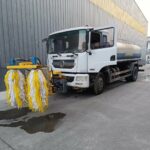
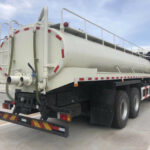
Built to Last & Fully Tailored: Top-tier garbage, sweeper and sewer trucks crafted for unrivaled durability. A trusted choice for municipal governments across the globe.
What Controls a Water Sprinkler Truck Tank Pump System?
Understanding the Core Role of a Water Sprinkler Truck Tank Pump System
A water sprinkler truck is far more than a simple vehicle carrying water, because at the heart of its operation lies the tank pump system, which determines how efficiently water is drawn, pressurized, distributed, and controlled during daily municipal, construction, or environmental tasks. This system acts as the operational brain of the truck, translating mechanical power into controlled water flow that supports road cleaning, dust suppression, landscaping, and emergency support functions. Understanding what controls this pump system requires looking beyond a single component and instead examining how mechanical, hydraulic, and operator-driven elements work together in a coordinated process that prioritizes reliability, precision, and safety.
Power Sources That Drive the Pump System
The first layer of control within a water sprinkler truck tank pump system comes from its power source, which determines how energy is supplied to move water from the tank to the spray outlets.
Engine-Driven Power Take-Off (PTO) Systems
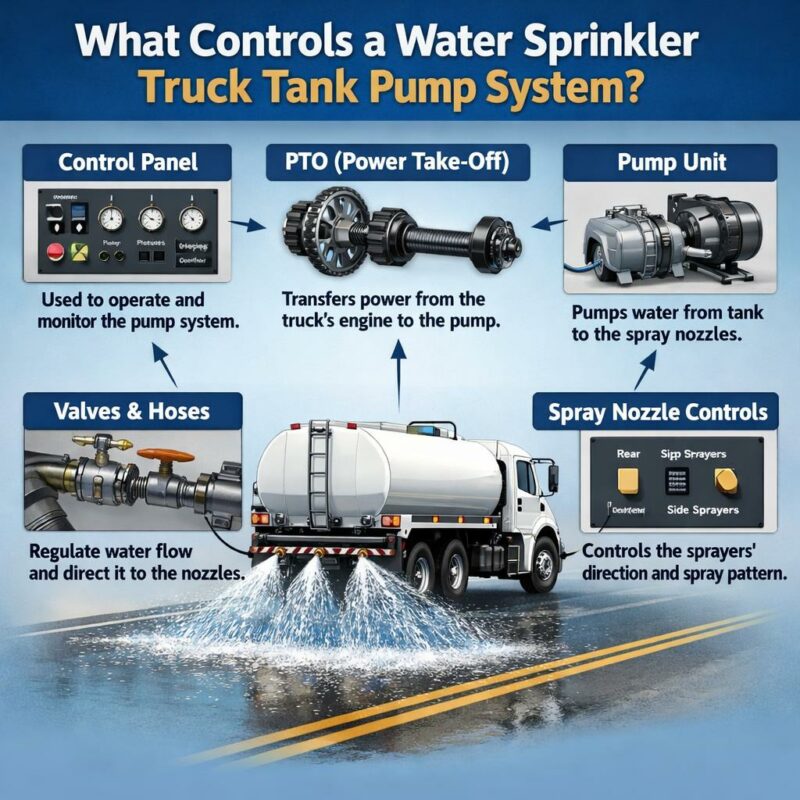
Most water sprinkler trucks rely on a power take-off mechanism connected directly to the vehicle’s engine, allowing rotational energy to be transferred from the drivetrain to the pump assembly. When engaged, the PTO enables the pump to operate independently of vehicle movement, which is essential for stationary spraying or controlled water discharge at low speeds. This setup offers dependable performance and ensures that pump output remains stable even under varying load conditions.
Auxiliary and Hydraulic Power Options
In some configurations, especially on specialized or heavy-duty units, auxiliary engines or hydraulic systems are used to power the pump. These systems provide additional flexibility, allowing operators to fine-tune pump speed and pressure without directly impacting engine RPM, which can be particularly useful in environments requiring precise water application.
Pump Types and Their Influence on Control
The type of pump installed plays a significant role in how the overall system is controlled, as each design responds differently to pressure, flow demands, and operational adjustments.
Centrifugal Pumps
Centrifugal pumps are commonly used due to their simplicity and smooth flow characteristics, making them ideal for continuous spraying applications. Control over these pumps is largely achieved through regulating engine speed and valve positioning, allowing operators to adjust water output gradually without abrupt pressure changes.
Positive Displacement Pumps
For applications requiring higher pressure or more consistent flow regardless of speed, positive displacement pumps are sometimes employed. These pumps are controlled through precise valve systems and pressure regulators, ensuring accurate delivery even when operating at lower engine speeds or in challenging conditions.
Valve Systems as the Primary Flow Controllers
Valves represent one of the most direct and critical control points in a water sprinkler truck tank pump system, as they determine where, when, and how much water is released.
Manual and Pneumatic Valves
Traditional systems often rely on manual or pneumatic valves that operators engage from the cab or control panels, directing water to front sprays, rear sprinklers, side nozzles, or handheld hoses. These valves provide straightforward, reliable control and are favored for their ease of maintenance.
Electronically Actuated Valves
Modern trucks increasingly use electronically controlled valves, which allow operators to manage water distribution with greater precision through digital interfaces. These systems support preset spray patterns, automated flow adjustments, and faster response times, enhancing both efficiency and consistency.
Pressure Regulation and Safety Controls
Maintaining appropriate pressure levels is essential for both performance and safety, making pressure regulation a key control function within the pump system.
Pressure Relief Valves
Pressure relief valves protect the pump and piping from damage by automatically releasing excess pressure when predefined limits are exceeded. This safeguard ensures system longevity and prevents sudden failures during high-demand operations.
Gauges and Monitoring Sensors
Pressure gauges and electronic sensors provide real-time feedback to operators, allowing them to monitor system performance and make informed adjustments. These instruments form a critical feedback loop, helping operators balance effective water delivery with equipment protection.
Operator Interfaces and Human Control Factors
While mechanical and electronic components play vital roles, the operator remains a central controlling element in the pump system’s performance.
Cab-Mounted Control Panels
Modern water sprinkler trucks feature ergonomic control panels that integrate pump engagement, valve selection, and pressure monitoring into a single interface. This design reduces operator workload and improves response time, particularly in complex urban environments.
Training and Operational Judgment
Even the most advanced pump system depends on skilled human judgment, as operators must assess road conditions, environmental factors, and task requirements to adjust settings appropriately. Proper training ensures that the pump system is used efficiently while minimizing water waste and mechanical strain.
Integrated Control Within the Broader Municipal Fleet
A water sprinkler truck does not operate in isolation, and its tank pump system must align with broader municipal fleet operations and maintenance practices. Effective pump control contributes to predictable performance, reduced downtime, and smoother coordination with other service vehicles. When integrated into a comprehensive urban service strategy, these trucks complement essential equipment such as the garbage truck and sweeper truck, collectively supporting cleaner streets, controlled dust levels, and more resilient city infrastructure through well-managed, intelligently controlled systems.