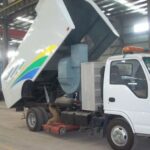
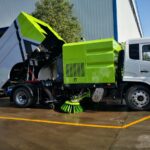
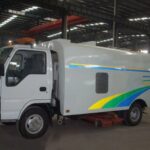
Built to Last & Fully Tailored: Top-tier garbage, sweeper and sewer trucks crafted for unrivaled durability. A trusted choice for municipal governments across the globe.
What Defines a Waterless Sweeper Truck and Its Eco-Advantages?
The persistent rumble and spray of traditional street sweepers are familiar sounds in urban maintenance. Yet, a quiet revolution is underway, driven by pressing environmental concerns and resource scarcity. Enter the waterless sweeper truck, a sophisticated reimagining of street cleaning technology that fundamentally challenges the reliance on water as the primary dust control and collection medium. This innovative approach isn’t merely a minor adjustment; it represents a paradigm shift towards significantly more sustainable and efficient urban sanitation. Understanding what defines these machines and the substantial eco-advantages they offer is crucial for municipalities and contractors aiming to modernize their fleets and reduce their environmental footprint.
I. Defining the Waterless Sweeper Truck: Core Principles and Operation
At its essence, a waterless sweeper truck is engineered to capture street debris – dust, dirt, sand, leaves, litter, and even fine particulate matter – without using thousands of gallons of potable water typically sprayed during conventional sweeping operations. This fundamental distinction necessitates a completely different approach to dust suppression and debris collection, relying on advanced mechanical and aerodynamic systems.
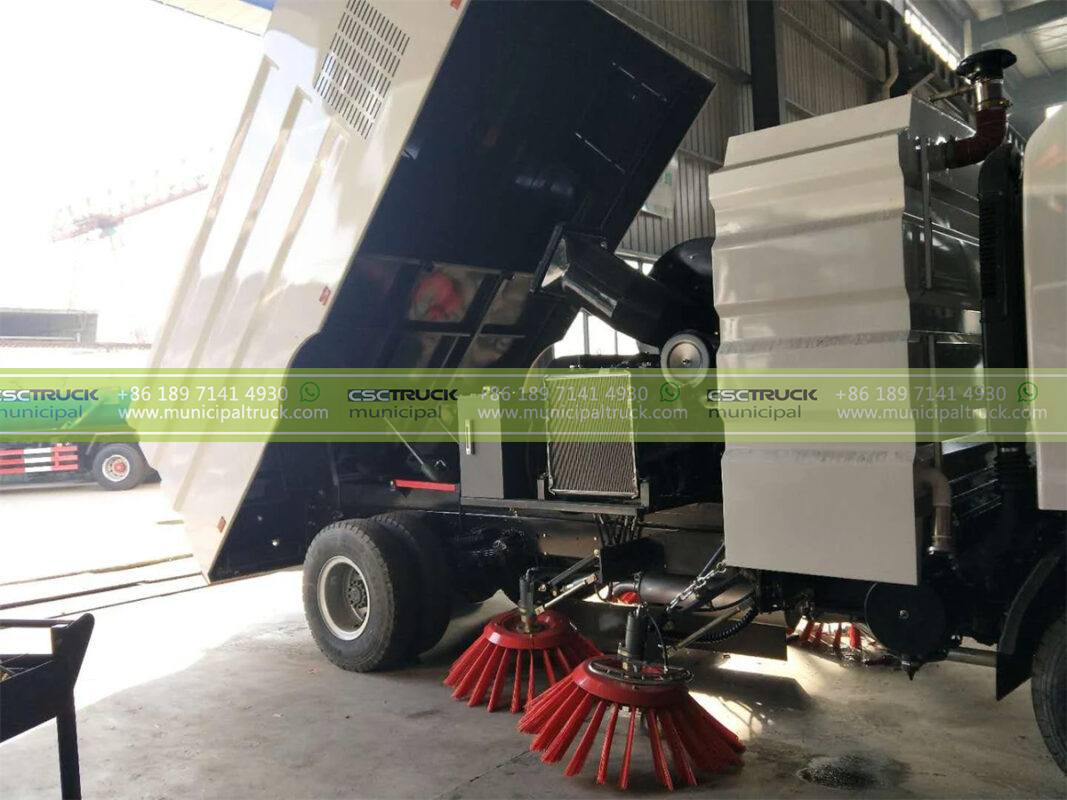
The Absence of Water Spray Systems: The most obvious defining feature is the elimination of the high-pressure water spray bars located near the main broom(s). Traditional sweepers rely on this water to suppress dust clouds generated by the sweeping action, binding fine particles and preventing them from becoming airborne pollution. Waterless models remove this subsystem entirely.
Advanced Vacuum and Airflow Management: To compensate for the lack of water-based dust control, waterless sweepers employ highly sophisticated, high-volume vacuum systems. These systems are far more powerful than those found on most traditional sweepers. The key lies in creating a controlled, high-velocity airstream that effectively entrains dust particles before they can escape into the atmosphere.
Sealed Sweeping Enclosures: Critical to the success of the vacuum system is a meticulously designed, sealed enclosure surrounding the main broom(s). This enclosure acts as a controlled environment, preventing ambient wind from disrupting the carefully managed airflow patterns. The enclosure ensures that the powerful vacuum suction is directed precisely where it’s needed – at the point where debris is dislodged by the broom.
Specialized Filtration: Capturing fine dust without water requires exceptional filtration capabilities. Waterless sweepers utilize multi-stage filtration systems, often incorporating:
Primary Cyclonic Separation: Using centrifugal force, this stage removes the bulk of heavier debris (sand, gravel, leaves) from the airstream before it reaches finer filters.
High-Efficiency Secondary Filters: These are the workhorses for fine dust capture. Advanced cartridge filters or baghouse systems with high dust-holding capacity and efficiency ratings (often HEPA-grade or equivalent for PM2.5 and PM10) trap the microscopic particles that water would traditionally suppress. Sophisticated filter cleaning mechanisms (reverse air pulses, mechanical shakers) are essential to maintain airflow and performance.
Optimized Broom Technology: While the main sweeping principle remains, brooms may be specifically designed or selected to work optimally within the sealed, high-airflow environment, minimizing dust generation at the source and maximizing debris pickup efficiency into the vacuum path.
The core principle is containment and capture: creating a physical barrier and using powerful, directed airflow to pull dust and debris directly into the collection hopper, bypassing the need for water to weigh down and trap particles.
II. Compelling Eco-Advantages: Beyond Water Savings
The environmental benefits of waterless sweeper trucks extend far beyond the immediate and substantial reduction in water usage. Their design addresses several critical environmental challenges associated with traditional sweeping:
Drastic Reduction in Potable Water Consumption: This is the most direct and quantifiable benefit. Traditional sweepers can use hundreds to thousands of gallons of water per hour of operation. In regions facing drought, water scarcity, or stringent conservation mandates, this consumption is increasingly untenable. Waterless sweepers eliminate this draw on precious municipal water supplies entirely, contributing significantly to water resource sustainability.
Elimination of Contaminated Runoff: Water sprayed by traditional sweepers doesn’t just disappear. It mixes with the street debris – including oils, heavy metals (from brake linings, tires), nutrients, pathogens, and litter – creating a contaminated slurry. This runoff flows into storm drains, ultimately polluting rivers, lakes, and oceans. Waterless sweepers prevent this pollution pathway at the source by containing all collected debris dry within the hopper. This debris is then disposed of appropriately at landfills or treatment facilities, preventing aquatic ecosystem damage and reducing the burden on wastewater treatment plants.
Superior Fine Particulate Matter (PM) Control: While water spray suppresses dust, it doesn’t eliminate it entirely, especially the finest, most hazardous particles (PM2.5 and PM10). These particles contribute significantly to urban air pollution, respiratory illnesses, and reduced visibility. The high-efficiency filtration systems in waterless sweepers are specifically engineered to capture a vastly higher percentage of these fine particulates, preventing them from becoming respirable airborne pollutants. This leads to demonstrably cleaner air in the swept areas, directly benefiting public health.
Reduced Carbon Footprint (Indirectly): While the sweeper itself still uses fuel, eliminating water usage contributes to a lower overall carbon footprint in several ways. The energy required to extract, treat, and pump the vast quantities of water used by traditional sweepers is substantial. By eliminating this water demand, waterless sweepers avoid these associated energy expenditures and greenhouse gas emissions. Furthermore, carrying less weight (no water tank, often a more compact design) can lead to marginally improved fuel efficiency during operation compared to a fully laden traditional sweeper.
Minimized Noise Pollution: The powerful vacuum systems are designed to operate efficiently, and modern units often incorporate sound-dampening technologies. Crucially, the elimination of high-pressure water pumps significantly reduces one of the noisier components of traditional sweepers. This results in a generally quieter operational profile, particularly beneficial for night-time or early morning sweeping operations in residential areas.
III. Performance, Practicality, and Implementation Considerations
Adopting any new technology requires evaluating its real-world performance and operational fit. Waterless sweepers have matured considerably, but understanding their practicalities is key:
Effectiveness Claims: Modern waterless sweepers are proven to be highly effective on most standard urban surfaces (asphalt, concrete). They excel at capturing fine dust and silt – a major challenge for traditional sweepers even with water. Performance on very coarse debris (like large gravel or construction spillage) is generally comparable to good traditional sweepers, though extremely heavy, wet mud can present challenges better suited to water-assisted systems. Manufacturers provide extensive performance data and certifications (like PNS or EN standards) for dust capture efficiency.
Operational Range and Limitations: Waterless sweepers perform best on relatively dry surfaces. Heavy rainfall during operation can hinder performance as wet debris behaves differently and can clog filters more rapidly. However, they are highly effective in dry and arid climates where water scarcity is most acute. They are also excellent for indoor use (warehouses, factories, airports) where water use is prohibited or problematic.
Maintenance Regimen: The primary maintenance focus shifts from water systems (pumps, nozzles, tanks) to the filtration system. Filters require regular, scheduled cleaning and eventual replacement based on operating hours and debris loading. While this is a cost, it is predictable and avoids the maintenance issues associated with water systems (corrosion, scaling, pump failures, leaks). Hopper emptying is similar to traditional sweepers, though the dry debris is often easier and less messy to handle.
Cost Considerations: The initial purchase price of a waterless sweeper is typically higher than a comparable traditional sweeper, primarily due to the advanced filtration and powerful vacuum systems. However, a comprehensive Total Cost of Ownership (TCO) analysis often reveals significant savings:
Elimination of water purchase costs.
Reduced maintenance costs associated with water pumps, tanks, and spray systems.
Potential fuel savings from reduced vehicle weight.
Avoided costs related to runoff pollution mitigation or fines.
Extended surface life of roads by preventing water infiltration into cracks.
IV. The Strategic Value Proposition: Beyond Ecology
While the eco-advantages are the primary drivers, the value proposition of waterless sweeper trucks extends into operational and strategic benefits:
Unconstrained Operation: Freedom from water tank refilling requirements significantly enhances operational flexibility and efficiency. Sweepers can operate for full shifts without needing to return to base or locate hydrants for refilling, maximizing productive sweeping time, especially on large routes or in areas with limited water access. This is particularly advantageous for large-scale deployments and continuous cleaning operations.
Regulatory Compliance and Future-Proofing: As environmental regulations tighten globally – focusing on stormwater pollution (NPDES permits in the US, similar frameworks elsewhere), air quality standards (PM2.5/PM10 limits), and water conservation mandates – waterless sweepers offer a proactive solution. Investing in this technology positions municipalities and contractors favorably for current and future regulatory landscapes, reducing compliance risks and potential penalties.
Enhanced Public Image and Sustainability Leadership: Deploying waterless sweepers demonstrates a tangible commitment to environmental stewardship and resource conservation. This enhances the public image of the responsible organization (city, contractor) as a leader in sustainable urban management, aligning with growing public and political expectations for greener practices.
Versatility: As mentioned, their suitability for dry conditions, arid regions, and indoor environments (factories, logistics centers, airports, parking garages) where water use is impractical or forbidden, significantly broadens their potential applications beyond standard street sweeping.
The rise of the waterless sweeper truck signifies a necessary evolution in urban sanitation. By replacing water with advanced engineering – powerful vacuum containment and high-efficiency filtration – these machines deliver exceptional cleaning performance while directly addressing critical environmental pain points: conserving water, eliminating polluted runoff, and drastically reducing hazardous airborne particulate matter. The operational benefits of extended range and reduced refilling needs further solidify their practicality. While the initial investment requires consideration, the compelling eco-advantages, combined with long-term operational savings and strategic value in regulatory compliance and sustainability leadership, make a strong case for adoption. As cities worldwide grapple with resource scarcity, pollution, and climate goals, waterless sweepers represent a smart, responsible, and effective step forward in maintaining cleaner, healthier urban environments. This focus on sustainable technology is part of a broader trend visible across municipal fleets, driving innovation not only in sweeper trucks but also influencing the design and operation of other essential vehicles like sewage trucks, all aimed at reducing environmental impact while enhancing service delivery.