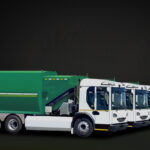
Built to Last & Fully Tailored: Top-tier garbage, sweeper and sewer trucks crafted for unrivaled durability. A trusted choice for municipal governments across the globe.
What Is the Capacity of a Compactor Garbage Truck Body?
Understanding What Capacity Means in a Compactor Garbage Truck Body
When discussing the capacity of a compactor garbage truck body, the term goes far beyond a simple volume number, because true capacity is shaped by how much waste the body can hold after compaction, how efficiently it compresses different materials, and how safely it can transport that load through urban streets. Unlike open or non-compacting bodies, a compactor body uses hydraulic force to reduce waste volume, allowing municipalities and private operators to collect significantly more material per trip while maintaining control, stability, and sanitation standards. Understanding capacity therefore requires looking at both physical dimensions and functional performance.
Rated Volume Versus Effective Compacted Capacity
Manufacturers often describe compactor bodies using rated volume, but effective capacity tells a more practical story.
Rated Body Volume
Rated volume refers to the internal space of the compactor body before compression, typically measured in cubic meters or cubic yards. Common sizes range from small-capacity bodies for narrow urban routes to large-capacity bodies designed for high-density collection zones.
Effective Compaction Capacity
Effective capacity accounts for how much waste can actually be carried once compacted. Depending on the compaction ratio, which can range from 2:1 to over 6:1, the same body can hold multiple times its rated volume in loose waste. This is why two trucks with identical rated volumes can perform very differently in real-world operations.
Compaction Mechanisms and Their Impact on Capacity
The design of the compaction system plays a critical role in determining how much waste a compactor garbage truck body can handle.
Rear-Loader and Front-Loader Compaction Systems
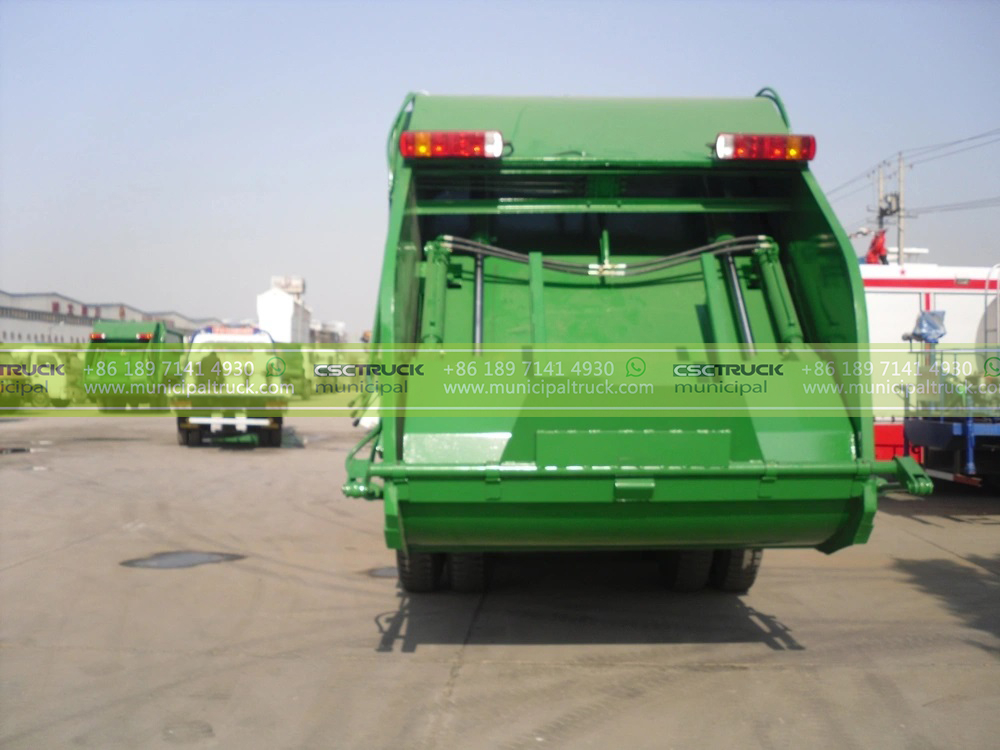
Rear-loader compactor bodies typically use a sliding or rotating packer blade that pushes waste forward into the main chamber, gradually compressing it with each cycle. Front-loader bodies, on the other hand, rely on overhead arms and gravity-assisted dumping combined with internal packer panels, often achieving higher compaction efficiency for commercial waste streams.
Hydraulic Pressure and Cycle Frequency
Higher hydraulic pressure allows waste to be compacted more densely, while faster cycle times enable more frequent compression during a route. Together, these factors increase effective capacity without requiring a larger body.
Waste Type and Density Considerations
Capacity is also heavily influenced by the nature of the waste being collected, because not all materials respond to compaction in the same way.
Household Versus Commercial Waste
Household waste, which often includes packaging and organic material, compresses relatively easily, allowing the truck to reach higher effective capacity. Commercial waste may include rigid or bulky items that reduce overall compaction efficiency, even in a large body.
Moisture Content and Weight Limits
Wet waste increases overall weight more quickly than volume, meaning the truck may reach legal axle or gross vehicle weight limits before the body is physically full. This makes weight capacity just as important as volumetric capacity in practical operations.
Structural Design and Legal Capacity Limits
A compactor garbage truck body must balance internal capacity with structural strength and regulatory compliance.
Body Construction and Reinforcement
High-strength steel panels, reinforced floors, and wear-resistant liners allow the body to withstand repeated compaction cycles without deformation. These design elements ensure that maximum capacity can be used consistently over the vehicle’s service life.
Chassis and Axle Ratings
Even if a compactor body can physically hold more waste, the chassis and axle ratings ultimately limit how much weight can be safely transported. Manufacturers design bodies to match specific chassis capacities, ensuring safe operation within legal limits.
Operational Factors That Influence Real-World Capacity
How a compactor garbage truck is operated can significantly affect how much waste it carries on a daily basis.
Route Planning and Load Distribution
Well-planned routes allow operators to compact waste evenly throughout the body, preventing localized overloading and maximizing usable space. Poor load distribution can reduce effective capacity and increase wear on hydraulic components.
Operator Technique and Maintenance
Experienced operators who use consistent compaction cycles and monitor load indicators tend to achieve higher capacity utilization. Regular maintenance ensures hydraulic systems maintain full pressure, preserving compaction performance over time.
Capacity in the Context of Modern Municipal Fleets
The capacity of a compactor garbage truck body is best understood as a balance between volume, compaction efficiency, weight limits, and operational practices. When integrated into a modern sanitation fleet, these trucks work in coordination with other essential vehicles such as the garbage truck and sweeper truck, supporting efficient waste collection, reduced fuel consumption, and cleaner urban environments through optimized capacity use and thoughtful system design.