What Regulates a Water Sprinkler Truck Spray Pattern?
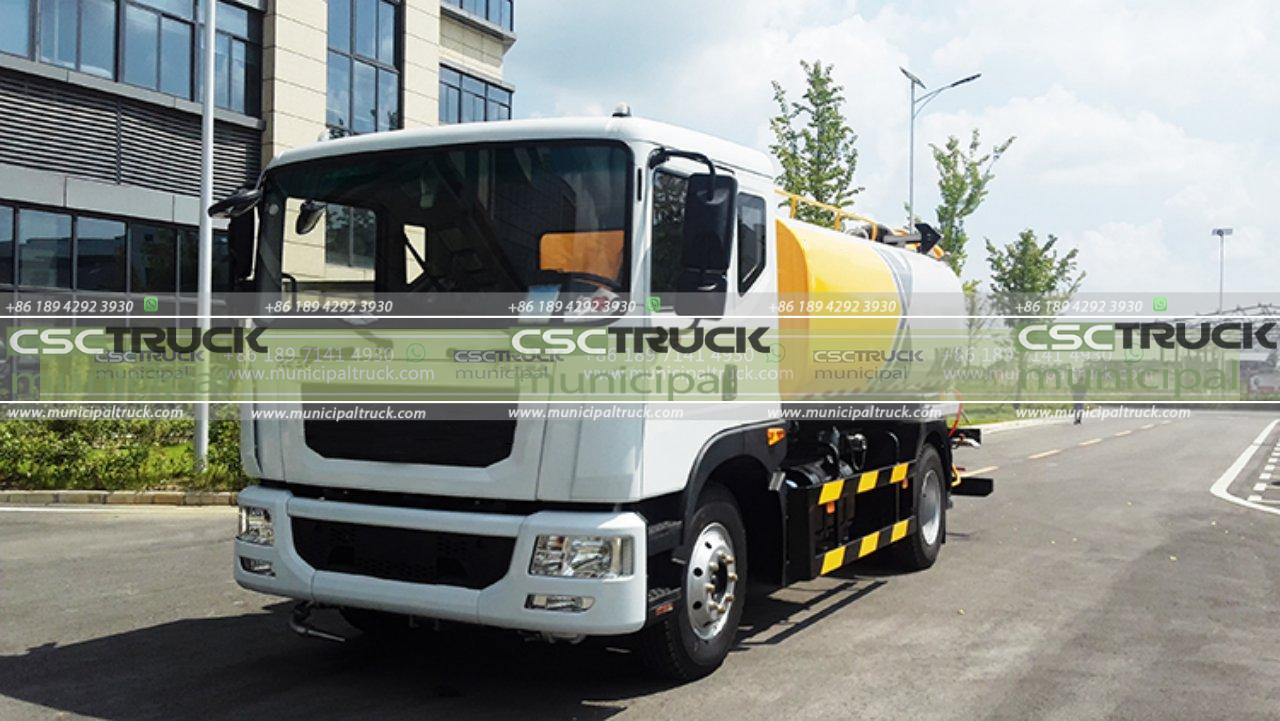
Beneath the seemingly simple arc of water cascading from a municipal sprinkler truck lies a complex interplay of physics, engineering, and operational strategy. Far from a random shower, the spray pattern – its width, droplet size, uniformity, and trajectory – is meticulously regulated by a suite of integrated systems. This precision is paramount. Whether suppressing dust on unpaved roads, pre-wetting surfaces for a sweeper truck, controlling emissions at construction sites, or mitigating airborne pollutants, the effectiveness and efficiency of the entire operation hinge on controlling how water meets its target. Understanding the intricate mechanisms governing this pattern reveals the sophisticated engineering dedicated to solving urban environmental challenges, drop by calculated drop.
The Hydraulic Heart: Pressure and Flow Dynamics
At the core of spray pattern regulation lies the fundamental relationship between water pressure and flow rate, governed by the truck’s pumping system and fluid dynamics principles.
Pump Power & System Pressure: The truck’s onboard water pump is the engine driving the spray. Its capacity, typically powered by the truck’s engine via a PTO (Power Take-Off) or a dedicated auxiliary engine, determines the maximum achievable system pressure. Higher pressure forces water through nozzles at greater velocity, directly influencing the spray’s reach (throw distance), the degree of atomization (droplet size), and the energy with which it impacts the surface. Precise pressure control valves are critical, allowing operators to dial in the exact force needed for the task, whether it’s a gentle mist for dust suppression near pedestrians or a high-impact stream for surface cleaning.
Flow Rate Regulation: While pressure dictates how the water exits, the flow rate (measured in gallons per minute – GPM or liters per minute – LPM) determines how much water is delivered. This is regulated by valves controlling the total water volume supplied to the spray bar or individual nozzles. Flow rate works in concert with pressure; a high flow rate at low pressure creates large, heavy droplets with shorter throw, while a low flow rate at high pressure produces a fine mist with potentially longer reach but lower impact energy. Achieving the desired pattern requires balancing these two parameters optimally for the specific application and desired coverage area.
Pipework & Friction Loss: The journey of water from the tank through pipes, valves, and fittings to the nozzles isn’t frictionless. Friction loss within the plumbing system reduces both pressure and flow rate available at the nozzle compared to the pump’s output. System designers meticulously calculate pipe diameters, minimize bends, and select efficient fittings to minimize these losses, ensuring consistent performance across the spray bar.
Nozzle Technology: The Architects of the Spray
Nozzles are the final, critical interface where hydraulic energy is transformed into a defined spray pattern. Their design is a specialized science.
Orifice Size & Shape: The nozzle orifice is the gatekeeper. Its diameter is the primary determinant of flow rate for a given pressure. Smaller orifices create finer droplets at higher pressures but restrict flow. Orifice shape (round, oval, slot) also influences the initial fan or cone pattern before external forces act upon it. Precision manufacturing ensures consistency across multiple nozzles on a spray bar.
Deflection Surfaces & Internal Geometry: Beyond the orifice, the internal design of the nozzle dictates pattern formation. Flat fan nozzles use a precision-machined deflection surface to spread the jet into a thin, flat sheet that naturally breaks up into droplets. Full cone nozzles utilize internal vanes or a spiral chamber to impart a swirling motion, creating a circular pattern filled with droplets. Hollow cone nozzles generate a ring-shaped spray. Each type offers distinct coverage and droplet characteristics suited to different tasks.
Material Science & Wear Resistance: Nozzles endure harsh conditions – abrasive water, chemicals, and physical impacts. Materials like hardened stainless steel, tungsten carbide, ceramics, and specialized polymers are chosen for wear resistance to maintain precise orifice dimensions and spray characteristics over extended operational life. Erosion of the orifice dramatically alters flow rate and pattern uniformity.
Specialized Designs: Specific applications demand unique nozzles. Anti-drip nozzles incorporate check valves to prevent unwanted dripping when the system is pressurized but not actively spraying. Adjustable nozzles allow operators to manually alter the fan angle or flow rate within a range. Air-induction nozzles deliberately entrain air, creating larger, softer droplets that resist wind drift – crucial for targeted dust suppression near sensitive areas.
Spray Bar Configuration: Orchestrating Coverage
The arrangement and control of nozzles on the spray bar define the overall coverage area and pattern uniformity.
Nozzle Spacing & Angling: The distance between nozzles on the spray bar is calculated based on the individual nozzle’s spray angle at the operating pressure and the desired overlap. Proper overlap (typically 30-50%) ensures uniform water distribution across the entire target width without dry streaks or excessive pooling. Nozzles are often angled slightly forward, backward, or downward to optimize trajectory for the intended surface interaction (e.g., hitting the ground just ahead of the truck for dust control, or angling backwards for pre-wetting in front of a sweeper truck).
Sectional Control: Modern spray bars feature sectional control valves, allowing operators to activate only specific segments (e.g., left, center, right). This prevents wasting water on non-target areas like sidewalks, opposing traffic lanes, or landscape features when only partial coverage is needed. This precision is vital for efficiency and environmental responsibility.
Height Adjustability: The vertical height of the spray bar above the ground significantly impacts the spray pattern’s width and density. Higher mounting widens the pattern but reduces droplet density and impact energy. Height adjustment mechanisms (manual or hydraulic) enable operators to fine-tune coverage for different truck configurations and target widths.
Vehicle Dynamics: Speed and Stability
The municipal truck itself is a moving platform, and its motion is a critical variable in spray application.
Ground Speed: The truck’s travel speed is inversely proportional to the application rate (depth of water per unit area). Driving faster spreads the same flow rate over a larger area, resulting in a lighter application. Driving slower concentrates the water on a smaller area. Operators must carefully match speed to the flow rate to achieve the desired application intensity (e.g., gallons per square yard). Advanced systems integrate speed sensors with flow control for automated rate adjustment.
Stability & Suspension: A bouncing or swaying truck disrupts spray pattern uniformity. Heavy-duty suspension systems and stable chassis designs are crucial for maintaining consistent nozzle height and angle, especially on rough terrain common in construction sites or unpaved roads. Vibration can cause inconsistent spray or premature nozzle wear.
Wind Effects & Compensation: Crosswinds are a major disruptor, deflecting spray droplets off-target, causing drift, and creating uneven patterns. While nozzle choice (e.g., air-induction) helps mitigate this, operators must constantly assess wind speed and direction, adjusting spray bar height, pressure, or even the driving path to minimize drift and ensure water lands where intended.
Environmental & Operational Factors: The Real-World Context
External conditions and the specific task dictate the optimal spray pattern parameters.
Target Surface & Objective: Regulating the pattern for dust suppression on a dry gravel road differs vastly from pre-wetting a paved street for a sweeper truck, which in turn differs from watering vegetation or controlling airborne silica at a demolition site. Dust suppression often requires smaller droplets that float and capture fine particles, while pre-wetting needs larger droplets that penetrate surface dust layers without immediately evaporating. Surface porosity also influences droplet size choice – porous surfaces may require larger droplets to avoid instant absorption before dust binding occurs.
Atmospheric Conditions: Ambient temperature and humidity directly affect droplet evaporation rates. Hot, dry, windy conditions necessitate larger droplets or higher application rates to compensate for rapid evaporation before the water can effectively suppress dust or moisten the surface. Conversely, cool, humid conditions allow finer droplets to persist longer.
Water Quality & Additives: The presence of sediments or dissolved solids can accelerate nozzle wear, altering patterns over time. Furthermore, chemical additives like dust suppressants (e.g., surfactants, polymers, salts) or de-icing agents change the water’s viscosity and surface tension, impacting atomization and droplet formation. Spray systems must be compatible with these additives, and pattern adjustments may be needed when they are used.
Control Systems: The Operator’s Command Center
Modern water sprinkler trucks integrate sophisticated controls to manage the complex variables.
Cab-Mounted Interfaces: Operators interact with intuitive control panels inside the cab. These digital or analog interfaces display critical parameters (pressure, flow rate, tank level, system status) and allow real-time adjustment of pressure, flow rate, spray bar section activation, and sometimes spray bar height. Clear feedback is essential for precise operation.
Automation & Precision Technology: Advanced systems leverage GPS guidance and application rate controllers. Operators input the desired application rate (e.g., 0.2 gal/sq yd). The system uses GPS speed data to automatically adjust the flow rate in real-time as the truck’s speed changes, maintaining consistent coverage regardless of acceleration or deceleration. This eliminates guesswork and optimizes water use.
Monitoring & Safety: Sensors monitor tank levels to prevent pump damage from dry running. Pressure sensors safeguard against over-pressurization. Alarms alert the operator to malfunctions, ensuring safe and reliable operation.
Maintenance: Preserving Precision Performance
Consistent spray patterns demand rigorous maintenance protocols; neglect leads to rapid degradation of performance.
Nozzle Inspection & Replacement: Regular nozzle inspection is paramount. Operators should visually check for wear (enlarged or out-of-round orifices), clogging (from debris or mineral deposits), and damage. Cleaning with appropriate tools (soft brushes, approved solvents) is routine. Establishing a schedule for nozzle rotation (moving end nozzles, which wear faster, to less critical positions) and proactive replacement based on wear or flow testing ensures consistent output across the spray bar. Keeping a set of calibrated spare nozzles is standard practice.
Filter Regimes: Protecting nozzles from debris is critical. In-line filters (strainers) are installed at key points – typically tank outlet, pump inlet, and often upstream of the spray bar. Regular inspection, cleaning, and replacement of filter elements according to water quality and usage prevent blockages that starve nozzles or cause uneven flow.
System Integrity Checks: Routine checks for leaks in hoses, fittings, and valves prevent pressure loss and water waste. Inspecting the spray bar structure for damage or misalignment ensures nozzles remain at their designed height and angle. Verifying pressure gauge accuracy and pump performance is also part of a comprehensive maintenance schedule. Lubricating moving parts on height adjustments and sectional valves prevents seizing.
The Synergy of Control: From Engineering to Application
The precise regulation of a water sprinkler truck’s spray pattern is not the result of a single component, but the harmonious integration of hydraulic power, precision nozzle engineering, intelligent spray bar design, stable vehicle dynamics, responsive control systems, and diligent maintenance, all guided by an understanding of environmental variables and the specific operational objective. This intricate orchestration transforms a simple tank of water into a powerful, targeted tool for urban environmental management. It enables efficient dust control that protects air quality and road safety, optimizes the cleaning efficiency of sweeper trucks by ensuring ideal surface pre-treatment, and allows for responsible water use in increasingly resource-conscious municipalities. Manufacturers dedicated to advancing this technology, like CSCTRUCK Municipal, continuously refine pump efficiencies, develop more durable and specialized nozzles, integrate smarter control systems with telematics for performance monitoring, and design robust spray bar solutions tailored to the demanding realities faced by public works fleets. Their focus on innovation ensures that the modern municipal truck remains a precise instrument, capable of delivering exactly the right spray, exactly where it’s needed, contributing significantly to cleaner, healthier, and more sustainable urban environments through the invisible science of controlled water application.