Why Choose a Skip Loader Garbage Truck for Urban Waste?
In the intricate dance of urban sanitation, where narrow alleyways meet towering apartment complexes and bustling commercial corridors intersect with historic districts, municipal operators face a relentless challenge: efficiently collecting diverse waste streams within the spatial and logistical constraints of dense cityscapes. While traditional rear loader garbage trucks and versatile hook loader garbage truck systems have their roles, the skip loader garbage truck emerges as an unsung hero, uniquely engineered to conquer the specific demands of modern urban waste collection. Its design philosophy centers on agility, versatility, and robust efficiency, making it an indispensable asset for cities striving for cleaner streets and optimized operational workflows. Choosing the right equipment isn’t just about hauling trash; it’s about navigating urban complexity with precision, minimizing environmental impact, and maximizing taxpayer value in an era of ever-increasing waste volumes and regulatory scrutiny.
Understanding the Urban Waste Challenge: Density, Diversity, and Constraints
Modern cities present a unique constellation of obstacles for waste management fleets:
Navigational Nightmares: Centuries-old street layouts, ubiquitous parked vehicles, tight turns around modern infrastructure, and dedicated pedestrian zones create environments where traditional bulkier collection vehicles struggle to maneuver efficiently, leading to traffic disruption, delayed collection times, and potential property damage incidents during tight squeezes.
Waste Stream Proliferation: The monolithic “general waste” bin is fading; urban cores now demand collection for separated recyclables (paper, plastics, metals, glass), organic/food waste programs, bulky items, and sometimes hazardous household waste, requiring flexible systems capable of handling multiple standardized containers efficiently without requiring multiple specialized vehicles for each stream.
Space Premium Realities: Limited curbside space for container placement, restricted access times in commercial districts to avoid peak traffic, and the absence of rear access lanes in many older residential areas necessitate a collection vehicle that can operate swiftly and effectively within confined footprints, minimizing on-street dwell time and congestion.
Labor Intensity Pressures: Attendant-based collection systems relying on manual bin handling become increasingly expensive and difficult to sustain given labor shortages and rising wage costs, demanding mechanized solutions that enhance worker safety by reducing heavy lifting and repetitive motion injuries while simultaneously improving productivity per labor hour invested.
Skip Loader Mechanics: Anatomy of an Urban Specialist
The fundamental operation of a skip loader sets it apart through its elegant simplicity and focused design:
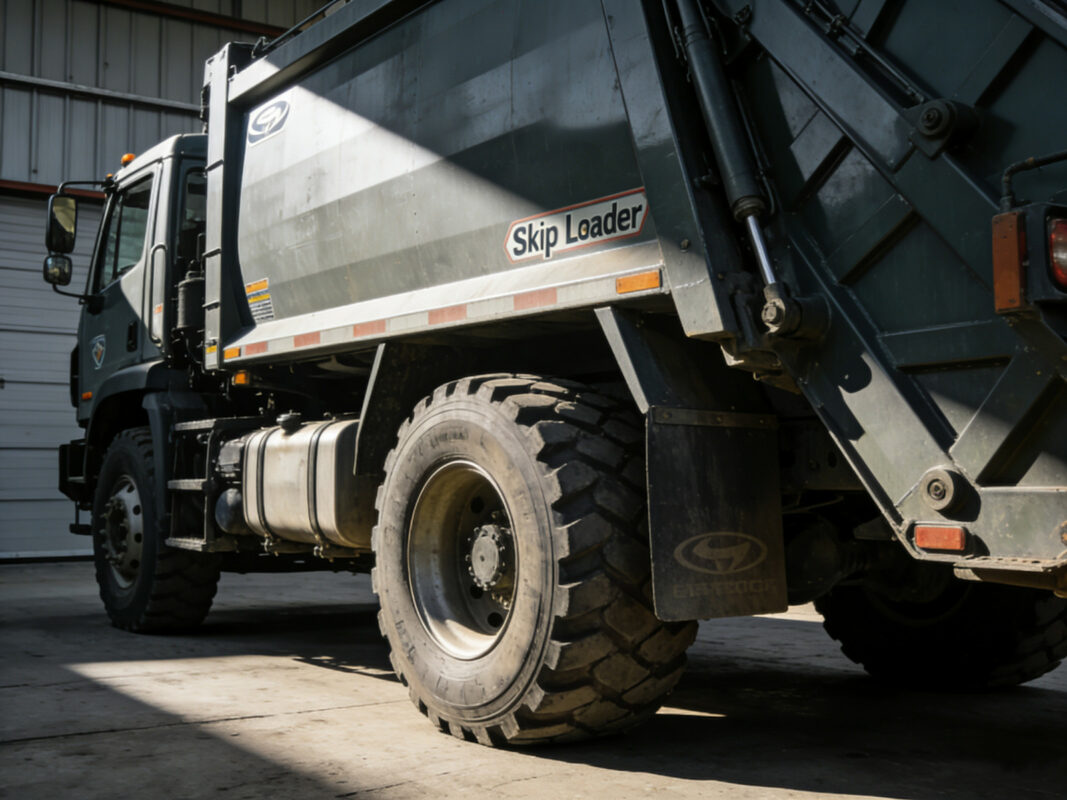
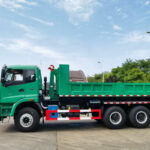
Core Functionality: The skip loader garbage truck utilizes a powerful hydraulic boom arm, typically mounted centrally on the chassis behind the cab, equipped with robust forks or a specialized grabbing mechanism; this arm lifts standardized mobile waste containers – commonly known as skips, bins, or dumpsters – from ground level, pivots them over the truck’s roof, and empties their contents directly into the enclosed hopper body behind the cab.
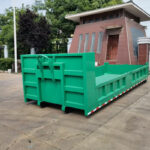
Container Integration: Unlike compactor trucks that integrate compaction within their body, the skip loader relies on pre-filled containers (ranging from 2-yard to 8-yard capacities) strategically placed by residents or businesses; the truck’s role is swift collection and transport of these full containers to transfer stations or landfills, maximizing the efficiency of the pre-collection phase.
The Hopper & Body: Emptied waste falls into a large, open-top hopper; crucially, while some models incorporate basic compaction mechanisms within the hopper to increase payload, the primary function is secure containment during transport rather than high-pressure compaction, resulting in a simpler, lighter overall vehicle structure compared to dedicated compactor garbage trucks.
Operational Versatility: The Defining Advantage in Cityscapes
This seemingly simple mechanism translates into profound operational benefits uniquely suited to urban chaos:
Unmatched Maneuverability & Access: The relatively compact chassis design, often based on a robust single-axle or tandem-axle commercial truck, combined with the central lift mechanism that minimizes rear overhang, grants skip loaders exceptional agility; they navigate narrow streets, tight corners, and congested urban environments with significantly greater ease than long rear loader garbage trucks or large hook loader systems, accessing collection points previously deemed unreachable by traditional refuse collection vehicles, thus expanding service coverage without requiring infrastructure changes.
Multi-Stream Collection Efficiency: A single skip loader garbage truck can seamlessly service multiple waste streams within one route by simply lifting and emptying distinct containers dedicated to different materials (e.g., green for organics, blue for recyclables, black for residual waste); this eliminates the need for separate dedicated collection runs for each stream, drastically reducing fleet mileage, fuel consumption, emissions, and overall operational complexity while simplifying logistics for waste generators who manage multiple bins.
Rapid Container Exchange: The mechanized lift-and-tip cycle is incredibly fast, typically taking less than 60 seconds per container from approach to completion of emptying; this speed minimizes the time the truck blocks traffic lanes or occupies precious curbside space, reducing congestion impact and enhancing overall route productivity by allowing more collection stops per shift compared to slower, attendant-reliant systems.
Bulky & Special Waste Handling: The ability to handle larger open-top skips makes skip loaders inherently suitable for collecting bulky waste (furniture, appliances, renovation debris) and green waste from parks or landscaping, tasks that often overwhelm compactor trucks or require dedicated roll-off services; municipal crews can deploy larger skips for clean-up events or special projects with ease using their existing skip loader fleet.
Economic Efficiency: Reducing Costs Across the Board
The operational advantages of the skip loader directly translate into tangible financial benefits for municipal budgets:
Labor Cost Optimization: The highly mechanized collection process drastically reduces the number of crew members required per truck; typically, a skip loader operates efficiently with just a driver, eliminating the need for one or more loaders required by rear loader garbage trucks, leading to significant long-term savings on salaries, benefits, training, and workers’ compensation premiums associated with manual handling injuries.
Lower Fleet Acquisition & Maintenance: The inherent mechanical simplicity of the skip loader system – lacking complex compactor rams, intricate tailgate seals, and high-pressure hydraulic systems dedicated solely to compaction – generally results in a lower initial purchase price compared to compactor garbage trucks; furthermore, reduced mechanical complexity translates into lower ongoing maintenance costs, fewer failure-prone components, and potentially longer vehicle service life.
Fuel & Operational Savings: Increased route density (more stops per hour), reduced mileage (eliminating separate trips for different streams), and often a lighter unladen weight contribute to lower fuel consumption per ton of waste collected; faster collection times also reduce engine idling time, further cutting fuel costs and associated emissions.
Container-Based Flexibility: The use of standardized, interchangeable containers simplifies operations; damaged containers can be swapped out quickly without taking the truck offline, containers can be strategically pre-placed ahead of collection days, and the system scales easily by adding more containers or adjusting container sizes as neighborhood needs evolve, without necessarily requiring larger or additional trucks immediately.
Durability and Maintenance: Built for the Urban Grind
Engineered for the rigors of constant stop-start operation and container handling:
Robust Construction: Critical components like the boom arms, lift cylinders, and fork mechanisms are constructed from high-strength steel alloys designed to withstand thousands of lifting cycles and the significant torsional stresses encountered when handling heavy, unevenly loaded containers; frame reinforcements are standard to handle dynamic loads.
Simplified Hydraulics: While powerful, the hydraulic system primarily focuses on lifting and tilting motions rather than the intense, repeated compaction forces experienced by compactor garbage trucks, resulting in generally lower hydraulic system stress, reduced risk of leaks, and less frequent component wear requiring replacement, contributing to higher uptime rates.
Easier Access & Serviceability: Key mechanical components like hydraulic cylinders, pivot points, and the hopper area are often more accessible for inspection and servicing than the densely packed rear compartments of compactor garbage trucks, enabling faster routine maintenance checks and repairs, minimizing costly workshop time and keeping trucks operational.
Environmental and Safety Synergies
The skip loader approach aligns well with modern sustainability and safety goals:
Reduced Emissions Profile: Optimized routes, fewer vehicle movements (due to multi-stream collection), lower fuel consumption per ton collected, and reduced idling time all contribute to a smaller carbon footprint and lower criteria pollutant emissions (NOx, PM) compared to less efficient collection methods; this is increasingly critical for municipalities facing stringent air quality regulations and climate action plans.
Containment & Litter Control: The enclosed hopper, combined with the swift dumping action directly over the body, ensures excellent containment of waste during transport, minimizing windblown litter and leakage of liquids compared to open-top roll-offs hauled by hook loader garbage truck systems, leading to cleaner streets and reduced environmental nuisance complaints.
Enhanced Crew Safety: The mechanized lifting significantly reduces the physical demands on workers, eliminating the need for manual bin dragging and lifting, thereby drastically lowering the risk of musculoskeletal injuries (strains, sprains, back injuries) common in manual collection systems; operators primarily work from the safety of the cab during the collection process, minimizing exposure to traffic hazards and potential biohazards present in waste.
Successful integration hinges on thoughtful deployment and complementary infrastructure:
Container Standardization & Placement: Maximizing the skip loader’s efficiency requires widespread adoption of compatible, standardized container sizes and types (typically 2-8 yard wheeled bins or mini-skips); strategic placement agreements ensuring clear access for the truck’s boom arm are crucial – bins must be positioned away from overhead obstructions and parked vehicles with the front facing the street.
Route Optimization & Scheduling: Leveraging specialized routing software that considers truck dimensions, turning radii, bin locations, and traffic patterns is essential to harness the skip loader’s maneuverability advantage fully; efficient scheduling ensures high-density routes that minimize deadhead miles between stops, making the most of the rapid collection cycle.
Transfer Station Integration: As skip loaders are primarily transport vehicles rather than compactors, efficient integration with strategically located transfer stations is vital; these stations allow for the consolidation of waste from multiple skip loader runs into larger trailers or compactor units for economical long-haul transport to distant landfills or processing facilities, completing the logistical chain effectively.
Fleet Mix Strategy: Skip loaders excel in specific urban contexts but aren’t a universal replacement; a balanced municipal fleet might utilize skip loaders for dense urban core collections and multi-stream programs, rear loader garbage trucks for certain curbside bag/can collection in less congested areas, and hook loader garbage truck systems for managing large roll-off containers at construction sites or recycling depots, ensuring the right tool is used for each specific task.
The relentless pulse of the city demands waste solutions that are as dynamic and adaptable as the urban environment itself. The skip loader garbage truck, with its ingenious blend of compact maneuverability, rapid mechanized collection, and inherent versatility in handling diverse waste streams and containerized loads, provides a compelling answer to the complex puzzle of modern urban sanitation. It delivers tangible benefits where municipalities need them most: reduced operational costs through labor savings and lower maintenance, minimized environmental impact via efficient routing and lower emissions, enhanced worker safety, and the flexibility to adapt to evolving waste management strategies like multi-stream recycling and organics diversion. For fleet managers seeking reliability, efficiency, and cost-effectiveness in the demanding urban arena, the skip loader stands as a proven, pragmatic cornerstone technology. Companies continuously refining this platform, like CSCTRUCK Municipal, focus on enhancing durability, operator ergonomics, and connectivity to ensure these agile workhorses remain at the forefront of keeping our densely packed cities clean, sustainable, and livable for the long haul, proving that sometimes the most effective solutions embrace simplicity and precision over brute force.