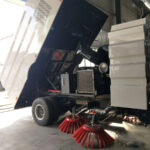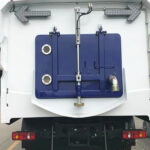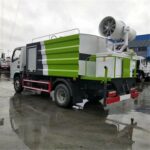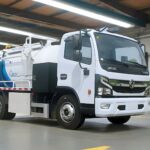
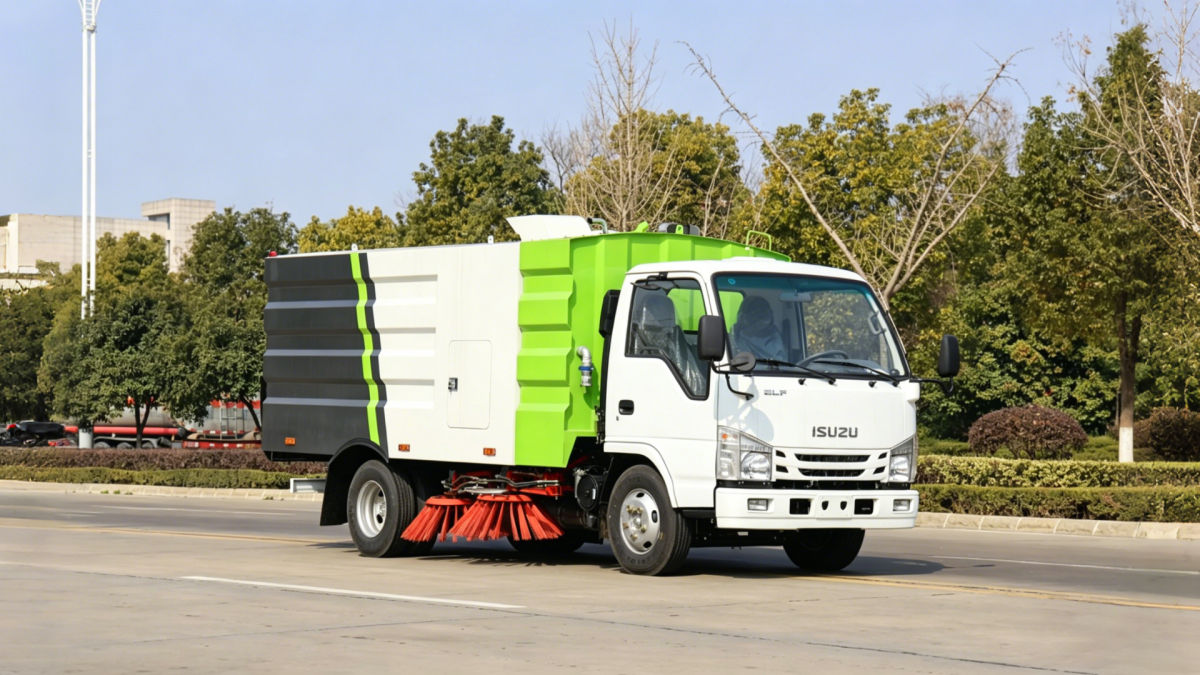
Dust control is one of the most critical functions of a road sweeper truck. Without an effective water spray system, sweeping operations can actually create more airborne dust, reducing visibility and posing health risks.
So how does the water spray system in a road sweeper truck actually work? Let’s break it down in a simple, practical way.
What Is the Purpose of the Water Spray System?
The primary goal of the water spray system is to:
- Suppress dust during sweeping
- Prevent fine particles (PM10, PM2.5) from becoming airborne
- Improve cleaning efficiency
- Enhance operator and public safety
In short, it keeps dust under control while the brushes do the cleaning.
Key Components of the System
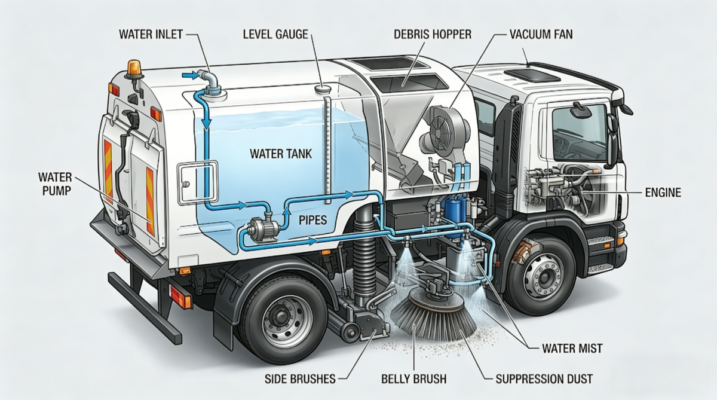
A typical road sweeper truck water spray system includes:
1. Water Tank
Stores clean water used for spraying. Capacity varies depending on truck size and application.
2. Water Pump
Pressurizes the water and delivers it through the system.
3. Spray Nozzles
Installed near key dust-generating points such as:
- Sweeping brushes
- Suction inlet
- Rear discharge area
4. Piping System
Connects the tank, pump, and nozzles, ensuring smooth water flow.
5. Control System
Allows the operator to:
- Turn spraying on/off
- Adjust water flow
- Control spray zones
How the Water Spray System Works (Step by Step)
Step 1: Water Pressurization
The pump draws water from the tank and pressurizes it.
Step 2: Water Distribution
Pressurized water travels through pipes to multiple spray nozzles positioned around the sweeping system.
Step 3: Fine Mist Formation
Nozzles atomize the water into fine droplets, creating a mist around:
- Rotating brushes
- Dust intake areas
This is crucial for effective dust suppression.
Step 4: Dust Capture
The water mist binds with dust particles, making them heavier.
Step 5: Collection and Removal
The heavier particles are then:
- Swept into the suction system
- Collected in the debris hopper
Result: cleaner roads with minimal airborne dust.
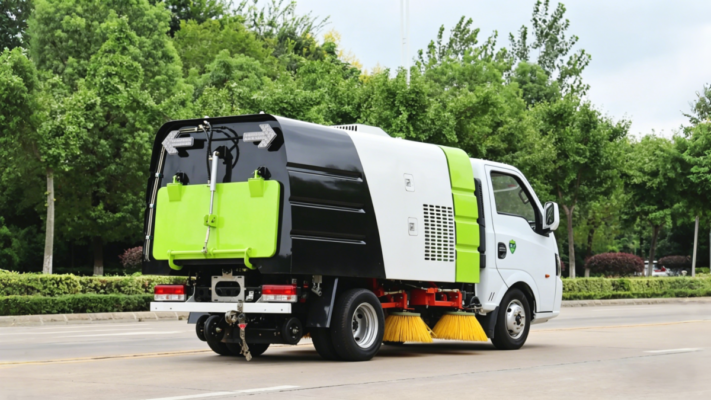
Why Water Spray Matters in Road Sweeping
Without water spraying:
- Dust becomes airborne again
- Cleaning efficiency drops
- Health risks increase
With a proper system:
- Dust suppression improves significantly
- Visibility remains clear
- Environmental impact is reduced
Advanced Features in Modern Systems
Modern road sweeper trucks are equipped with smarter water spray technologies:
Adjustable Spray Control
Operators can control water usage based on dust levels.
Multiple Spray Zones
Different areas can be activated independently for efficiency.
Low-Water Consumption Design
Optimized nozzles reduce water usage while maintaining performance.
Anti-Clogging Nozzles
Prevent blockage caused by impurities in water.
Common Issues and Maintenance Tips
To keep the system working efficiently:
- Use clean or filtered water to avoid nozzle blockage
- Regularly inspect pumps and pipelines
- Check nozzle spray patterns for consistency
- Drain the system in cold weather to prevent freezing
Proper maintenance ensures long-term reliability.
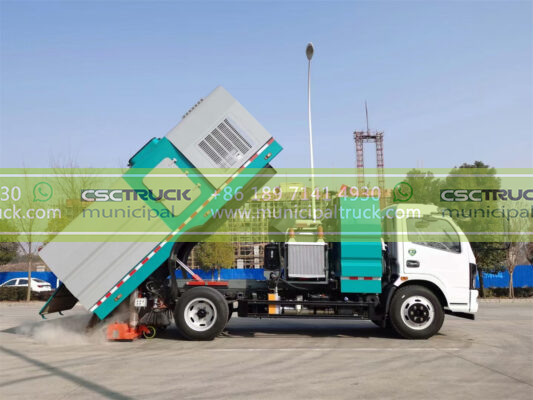
Water Spray System vs Dry Sweeping
| Feature | With Water Spray | Dry Sweeping |
|---|---|---|
| Dust control | Excellent | Poor |
| Air quality | Improved | Degraded |
| Cleaning efficiency | High | Lower |
| Environmental impact | Low | Higher |
Water spray systems are essential for modern urban cleaning standards.
Conclusion
The water spray system is a core component of any road sweeper truck. By combining pressurized water, fine mist technology, and precise nozzle placement, it effectively controls dust and enhances overall cleaning performance.
For municipalities, contractors, and facility operators, choosing a sweeper truck with a well-designed water spray system is key to achieving cleaner, safer, and more sustainable road maintenance.
Looking for Advanced Road Sweeper Trucks?
If you need reliable road cleaning solutions with efficient dust suppression systems, investing in a high-quality road sweeper truck is the right choice.
CSCTRUCK Municipal provides a wide range of road sweeper trucks and offers customized solutions tailored to different industries and operational needs.