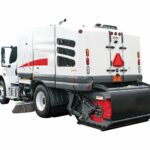
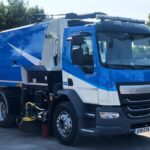
Built to Last & Fully Tailored: Top-tier garbage, sweeper and sewer trucks crafted for unrivaled durability. A trusted choice for municipal governments across the globe.
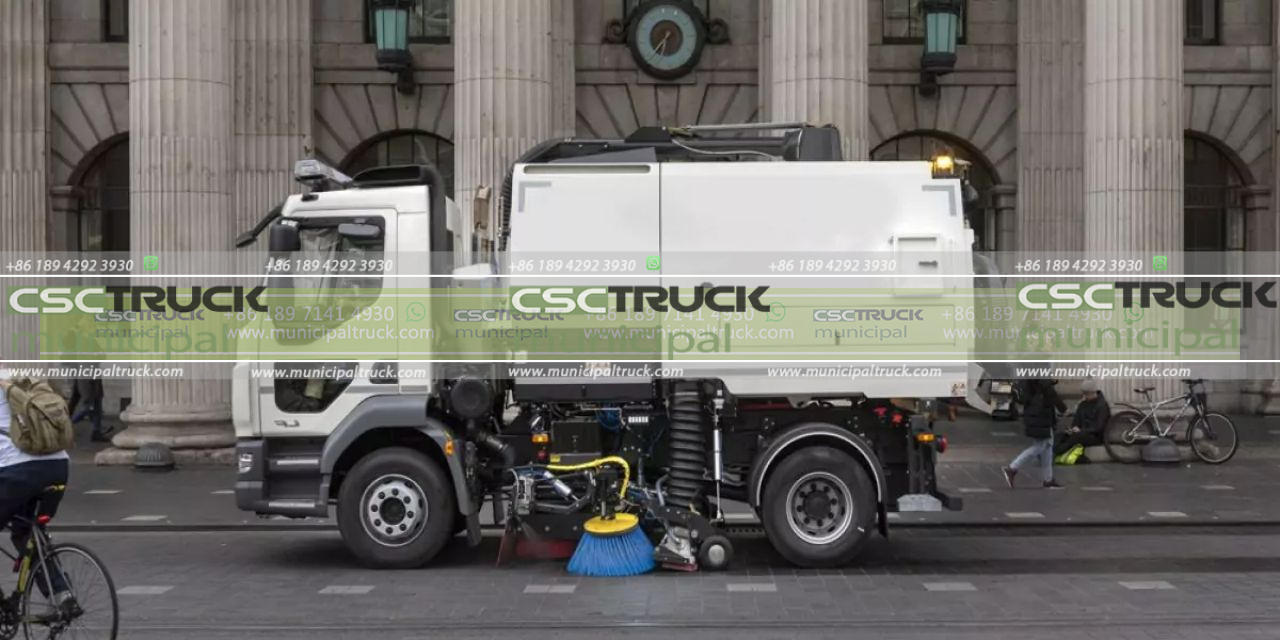
In the vast, sun-baked expanses of the world’s dry climate regions – from sprawling desert metropolises to drought-stricken agricultural towns – maintaining clean streets presents a unique and critical challenge. Traditional street sweeping, heavily reliant on vast quantities of water for dust suppression, becomes an unsustainable luxury, even an environmental paradox, in areas where every drop is precious. Enter the technologically advanced solution: waterless sweeper trucks. These specialized machines represent a fundamental shift in municipal and industrial cleaning, offering uncompromised performance while conserving vital water resources, making them not just a practical choice, but an essential component of sustainable infrastructure management in arid environments.
1. The Imperative for Waterless Technology in Arid Zones
The inherent limitations of conventional sweepers become starkly evident under the relentless sun and low humidity characteristic of dry climates.
Water Scarcity as a Governing Factor: Utilizing hundreds, even thousands, of gallons of potable water per day for dust control is simply untenable in regions facing persistent drought, depleted aquifers, and strict water rationing. Waterless sweeper trucks eliminate this massive draw on the municipal water supply, aligning cleaning operations with critical conservation mandates.
The Exacerbated Dust Menace: Dry, loose soil and sand, combined with high winds, create pervasive dust clouds. This isn’t merely unsightly; it poses significant public health risks (respiratory issues like asthma and silicosis), reduces visibility (traffic hazards), damages machinery and electronics, and impacts overall quality of life. Effective suppression without water is paramount.
Environmental Responsibility: Diverting scarce water for sweeping, only to have it quickly evaporate or become contaminated with street debris, is ecologically inefficient. Waterless technology embodies a proactive approach to environmental stewardship within these fragile ecosystems, minimizing resource consumption and avoiding potential runoff contamination associated with water-based sweeping sludge.
2. Decoding the Mechanics: How Waterless Sweepers Conquer Dust
The core innovation lies in replacing water-based dust suppression with highly efficient mechanical and pneumatic systems designed for maximum particle capture.
Advanced Dry Filtration Systems
Multi-Stage Air Filtration: The heart of the system. Powerful suction generated by high-volume fans draws debris-laden air into the sweeper. This air passes through a sophisticated cascade of filters – typically starting with primary cyclone separators for larger particles, then moving through dense primary filter bags capturing medium grit, and culminating in ultra-fine secondary HEPA or cartridge filters capable of trapping PM10 and even PM2.5 particulates, the most hazardous airborne dust.
Continuous Filtration Maintenance: Key to sustained performance. Sophisticated automatic filter cleaning mechanisms (such as reverse-pulse air jets or mechanical shakers) constantly dislodge accumulated dust from filter media during operation, preventing clogging and maintaining optimal suction power and filtration efficiency throughout the shift.
Optimized Mechanical Collection
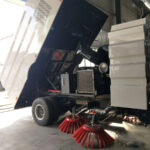
Precision Brush Systems: Robust, often segmented, main and gutter brooms, engineered with specific bristle materials and angles, effectively dislodge debris from various pavement surfaces without needing water for lubrication or dust binding. Their design ensures maximum debris roll-up into the suction path.
High-Vacuum Debris Conveyance: The powerful airflow created by the fan doesn’t just filter dust; it actively transports dislodged debris (leaves, sand, gravel, litter) from the brooms into the enclosed hopper via a large suction mouth. This debris conveyance is rapid and efficient, minimizing the opportunity for dust to escape.
3. Compelling Advantages Driving Adoption
The shift to waterless sweeper trucks delivers a cascade of benefits beyond mere water savings, fundamentally transforming street cleaning economics and effectiveness in dry climates.
Zero Water Consumption: The most profound benefit, directly addressing the core challenge. Eliminating water use aligns perfectly with conservation goals and stringent water restrictions, freeing up resources for essential human and agricultural needs.
Superior Dust Control & Air Quality: Advanced filtration systems capture significantly higher percentages of fine, respirable dust particles compared to water sweepers, which often simply “wet” dust temporarily, allowing it to become airborne again once dry. This leads to measurably improved ambient air quality.
Enhanced Operational Flexibility & Reduced Downtime: Freedom from water tank fills and avoiding restrictions on sweeping during drought-related water bans extends operational windows. There’s no waiting for water trucks or dealing with frozen water lines in colder desert nights.
Reduced Operating Costs: Savings accrue from eliminating water procurement costs, reduced wear on water pumps and spray nozzles, and simplified logistics. Dry hopper contents are often lighter and cheaper to dispose of in landfills compared to wet sludge.
Year-Round Deployment: Unlike water-based sweepers that can be immobilized by freezing temperatures, waterless sweepers operate effectively in all weather conditions typical of dry climates, including cold desert winters.
4. Optimal Deployment Scenarios for Maximum Impact
Waterless sweeper trucks excel in diverse settings within arid regions, becoming indispensable assets:
Municipal Street Maintenance: The primary application. Ideal for daily or weekly sweeping cycles in urban centers, suburban neighborhoods, and around critical infrastructure like airports, hospitals, and schools to maintain cleanliness and meet air quality standards.
Construction Site Perimeter Control: Essential for managing the intense dust generated by construction activities in dry areas, preventing sediment runoff onto public roads and minimizing dust migration to adjacent properties, ensuring regulatory compliance.
Industrial Facilities & Logistics Yards: Crucial for keeping large paved areas (manufacturing plants, warehouses, ports) free of dust and debris that can contaminate products, damage equipment, and create hazardous working conditions. Their independence from site water supply is a major advantage.
Mining & Resource Extraction Operations: Vital for controlling dust on haul roads, around processing plants, and on access roads within mines located in deserts or other dry landscapes, protecting worker health and reducing environmental impact.
Parks, Pathways, and Sensitive Areas: Useful for cleaning pedestrian zones, bicycle paths, and areas near sensitive habitats where introducing water runoff might be undesirable.
5. Selecting the Right Waterless Sweeper: Key Considerations
Choosing the optimal unit requires careful assessment of specific operational demands:
Performance & Capacity Parameters
Vacuum Power & Airflow Volume (CFM): Directly impacts dust capture efficiency and the size/weight of debris that can be lifted. Higher CFM is essential for fine dust control and heavier materials.
Filtration Efficiency: Verify the system’s ability to capture PM10 and PM2.5 particulates. Look for multi-stage systems with certified HEPA or equivalent high-efficiency final filters and robust automatic cleaning mechanisms.
Hopper Capacity: Determines operational range between dumping cycles. Match capacity to route length and expected debris volume.
Broom Configuration & Reach: Consider broom width, adjustability, and type (side broom, main broom) needed for target surfaces (curbs, wide avenues, uneven pavement).
Operational & Practical Factors
Chassis Size & Maneuverability: Truck size (Class 5 to 8) impacts accessibility in tight urban streets versus the capacity needed for large industrial sites or long highway runs. Cab-over-engine designs often offer better visibility and maneuverability.
Dust Emission Certification: Ensure the unit meets relevant local or international standards for dust emissions control (e.g., US EPA regulations, European CEN standards).
Maintenance Accessibility & Cost: Evaluate the ease of accessing filters, brooms, and hydraulic systems for servicing. Consider parts availability and service support from the manufacturer or dealer.
6. The Future Horizon: Innovation and Integration
The evolution of waterless sweeper trucks continues, driven by demands for even greater efficiency, autonomy, and environmental integration:
Enhanced Filtration Intelligence: Development of sensor-based systems that monitor filter condition and airflow in real-time, triggering cleaning cycles only when needed for optimal efficiency and extending filter life, potentially integrating AI for predictive maintenance.
Electrification & Alternative Powertrains: The transition to battery-electric and potentially hydrogen fuel cell powertrains is accelerating. Electric waterless sweepers offer zero tailpipe emissions, significantly reduced noise pollution (crucial for nighttime urban sweeping), and lower operating costs, further enhancing sustainability beyond water savings.
Autonomous & Semi-Autonomous Operation: Advancements in GPS, LiDAR, and AI are paving the way for self-driving or operator-assisted sweepers, capable of precise, repeatable routes, particularly useful for large, structured environments like terminals or industrial parks, improving consistency and potentially reducing labor costs.
Integrated Fleet Management Systems: Telematics and IoT connectivity provide real-time data on sweeper location, performance metrics (filter status, hopper load, fuel/battery level), and maintenance needs, optimizing fleet deployment, scheduling, and resource allocation for municipalities and large contractors.
Synergy with Complementary Municipal Assets: The efficiency of a waterless sweeper truck fleet is amplified when integrated within a broader municipal equipment strategy. Coordinating sweeping schedules with garbage truck collection routes optimizes street cleanliness. Understanding the distinct roles of specialized vehicles – from waterless sweepers tackling surface debris and dust, to sewage trucks managing wastewater infrastructure, to refuse collection – is key to a cohesive and effective public works operation.
For municipalities, contractors, and industrial operators navigating the unique demands of arid regions, procuring the right cleaning technology is critical. Platforms like Municipaltruck.com provide invaluable access to a comprehensive range of cutting-edge waterless sweeper trucks, alongside other essential equipment like advanced garbage trucks and robust sewage trucks, offering tailored solutions that ensure communities and facilities remain clean, compliant, sustainably managed, and resilient in the face of water scarcity.