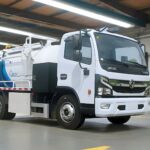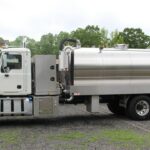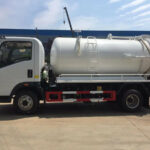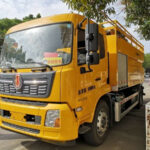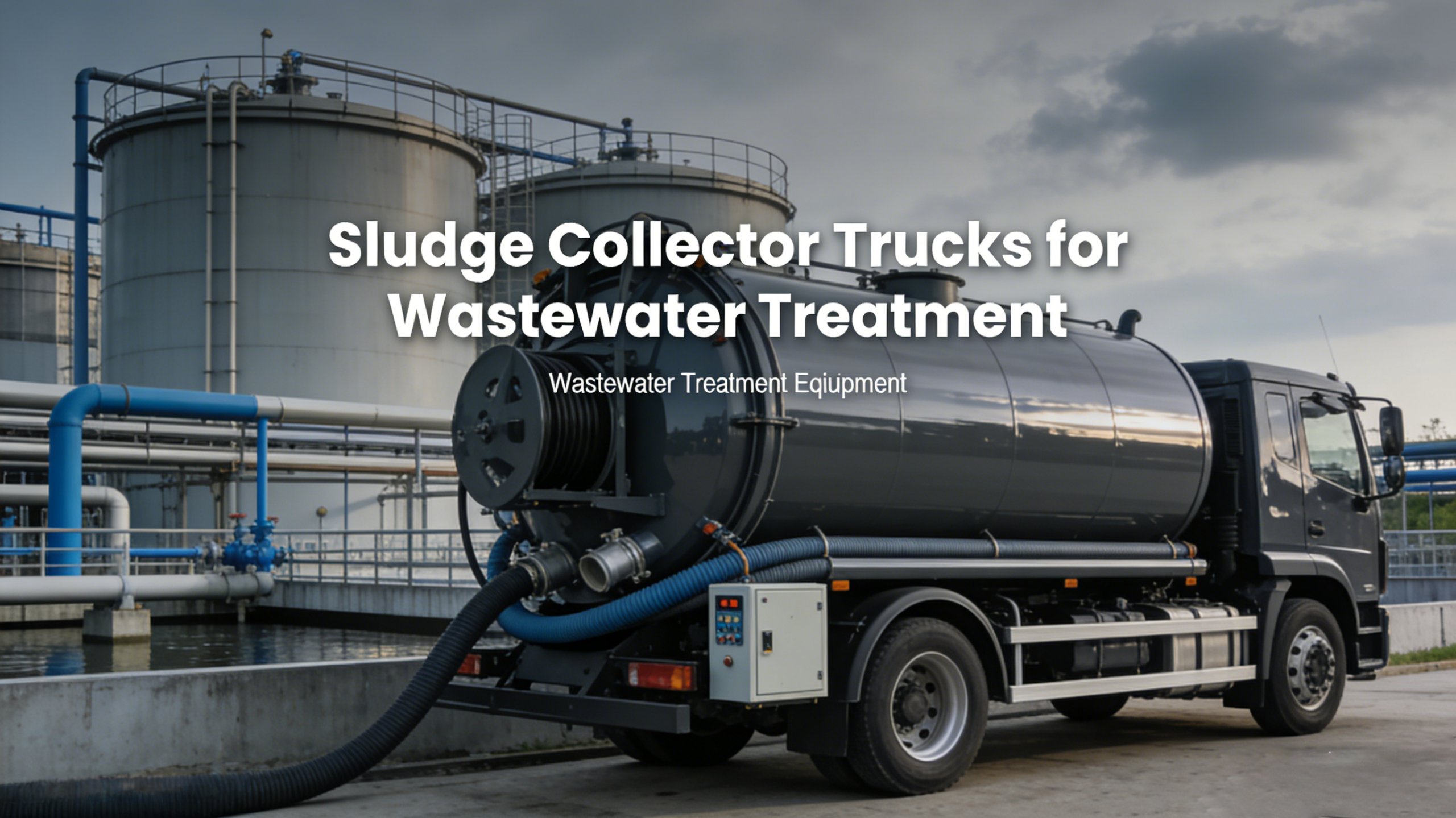
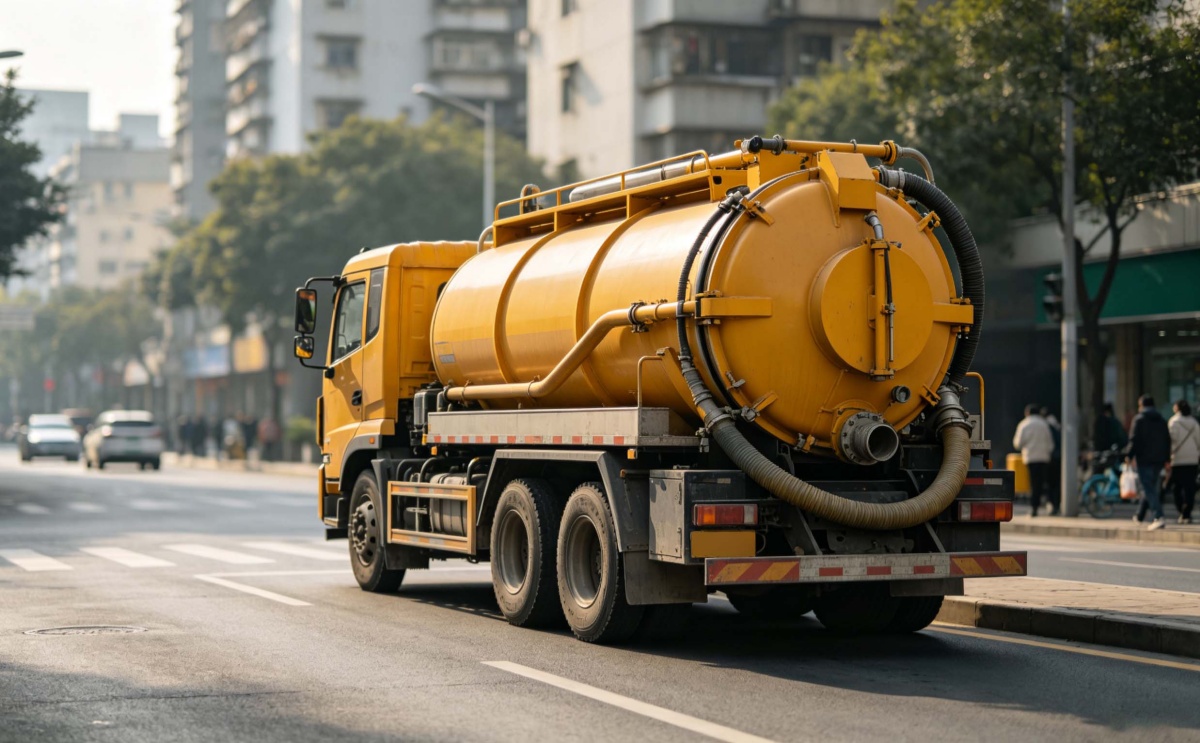
The vacuum sewage truck is a specialized sanitation vehicle designed for the collection, transportation, and discharge of liquid waste through a powerful negative-pressure suction system. It is widely used in municipal sanitation, industrial waste management, septic tank cleaning, and wastewater treatment applications.
Depending on different regions and industries, this type of vehicle is also known as a sewage suction truck, vacuum tanker truck, fecal suction truck, or waste suction truck.
Although its appearance looks similar to a standard tanker vehicle, the real value of a vacuum sewage truck lies in its integrated vacuum generation system, storage system, and control system, which work together to achieve efficient waste collection.
What Is a Vacuum Sewage Truck?
The vacuum sewage truck is a vehicle equipped with a sealed vacuum tank and a high-performance vacuum pump. By creating a pressure difference between the inside of the tank and the external environment, the truck generates suction force to extract sewage, sludge, and other liquid waste.
Unlike ordinary pumping equipment, the truck combines:
- Vacuum suction technology
- Waste storage capability
- Transportation functions
- Automatic discharge operations
This makes it an all-in-one solution for handling various liquid waste materials.
Common Applications:
- Municipal sewage cleaning
- Septic tank maintenance
- Drainage pipeline cleaning
- Industrial wastewater collection
- Sludge transportation
- Emergency pollution control
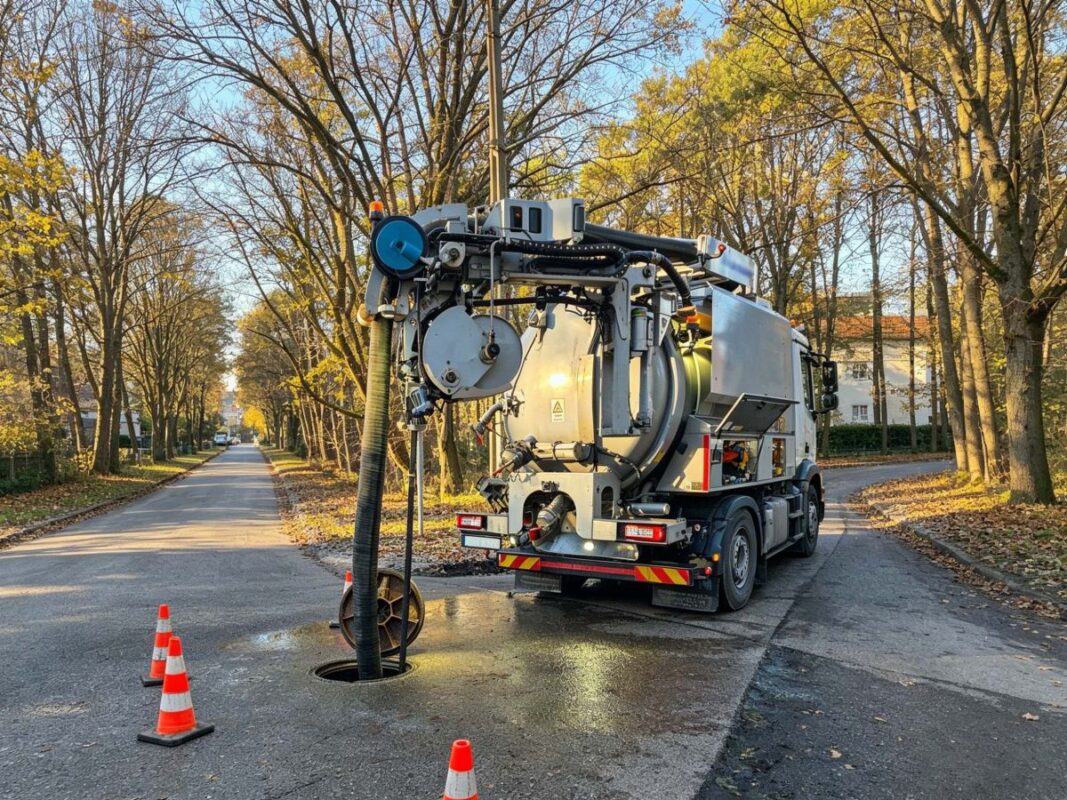
The Core Principle: How Negative Pressure Creates Suction
The working principle of a vacuum sewage truck is based on negative pressure technology.
When the vacuum pump operates, it removes air from the sealed tank, reducing the internal pressure. The atmospheric pressure outside the tank then pushes sewage through the suction hose into the tank.
The process can be summarized as:
Vacuum Pump Creates Negative Pressure → Pressure Difference Forms → Waste Is Suctioned Into Tank
The stronger and more stable the vacuum level, the higher the suction efficiency.
Complete Working Process of a Vacuum Sewage Truck
The operation of a vacuum sewage truck usually includes four main stages:
Step 1: Vacuum Generation
The power take-off (PTO) transfers engine power to the vacuum pump.
The pump starts extracting air from the tank, creating a vacuum environment.
Step 2: Waste Suction
The operator connects the suction hose to the sewage source.
Due to the pressure difference, liquid waste enters the tank through the pipeline system.
Step 3: Separation and Protection
During suction, mixed materials such as gas, water droplets, and impurities enter the system.
The water-gas separator separates liquid and air to prevent liquid from entering the vacuum pump.
The oil-gas separator helps maintain lubrication efficiency and protects the pump system.
Step 4: Discharge Operation
When the tank reaches capacity, the operator switches the valve system.
The four-way valve changes airflow direction, allowing the system to release pressure or create positive pressure for unloading.
The collected waste is then discharged safely.
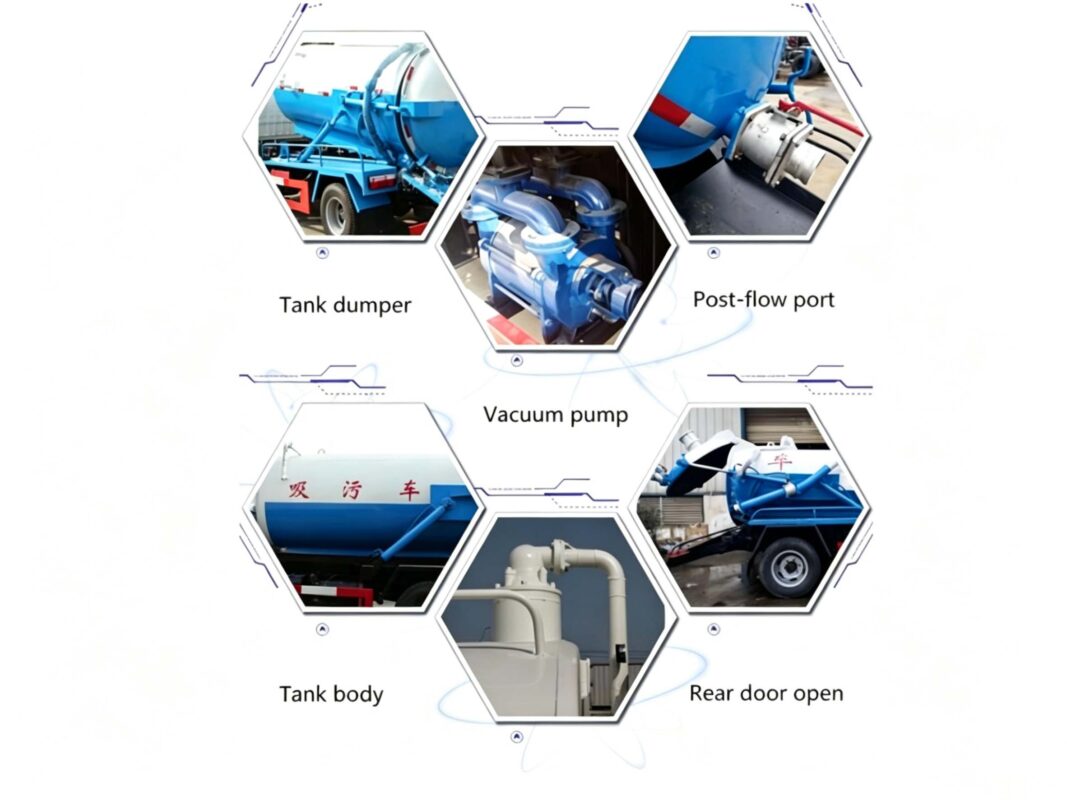
Main Components of a Vacuum Sewage Truck
A modern vacuum sewage truck system is composed of several key components.
1. Vacuum Pump
The vacuum pump is the heart of the entire system.
Its main functions include:
- Creating negative pressure
- Maintaining vacuum stability
- Providing continuous suction power
Common types include:
- Rotary vane vacuum pumps
- Water ring vacuum pumps
- Oil-sealed vacuum pumps
A high-quality pump directly affects suction speed and working efficiency.
2. Vacuum Tank
The vacuum tank is a sealed container used for storing collected waste.
Its design must consider:
- Pressure resistance
- Corrosion protection
- Safety performance
- Capacity requirements
Many tanks use reinforced steel structures with anti-corrosion coatings for long-term operation.
3. Water-Gas Separator
The water-gas separator protects the vacuum pump by separating liquid particles from the airflow.
Its purpose:
- Prevent sewage from entering the pump
- Improve equipment lifespan
- Maintain stable vacuum performance

4. Oil-Gas Separator
The oil-gas separator manages oil mist and airflow generated during pump operation.
It helps:
- Reduce oil consumption
- Improve lubrication efficiency
- Keep the vacuum system cleaner
5. Four-Way Valve
The four-way valve controls the direction of airflow.
It enables two major functions:
- Vacuum suction mode
- Pressure discharge mode
By switching the airflow path, operators can easily control loading and unloading processes.
6. Power Take-Off (PTO)
The power take-off (PTO) connects the vehicle engine with the working system.
It transfers mechanical power from the truck engine to components such as:
- Vacuum pump
- Hydraulic system
- Auxiliary equipment
A reliable PTO system ensures smooth operation.

System Integration: How All Components Work Together
A successful vacuum sewage truck system is not simply a combination of individual parts. It requires precise integration between mechanical, hydraulic, and control systems.
The complete workflow is:
Engine → PTO → Vacuum Pump → Vacuum Tank → Separation System → Valve Control → Suction/Discharge Operation
Good system integration improves:
- Suction efficiency
- Safety performance
- Equipment durability
- Maintenance convenience
Advantages of Modern Vacuum Sewage Truck Technology
With the continuous development of sanitation technology, modern vacuum sewage trucks provide several advantages:
Higher Efficiency
Advanced vacuum pumps create stronger suction and reduce operation time.
Better Safety
Improved separation systems protect operators and equipment.
Lower Maintenance Cost
Optimized components extend service life.
Wider Application Range
They can handle:
- Liquid sewage
- Sludge
- Industrial waste
- High-density wastewater
Conclusion: The Future of Vacuum Sewage Truck Technology
A vacuum sewage truck is more than a waste transportation vehicle. It is a highly integrated engineering system combining negative pressure technology, vacuum equipment, and intelligent control components.
Understanding the working principles of the vacuum pump, tank system, water-gas separator, oil-gas separator, four-way valve, and PTO system helps users choose better equipment and improve operational efficiency.
As environmental requirements continue to increase, advanced vacuum sewage truck technology will play an increasingly important role in modern sanitation and industrial waste management.