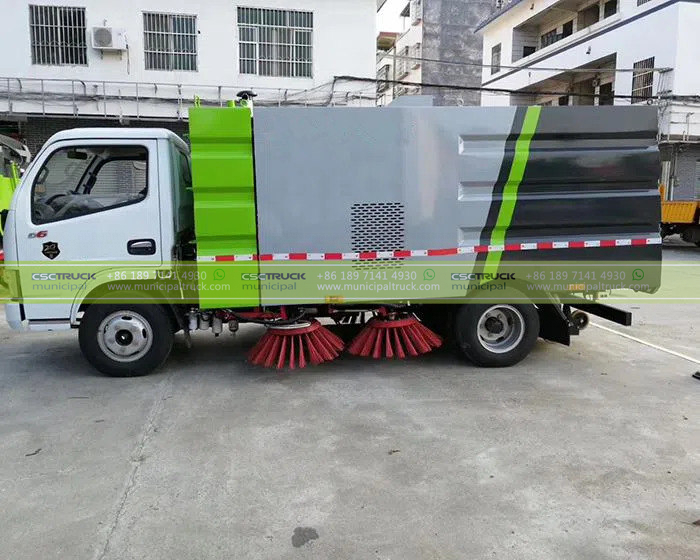
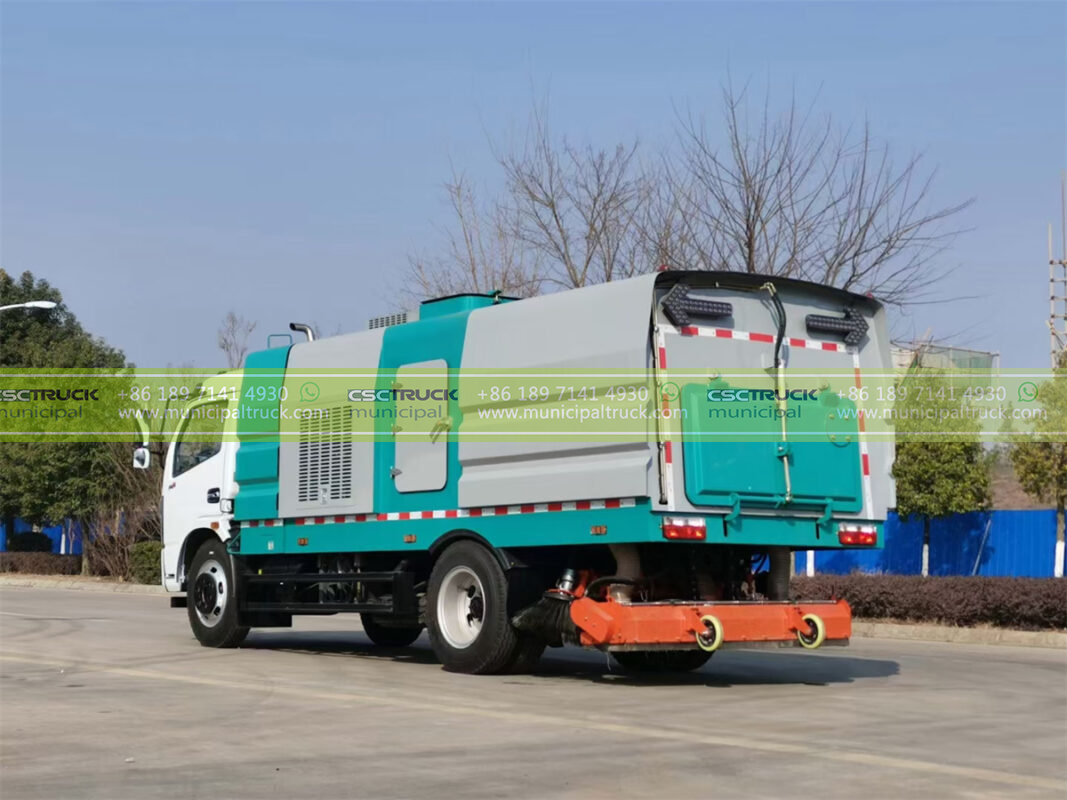
As global infrastructure demands grow, highway maintenance has evolved beyond traditional road sweeping to encompass comprehensive right-of-way cleaning—a task where specialized fence sweeper trucks have become indispensable. These advanced machines combine precision engineering with high-capacity debris management to maintain safety corridors along highways, ensuring unobstructed visibility, reduced fire hazards, and preserved ecological balance. Unlike conventional sweeper trucks designed for urban roads, fence sweepers tackle the unique challenges of highway margins, from accumulated windblown trash to vegetation overgrowth. This article explores their technological innovations, operational benefits, and transformative impact on modern infrastructure upkeep.
1. The Engineering Marvel Behind Fence Sweeper Trucks
Modern fence sweeper trucks represent a fusion of rugged durability and intelligent design, tailored specifically for highway environments. Their architecture addresses three core challenges: variable terrain, mixed debris types, and extended operational cycles.
Core Components and Innovations
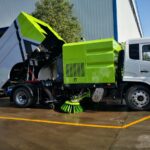
- Multi-Arm Brush Systems: Rotating brushes with adjustable pressure settings handle everything from fine gravel to tangled vegetation along fence lines.
- High-Vacuum Debris Collection: 8000Pa suction systems capture lightweight litter before it disperses into traffic lanes.
- Terrain-Adaptive Suspension: Hydraulic leveling maintains optimal brush contact on sloped shoulders or uneven ground.
Manufacturers like Municipaltruck.com integrate these features with CAN-Bus diagnostics, allowing real-time performance monitoring and predictive maintenance—a critical advantage for fleets servicing thousands of highway miles annually.
2. Operational Advantages Over Traditional Methods
Replacing manual crews and tractor-mounted sweepers, dedicated fence sweeper trucks deliver measurable improvements in efficiency, safety, and cost-effectiveness for transportation agencies.
Quantifiable Benefits for Highway Authorities
- Labor Reduction: A single truck replaces 12-15 manual workers, slashing labor costs by 60% in documented cases like Germany’s Autobahn network.
- Speed Optimization: Operating at 15-25 km/h, these trucks clean 30-50 lane-kilometers per shift—three times faster than conventional methods.
- All-Weather Capability: Enclosed cabins and all-wheel drive enable operation during light rain or dusty conditions that would halt manual efforts.
The trucks’ integrated water misting systems also suppress dust during operation, addressing a persistent air quality concern near high-traffic corridors.
3. Specialized Applications in Highway Ecosystems
The versatility of fence sweeper trucks extends beyond litter collection, playing pivotal roles in broader highway maintenance strategies.
Vegetation Management
- Undergrowth Control: Side-mounted flail mowers trim invasive plants encroaching on fences, reducing fire risks in drought-prone regions.
- Seed Dispersal: Some models feature seed banks for revegetation projects along eroded embankments.
Emergency Response
- Post-Accident Cleanup: Powerful suction clears shattered glass and vehicle debris from crash sites faster than manual methods.
- Storm Debris Removal: Modified buckets handle fallen branches after extreme weather events.
These multifunctional capabilities justify their higher upfront costs through long-term operational savings.
4. Sustainability and Environmental Stewardship
As governments prioritize eco-friendly infrastructure, fence sweeper trucks incorporate groundbreaking sustainability features.
- Electric Hybrid Models: Lithium-ion battery systems power auxiliary functions, cutting diesel consumption by 40% in trials along California’s I-5.
- Waste Sorting Systems: Onboard separators segregate recyclables (plastics, metals) from organic waste, diverting 65% of collected material from landfills.
- Noise Reduction: 72 dB operational volume (versus 85+ dB for traditional sweepers) minimizes disturbance to wildlife habitats.
The trucks’ closed-loop water filtration also prevents contaminated runoff—a critical consideration near watersheds.
5. Global Adoption and Case Study Highlights
Highway agencies worldwide are recognizing the value of dedicated fence sweeping units, with notable deployments demonstrating their impact.
Success Stories
- Australia’s M1 Motorway: Reduced roadside fires by 75% after introducing fence sweepers with thermal cameras to detect smoldering debris.
- Texas DOT’s I-35 Initiative: Cut litter-related maintenance costs by $2.3 million annually through scheduled robotic sweeper patrols.
- EU Cross-Border Fleets: Standardized models from Municipaltruck.com now service highways from Portugal to Poland with interchangeable attachments.
These examples underscore the trucks’ adaptability to diverse geographic and regulatory environments.
6. The Future of Corridor Maintenance Technology
The next generation of fence sweeper trucks will leverage AI and automation to further transform highway upkeep. Emerging developments include:
- Autonomous Convoys: GPS-guided platoons operating overnight to minimize traffic disruptions.
- Drone-Assisted Inspection: UAVs identifying debris hotspots for targeted cleaning.
- Modular Design: Swappable modules converting units into sewage trucks for drain maintenance during wet seasons.
As Municipaltruck.com and other innovators refine these technologies, the line between sweeper trucks and multi-purpose municipal assets will continue to blur—ushering in an era where highways maintain themselves with minimal human intervention. The hum of their engines along the guardrails isn’t just cleaning; it’s redefining the standards of public infrastructure stewardship.