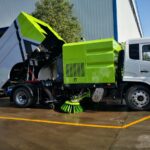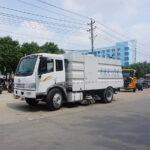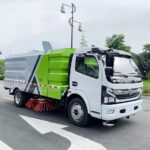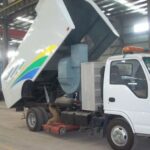
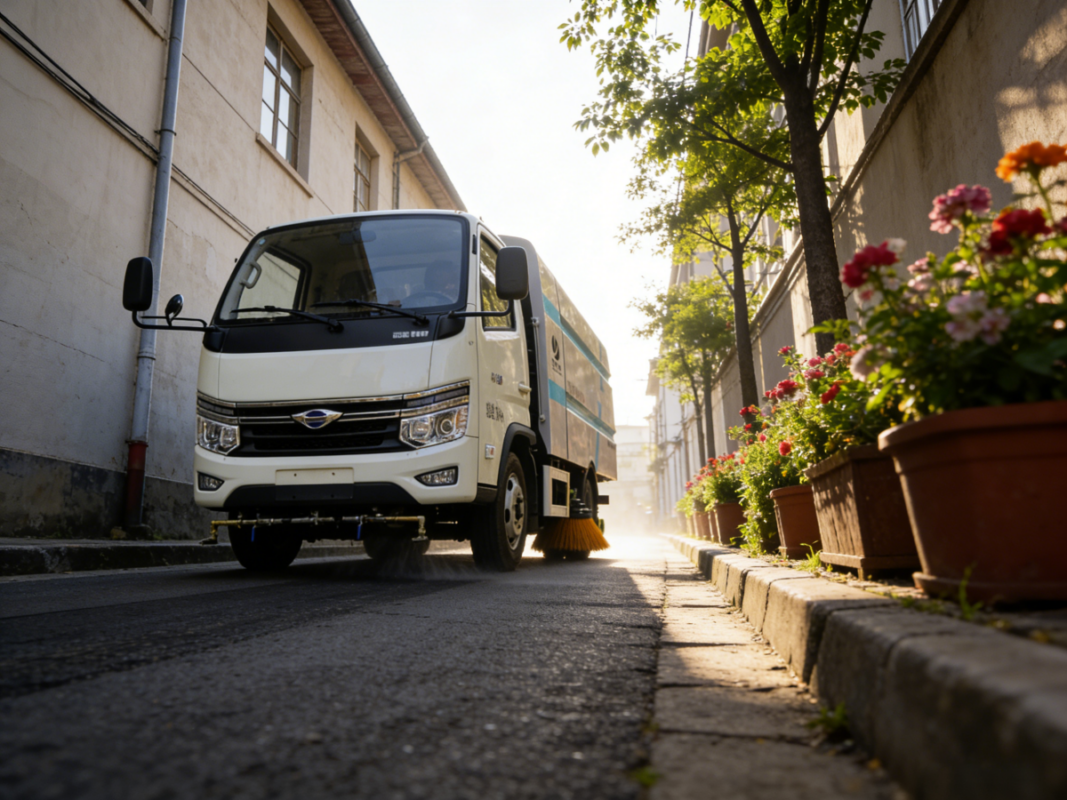
As cities around the world continue to grow and densify, public works departments face an increasingly difficult challenge: maintaining cleanliness in confined spaces where traditional equipment cannot operate. The wide boulevards and arterial roads that large sweepers handle with ease tell only part of the story of urban cleanliness. The true test lies in the narrow lanes of historic city centers, the congested residential neighborhoods, and the tight alleyways that define a city’s character.
A compact sweeper truck is the purpose-built solution to this specific problem. These agile machines are engineered from the ground up to navigate tight spaces while delivering powerful cleaning performance. This comprehensive guide explores everything you need to know about compact sweeper trucks for narrow streets—from their core features and benefits to selection strategies and future trends.
Why Traditional Sweepers Fail in Narrow Streets
Understanding the need for compact sweepers requires first understanding why conventional machines fall short in dense urban environments.
1. The Turning Radius Challenge
Large, truck-mounted sweepers have wide turning radii similar to those of any other heavy truck. This makes navigating the sharp 90-degree corners common in older city districts and dense residential areas extremely difficult, if not impossible. Attempting such turns often requires multi-point maneuvers that are time-consuming, disruptive to traffic, and potentially dangerous.
The result is that many narrow streets and cul-de-sacs become effectively inaccessible, creating an inconsistent standard of cleanliness across the city, where main roads are clean but smaller side streets are neglected.
2. Physical Size Limitations
Beyond the turning radius, the sheer dimensions of large sweepers present major barriers. Many historic lanes and older residential streets simply aren’t wide enough to accommodate a large truck, especially with cars parked on one or both sides. Forcing a large machine into these spaces risks damage to the sweeper, parked vehicles, and private property.
Height also becomes problematic. Low-hanging tree branches, old bridges with limited clearance, and building overhangs can render entire streets impassable for tall machines, creating permanent “no-go zones” for traditional sweeper fleets.
3. Weight and Surface Sensitivity
Fully loaded with water and debris, a large sweeper weighs many tons. This immense weight can damage delicate or historic pavement surfaces—cobblestones, bricks, and decorative paving stones that give historic districts their character. The ground pressure may also exceed weight limits for older bridges or streets built over underground utilities and structures.
4. The Manual Labor Alternative
The traditional alternative to machines that don’t fit is manual labor. But sweeping by hand is extremely inefficient and costly. The cost per mile for manual cleaning is many times higher than mechanical sweeping. More importantly, manual sweeping cannot remove fine, hazardous dust and particulate matter—only mechanical sweepers with powerful vacuums and dust suppression systems provide a deep, hygienic clean.
Core Features of Compact Sweeper Trucks
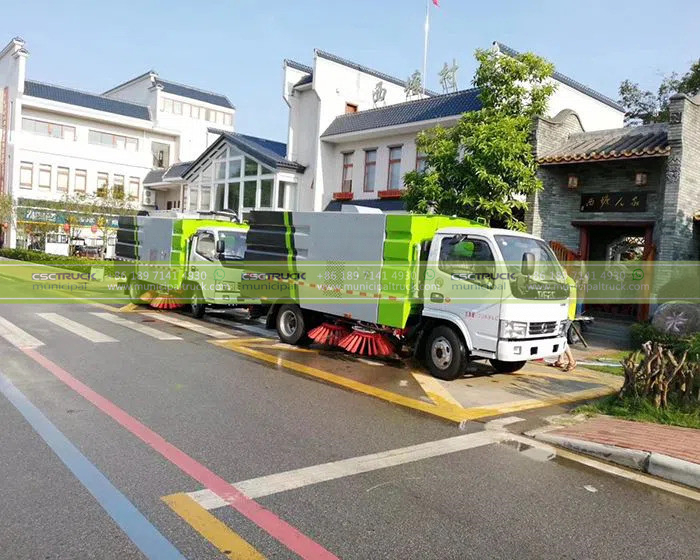
A compact sweeper is not simply a scaled-down version of a larger machine. It represents a distinct class of equipment with specialized engineering optimized for confined spaces.
1. Articulated Steering for Unmatched Agility
The defining feature of many compact sweepers is articulated steering. The machine’s frame hinges in the middle between the front and rear axles. When the operator turns, the entire machine pivots at this central point, creating an exceptionally small turning circle. This allows compact sweepers to navigate sharp corners in a single smooth motion and maneuver precisely around obstacles like parked cars and street furniture.
2. Minimal Physical Footprint
Compact sweepers are engineered with the narrowest possible width and lowest overall height for their capacity class. This small footprint allows them to pass comfortably down lanes that would be tight even for passenger vehicles. Some models measure as narrow as 1.5 meters wide, enabling access to alleyways and pedestrian paths that larger sweepers cannot enter.
3. Balanced Capacity for Urban Routes
While compact in size, these machines are not light-duty toys. Engineers carefully balance small footprints with practical debris hopper capacity. A typical compact sweeper can operate for several hours on a dense urban route before requiring disposal, with hopper capacities ranging from 0.1 to 1.5 cubic meters depending on the model.
4. Powerful Cleaning Systems
A common misconception is that compact size means compromised cleaning performance. High-quality compact sweepers feature robust brush systems and powerful vacuums capable of handling typical urban debris—from light litter and leaves to heavier sand and grit. Cleaning widths typically range from 1.0 to 3.0 meters, allowing operators to match coverage to their specific environment.
5. Advanced Dust Suppression
Many compact sweepers integrate water spray systems that control airborne dust during operation. This not only improves air quality for nearby residents and pedestrians but also enhances operator comfort and visibility. Some models feature 120-liter to 300-liter water tanks dedicated to dust control.
6. Intelligent Control Systems
Modern compact sweepers increasingly incorporate smart technology. Features like proportional hydraulic controls allow precise operation, while some electric models offer IoT connectivity for real-time GPS tracking, route playback, performance monitoring, and fleet management.
Key Applications for Compact Sweeper Trucks
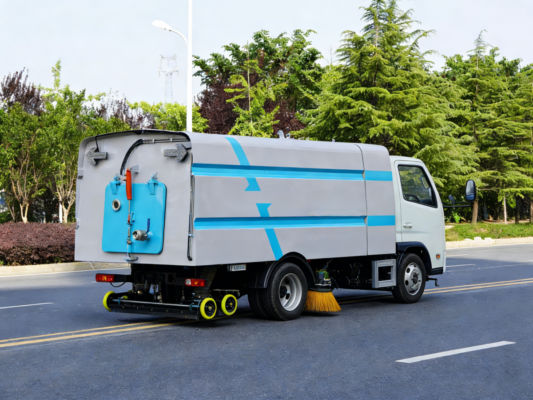
The versatility of compact sweepers makes them valuable across a wide range of urban and commercial environments.
1. Historic City Centers and Old Towns
Historic districts with narrow, winding, cobblestoned streets are cultural treasures—but cleaning challenges. Compact sweepers are often the only machines that can effectively and safely clean these delicate spaces. Their low weight protects historic pavement, while agile handling navigates ancient street layouts.
2. Dense Residential Neighborhoods
Many older residential neighborhoods were built with streets much narrower than today’s standards. Often lined with parked cars on both sides, these areas require the slim profile and maneuverability of compact sweepers to provide regular, high-quality cleaning service.
3. Pedestrianized and Shared Spaces
Compact sweepers excel in “shared spaces” where pedestrians, cyclists, and slow-moving vehicles coexist without curbs. Their excellent all-around visibility and agile handling make them much safer than large trucks in these integrated environments. Even smaller sub-compact machines handle fully pedestrian-only zones.
4. Modern Traffic-Calmed Developments
Urban planners increasingly design streets to be narrower and more complex, intentionally slowing vehicle traffic to create safer communities. Features like tight chicanes, curb extensions, and traffic circles—difficult for large machines to navigate—pose no problem for compact sweepers.
5. Bike Lanes and Protected Pathways
The growing prevalence of protected bike lanes creates narrow channels requiring compact cleaning equipment. Compact sweepers maintain these essential transportation corridors without disrupting cyclists or pedestrians.
6. Large Campuses and Facilities
Beyond public streets, compact sweepers maintain private road networks at universities, hospitals, and industrial parks. These extensive facilities often have service roads too narrow for large sweepers but essential for logistics.
7. Commercial and Industrial Zones
Shopping centers, airports, seaports, and manufacturing plants use compact sweepers to maintain clean environments. Indoor facilities particularly benefit from electric models with zero exhaust emissions.
The Future of Compact Sweepers
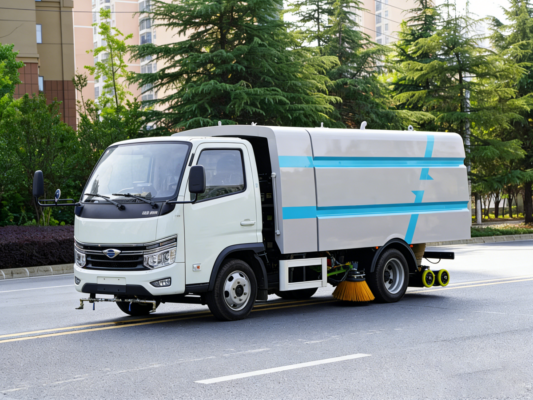
Several trends are shaping the evolution of compact sweeper technology.
1. Electrification
Battery technology continues to improve, offering longer ranges and faster charging. Electric sweepers are becoming increasingly viable for a wider range of applications, with zero emissions and quiet operation making them ideal for urban environments.
2. Smart Connectivity
IoT systems enable real-time monitoring of sweeper location, performance, and maintenance needs. Fleet managers can optimize routes, track productivity, and schedule maintenance proactively. Some systems include photo-based performance logging and driver scoring.
3. Autonomous Features
Semi-autonomous operation is emerging, with sensors and machine learning assisting operators. While fully autonomous sweeping may be years away, features like obstacle detection and automated brush adjustment are already appearing.
4. Advanced Filtration
Improved filtration systems capture increasingly fine particulate matter, helping cities meet air quality standards. High-efficiency particulate air filters and advanced dust suppression systems protect both operators and the public.
5. Modular Design
Modular components allow quick reconfiguration for different tasks—sweeping one day, snow removal the next. This flexibility maximizes equipment utilization and return on investment.
Conclusion
Compact sweeper trucks represent the pinnacle of specialized urban cleaning equipment. By combining the mobility of a small vehicle with the cleaning power of much larger machines, they enable cities to maintain consistent sanitation standards across every street, lane, and alley—not just the wide ones.
The benefits extend beyond mere cleanliness. Compact sweepers reduce disruption to traffic and residents, protect delicate historic pavement, lower operational costs compared to manual labor, and provide the deep, mechanical clean that removes fine dust and particulate matter. Electric models offer the additional advantages of zero emissions and quiet operation, making them ideal partners in creating livable, sustainable cities.
For public works departments, facility managers, and sanitation professionals facing the challenge of cleaning narrow streets, a compact sweeper is not just an option—it’s the only truly effective solution. By carefully assessing your specific needs, evaluating available technologies, and planning for proper maintenance, you can select a compact sweeper that will serve your community for years to come.
In the complex ecosystem of urban cleaning, where large sweepers handle main arteries and manual crews address spot issues, compact sweepers fill the critical middle ground. They are the machines that ensure no street—no matter how narrow—gets left behind.