Built to Last & Fully Tailored: Top-tier garbage, sweeper and sewer trucks crafted for unrivaled durability. A trusted choice for municipal governments across the globe.
Containers Without Cranes: Why Skip Loader Trucks Are the Missing Link in Urban Micro-Logistics
Introduction
Urban logistics is rapidly evolving. As cities become denser and traffic congestion increases, traditional centralized logistics systems are no longer efficient for high-frequency waste collection and last-mile operations. This shift has led to the rise of urban micro-logistics—a decentralized model built around distributed containers and flexible, short-distance transport.
However, one major challenge remains: How can containers be efficiently handled without relying on cranes?
This is where skip loader garbage trucks play a critical role. More importantly, they do not operate alone—they work alongside other types of garbage trucks to form a complete and efficient urban waste management system.
Urban Micro-Logistics and the Rise of Containerization
The core of urban micro-logistics lies in modularity and flexibility:
Waste is distributed across multiple containers instead of centralized piles
Transportation is done through frequent, small-scale movements
Systems are scalable and adaptable to different urban environments
Containers (skip bins) are the foundation of this model. But without efficient handling equipment, their full potential cannot be realized.
The Core Challenge: Container Handling Without Cranes
While containers offer clear advantages:
Standardization
Easy storage and sorting
Efficient transfer between locations
Their use in urban environments is often limited by crane dependency:
High equipment and operational costs
Limited mobility in narrow streets
Time-consuming setup
Safety risks in populated areas
This creates a gap between container-based logistics and real-world urban operations.
Skip Loader Trucks: The Crane-Free Solution
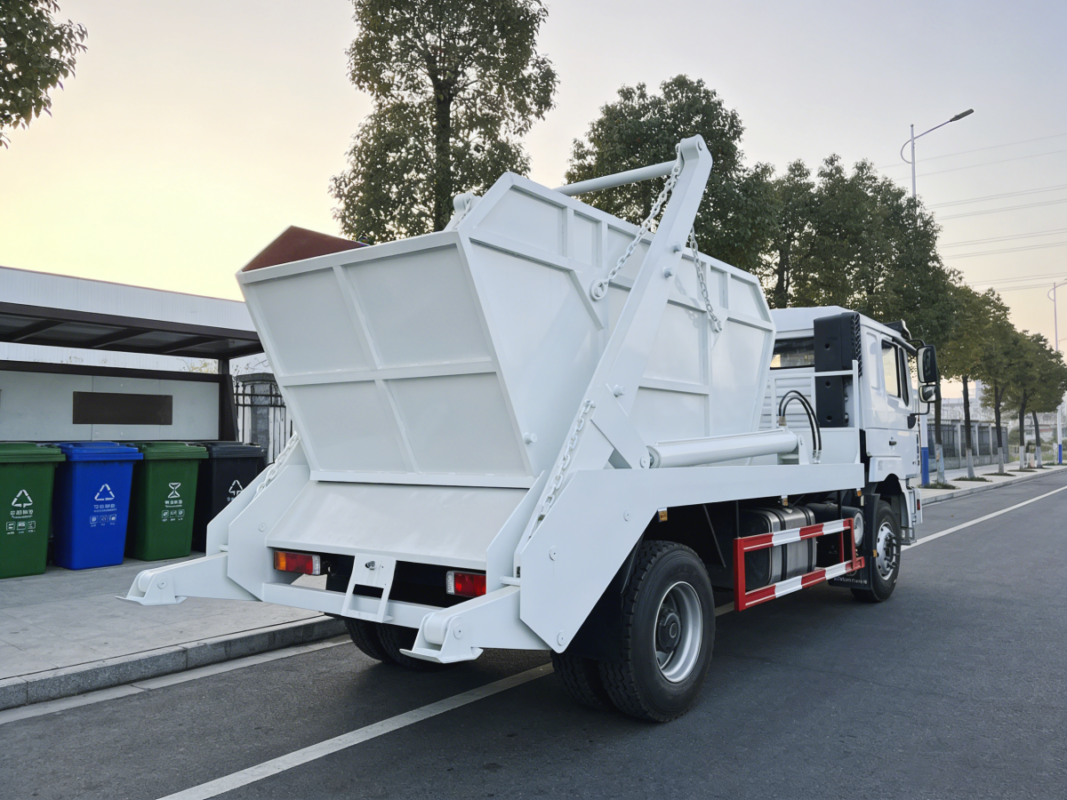
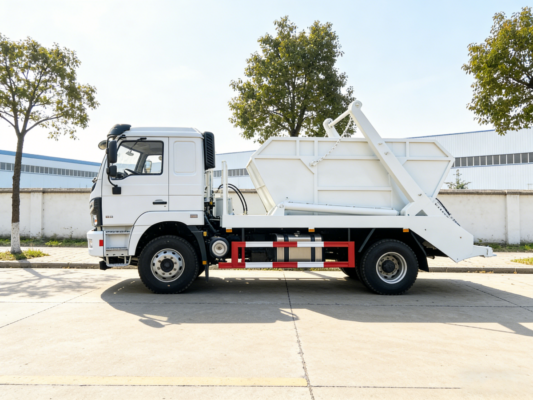
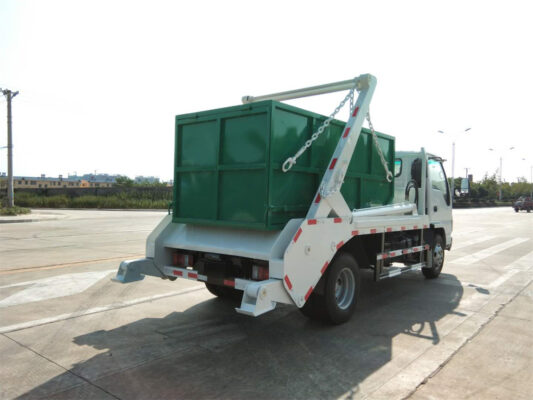
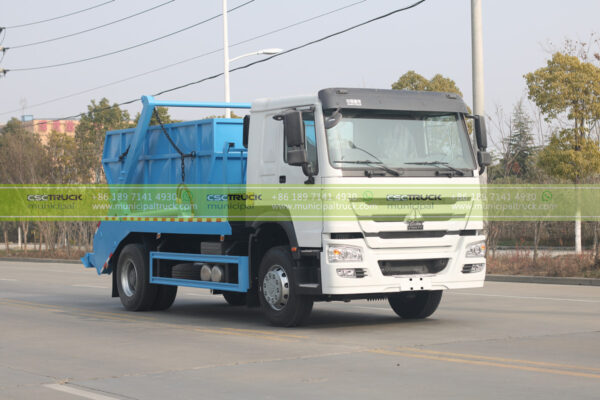
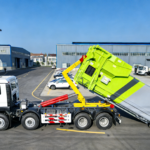
Skip loader garbage trucks are specifically designed to load, transport, and unload containers without external lifting equipment. Using hydraulic arms, they can pick up skip bins directly from ground level and place them onto the truck.
This makes them ideal for:
Residential neighborhoods
Urban streets
Small construction sites
Their simplicity and efficiency make them the frontline solution in micro-logistics systems.
Building a Complete System: Integration with Other Garbage Trucks
In real-world operations, no single truck type can handle all scenarios. Skip loader trucks work in coordination with other specialized vehicles to create a comprehensive waste management ecosystem.
The Future: From Individual Trucks to Integrated Systems
The future of urban waste management is not about a single vehicle—it is about integrated systems:
Modular containers
Smart dispatching
Multi-vehicle coordination
In this ecosystem:
Skip Loader = Frontline collection unit
Hook Loader = Transport backbone
Other trucks = Scenario-specific support
Conclusion
As urban micro-logistics continues to evolve, crane-free container handling is becoming essential.
Skip loader garbage trucks fill this critical gap by enabling efficient, flexible, and cost-effective operations. When combined with hook loaders, self-tipping trucks, and compactor trucks, they form a complete and scalable waste management solution.
For cities and businesses aiming to modernize their operations: Skip loader trucks are not just equipment—they are the starting point of a smarter, more efficient logistics system.