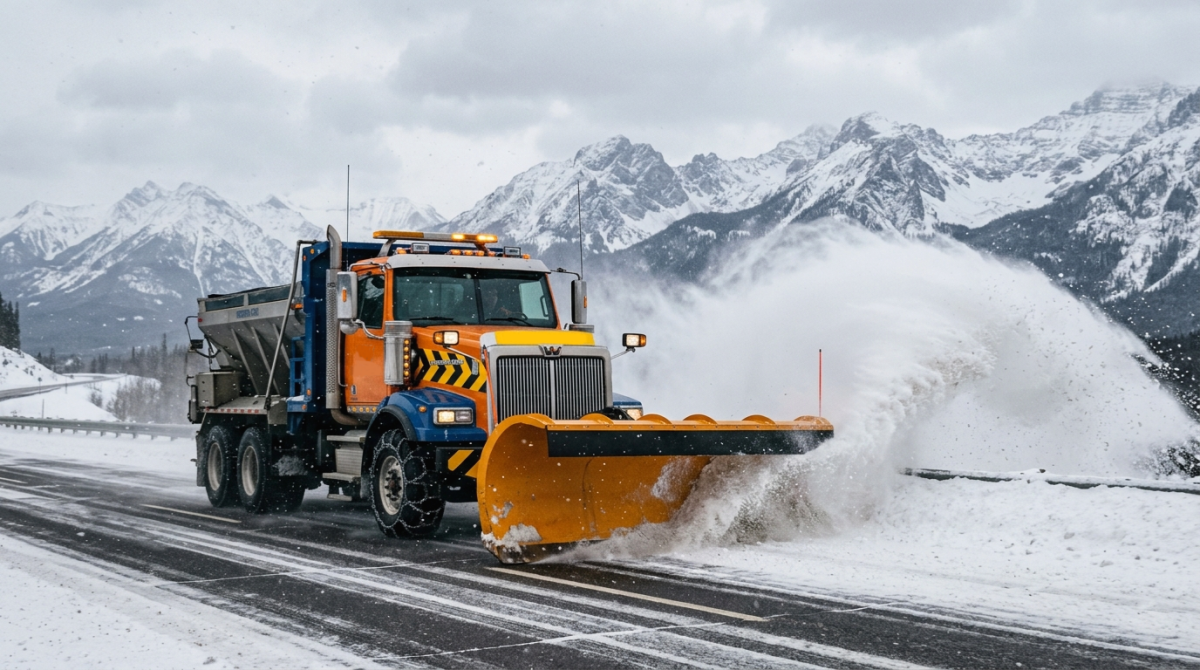
Snow removal is not a one‑size‑fits‑all job. A residential cul‑de‑sac, an interstate highway, an airport runway, and a mountain pass each demand different strategies and equipment. Choosing the right attachment for your snow plow truck can mean the difference between clearing a route in minutes or struggling for hours.
Four primary types of snow removal equipment dominate the industry: plow blades, snow blowers, brooms (rotary sweepers), and cold‑air blowers. Each has distinct strengths, weaknesses, and ideal applications. Understanding these differences is essential for fleet managers, municipal departments, and contractors who need to keep roads safe and open through winter.
1. Plow Blades – The Classic Workhorse
How they work
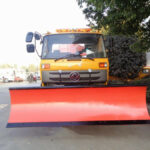
A plow blade is a curved steel or polymer moldboard mounted to the front or underbody of a truck. As the truck moves forward, the blade pushes snow to the side. Hydraulic cylinders allow the operator to angle the blade left or right, lift it, and sometimes adjust the cutting edge pressure.
Best for
- Plowing fresh, loose snow
- Clearing highways, arterial roads, and parking lots
- Pushing snow into windrows for later removal
Advantages
- Fast and efficient for large areas with moderate snowfall
- Simple construction – few moving parts, easy to maintain
- Durable – steel blades handle curbs, manhole covers, and frozen ruts
- Low operating cost – minimal fuel consumption compared to blowers or brooms
Disadvantages
- Cannot remove heavy, packed, or icy snow – leaves a thin layer behind
- Creates windrows – snow piles at the side that may need a second pass
- Requires storage space for displaced snow; not suitable for narrow streets with nowhere to push snow
Best practice: Use plow blades for the first pass after a fresh snowfall. Pair with a spreader for de‑icing if needed.
2. Snow Blowers – The Heavy Lifter
How they work
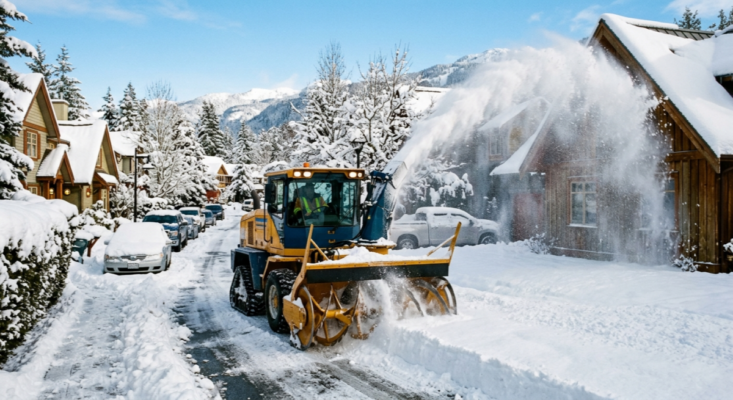
A snow blower (also called a snow thrower or rotary snowplow) uses a high‑speed impeller and auger to chop, lift, and throw snow far to the side or into a dump truck. Large, truck‑mounted blowers are typically powered by a dedicated hydraulic system or a separate auxiliary engine.
Best for
- Deep, heavy, or wet snow
- Areas with no place to push snow (e.g., narrow streets, cul‑de‑sacs, alleys)
- Clearing snow from loading docks, rail yards, and airport aprons
Advantages
- Removes snow completely – no windrows left behind
- Handles extreme depths – can cut through drifts several feet high
- Throws snow far – often 30 to 50 feet or more, clearing the right‑of‑way in one pass
- Works on compacted snow – auger breaks up packed layers
Disadvantages
- High fuel consumption – the blower requires significant power
- Complex and expensive – more moving parts, higher maintenance costs
- Slower than plow blades for light snow
- Can damage pavement if the auger or impeller strikes raised obstacles
Best practice: Use a snow blower for deep snow events, narrow streets, or after plows have pushed snow into windrows that need to be removed.
3. Brooms (Rotary Sweepers) – The Finishing Touch
How they work
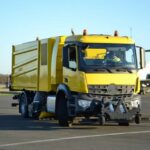
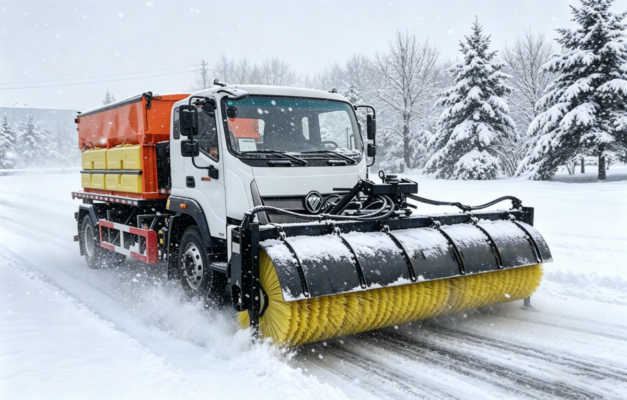
A broom attachment uses a rotating cylindrical brush (often with steel or polypropylene bristles) to sweep snow and slush from the pavement. Some models include a water spray system to suppress dust, but in winter they are used dry. The debris is typically pushed to the side or into a hopper.
Best for
- Removing thin snow and slush after a plow or blower has passed
- Cleaning bridge decks, crosswalks, bike lanes, and sensitive pavements
- Final cleanup before applying de‑icers or anti‑icers
Advantages
- Leaves a clean, dry surface – removes nearly all snow and slush
- Gentle on pavement – bristles do not damage asphalt or concrete markings
- Effective on thin layers where plow blades would skip or scrape
- Can sweep light debris along with snow (sand, salt residue)
Disadvantages
- Not for deep snow – the broom will simply ride over heavy accumulations
- Bristle wear – frequent replacement needed, especially on abrasive surfaces
- Slower operating speed compared to plowing
- Can throw snow onto pedestrians or traffic if not shielded properly
Best practice: Deploy brooms after plows or blowers for polishing. Use on sensitive surfaces like epoxy‑coated bridge decks or colored pavement.
4. Cold‑Air Blowers – The No‑Contact Solution
How they work
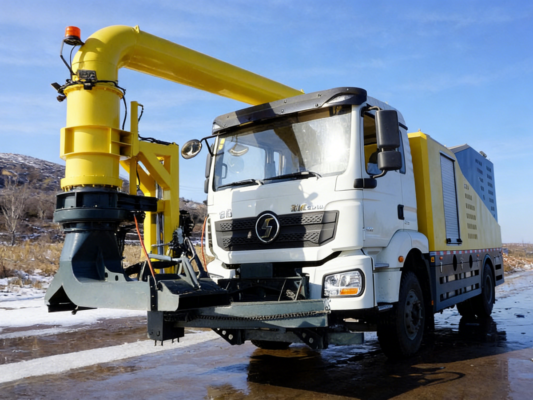
A cold‑air blower (also called a cold‑air snowplow or high‑velocity snow blower) uses a large fan or centrifugal blower to generate a high‑speed, high‑volume stream of ambient air. This air jet physically blows snow, slush, standing water, and light debris off the pavement. No heating elements are involved; the air is at ambient temperature.
Best for
- Airports (runway and apron cleaning)
- Bridges and overpasses where chemicals are restricted
- Environmentally sensitive areas (near water sources, protected vegetation)
- Removing slush and standing water before it refreezes
Advantages
- Zero contact with pavement – no wear, no damage to markings or joints
- No chemicals – environmentally friendly, no corrosion
- Removes water and slush – prevents black ice formation
- Low maintenance – few moving parts compared to blowers or brooms
- Works in extreme cold – no fluids to freeze, instant start
Disadvantages
- Not for deep, heavy snow – effective up to moderate depths (typically 4–8 inches depending on density)
- High air velocity requires careful aim – can blow snow onto pedestrians or traffic if misdirected
- Noise – high‑speed fans are loud
- Higher initial equipment cost than a basic plow blade
Best practice: Use cold‑air blowers for airports, bridges, and sensitive zones. Combine with plow blades for deep snow, followed by air blowing to achieve a bare, dry pavement.
Comparison Summary Table
| Feature | Plow Blade | Snow Blower | Broom | Cold-Air Blower |
|---|---|---|---|---|
| Snow depth capacity | Up to 12+ inches | 24+ inches | 2–4 inches | 4–8 inches |
| Removes packed snow? | No | Yes | Lightly | No |
| Removes slush/water? | No | Yes | Yes | Yes |
| Pavement contact | Yes (steel/polymer edge) | Yes (auger) | Yes (bristles) | No |
| Maintenance cost | Low | High | Medium (bristles) | Low |
| Fuel consumption | Low | High | Medium | Medium |
| Typical speed | 15–30 mph | 5–15 mph | 5–15 mph | 10–25 mph |
| Best application | Fresh snow, large areas | Deep snow, narrow streets | Final cleanup, sensitive surfaces | Airports, bridges, no-chemical zones |
How to Choose the Right Combination
Most professional snow removal fleets do not rely on a single attachment. Instead, they match the tool to the condition and location.
- Light to moderate snow on highways: Plow blades + spreader (de‑icer).
- Heavy snow event on narrow streets: Snow blower to remove windrows.
- Bridge deck after plowing: Cold‑air blower to clear slush without chemicals.
- Airport runway final clearance: Cold‑air blower for FOD‑free, dry pavement.
- Parking lot and sidewalk cleanup: Small plow blade followed by broom.
Many modern snow plow trucks are equipped with quick‑change mounting systems, allowing operators to swap between a plow blade, blower, or broom in minutes. This versatility extends the useful season of the truck and improves overall efficiency.
Conclusion
No single snow removal attachment is perfect for every situation. Plow blades are fast and economical for routine snowfall. Snow blowers tackle the deepest drifts and remove snow completely. Brooms leave a polished, dry surface for sensitive pavements. Cold‑air blowers offer a no‑contact, chemical‑free solution ideal for airports, bridges, and environmentally protected areas.
Fleet managers should evaluate their typical snow events, road types, environmental regulations, and budget to select the right mix of equipment. Investing in multiple attachments—or trucks equipped with interchangeable systems—ensures that whatever winter brings, your team is ready to clear it quickly and safely.
If you are looking to equip your fleet with reliable snow removal attachments, contact us. CSCTRUCK offers a full range of snow plow trucks and sweeper trucks—all customizable to your climate and application.