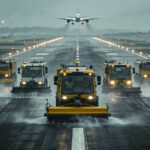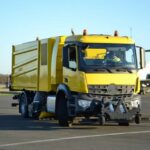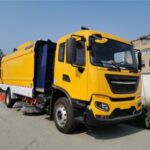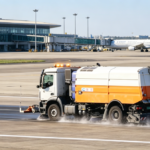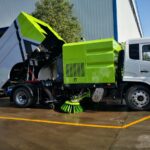
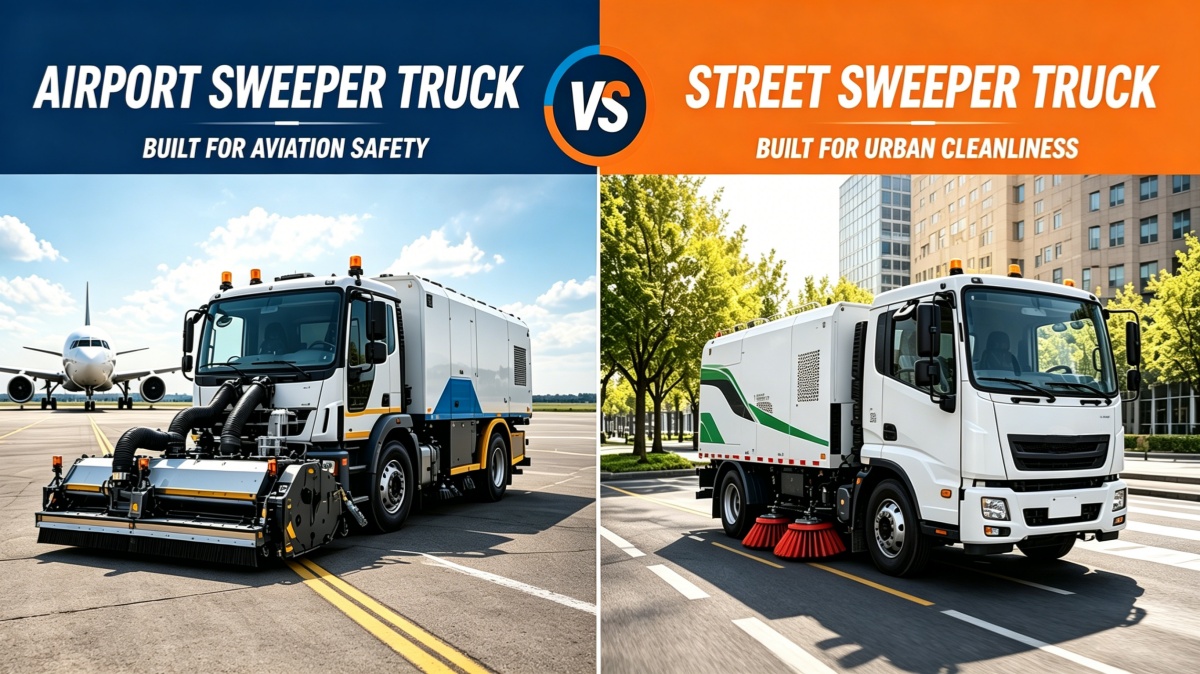
At first glance, a municipal street sweeper and an airport runway sweeper may appear quite similar. Both are designed to remove debris, dust, and foreign materials from paved surfaces. However, when it comes to airport operations, using a standard city sweeper on a runway is far from sufficient—and in some cases, it can even create serious safety risks.
Runways operate under extremely strict safety standards, and the cleaning equipment used on them must meet specialized aviation requirements that ordinary municipal sweepers simply were not designed for.
So what exactly makes an airport sweeper different from a regular street sweeper? Let’s take a closer look.
Runway Cleaning Is About Safety, Not Just Cleanliness
In city environments, municipal sweepers mainly focus on maintaining urban cleanliness by collecting leaves, dirt, litter, and sand.
At airports, however, runway cleaning is directly linked to aviation safety.
Even small debris such as:
- Loose gravel
- Metal fragments
- Rubber particles
- Broken bolts
- Plastic pieces
can become dangerous Foreign Object Debris (FOD) capable of damaging aircraft engines, tires, or landing gear.
Because aircraft travel at extremely high speeds during takeoff and landing, airports require highly specialized sweeping systems that can reliably remove microscopic and heavy debris alike.
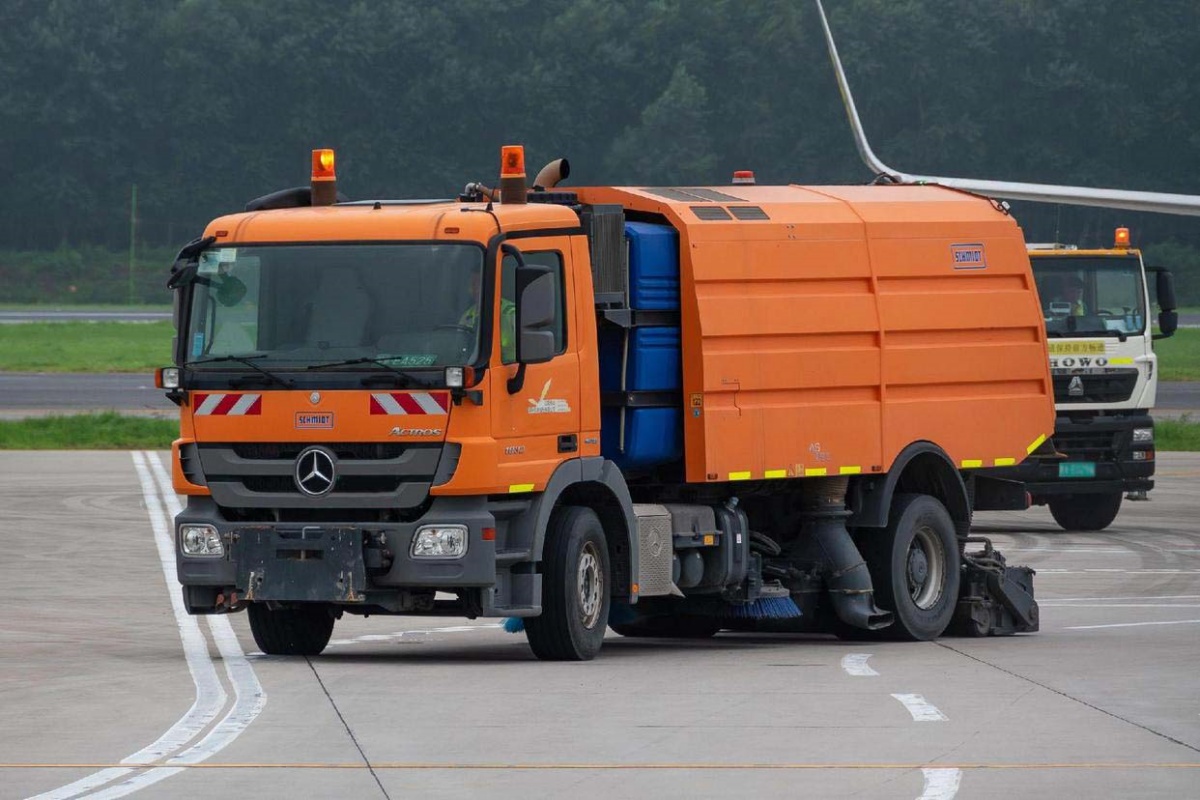
Airport Sweepers Use Advanced FOD Removal Technology
One of the biggest differences between the two machines is their debris removal capability.
Municipal Sweepers Typically Use:
- Mechanical brushes
- Standard vacuum systems
- Low-to-medium suction power
These systems work well for normal road cleaning but are not designed for aviation-grade debris control.
Airport Sweepers Often Include:
- High-capacity vacuum systems
- Magnetic FOD collection
- Powerful air blast systems
- Precision dust filtration
- Rubber removal technology
Some advanced runway sweepers are specifically engineered to remove embedded rubber deposits left behind by aircraft tires during landing.
This level of cleaning performance is critical for maintaining runway friction and aircraft braking safety.
Speed and Coverage Requirements Are Completely Different
Airport operations cannot afford long runway closures.
Unlike municipal roads, runways operate on extremely tight schedules where every minute matters. Cleaning equipment must therefore deliver:
- High sweeping speeds
- Wide cleaning paths
- Fast deployment capability
- Continuous heavy-duty performance
Many airport runway sweepers are capable of cleaning large runway sections quickly while maintaining consistent suction and debris collection efficiency.
Municipal sweepers, by comparison, are usually optimized for slower urban driving conditions.
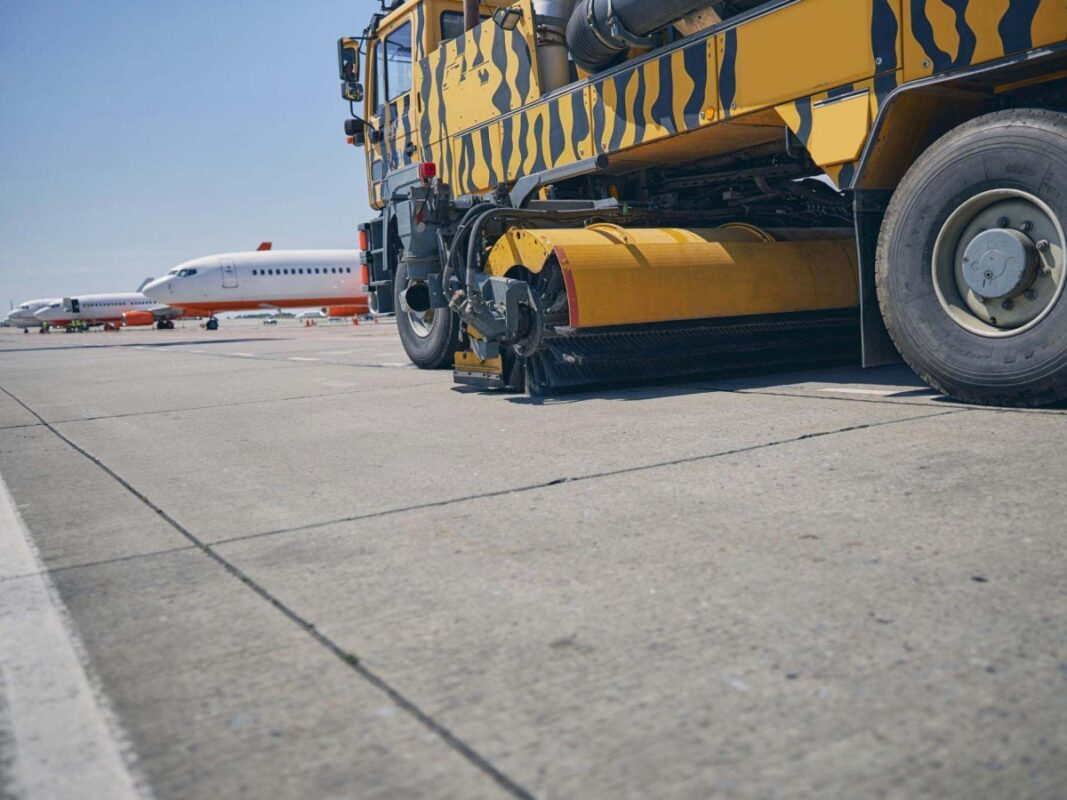
Airport Sweepers Must Meet Aviation Standards
Another major difference lies in compliance and certification.
Airport cleaning vehicles may need to comply with:
- ICAO operational recommendations
- Airport authority regulations
- Airside safety requirements
- Night visibility standards
- Noise and emission restrictions
Features commonly found on airport sweepers include:
- High-visibility warning lights
- Aviation-grade communication systems
- Enhanced braking systems
- Jet blast resistance
- Low-profile designs for airside operations
Standard municipal sweepers are generally not built with these aviation-specific operational demands in mind.
Weather and Surface Conditions Require Specialized Design
Airport runways face far harsher operational environments than city streets.
Runway sweepers may need to handle:
- Heavy rain
- Snow and ice
- High crosswinds
- Jet fuel residue
- Rubber buildup
- Large open-area cleaning
As a result, airport sweepers are often built with reinforced chassis structures, corrosion-resistant materials, and higher-performance filtration systems.
Many also integrate multifunctional systems such as:
- Snow removal
- Water flushing
- Air blowing
- Vacuum sweeping
This allows airports to maintain runway safety under changing weather conditions year-round.
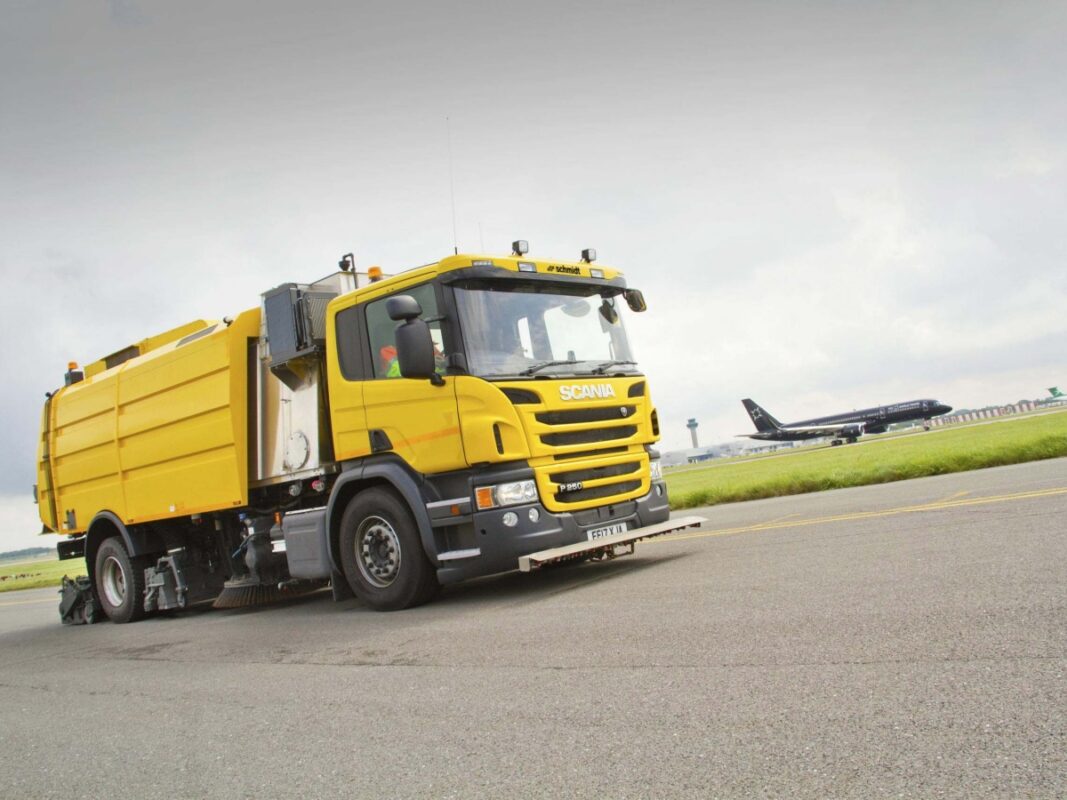
Cost Differences Reflect Performance Differences
Airport sweepers are significantly more expensive than municipal street sweepers—but for good reason.
The higher cost reflects:
- More advanced engineering
- Aviation-grade safety systems
- Greater cleaning efficiency
- Heavy-duty durability
- Specialized FOD removal capabilities
For airports, investing in the correct equipment is not just an operational choice—it is a critical safety requirement.
Final Thoughts
Although municipal sweepers and airport sweepers may look similar externally, they are designed for entirely different operational environments.
A city street sweeper may be effective for urban sanitation, but it lacks the specialized technology, safety systems, and cleaning performance required for modern runway operations.
When it comes to aviation safety, airports cannot afford compromises. Proper runway sweeping equipment plays a vital role in preventing FOD incidents, maintaining runway friction, and ensuring safe aircraft operations every day.
In the aviation industry, the difference between a street sweeper and an airport sweeper is far more than appearance—it’s the difference between basic cleaning and mission-critical airside safety.