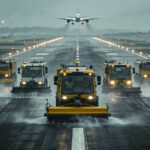
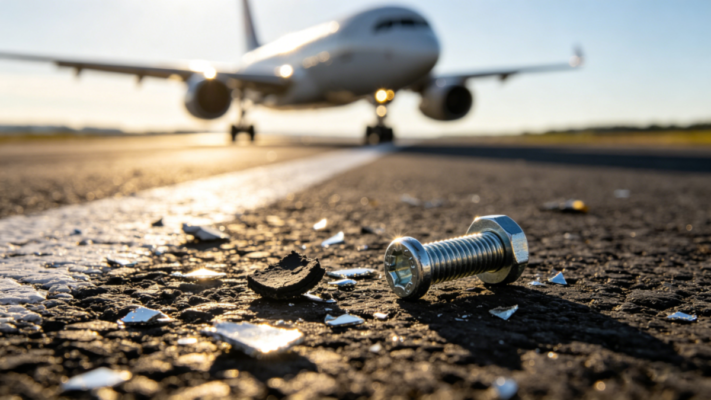
On an airport runway, a single loose bolt, a broken piece of tire tread, or even a small stone can bring down an aircraft. The aviation industry has a name for these hazards: FOD – Foreign Object Debris. With jet engines ingesting air at tremendous velocity, and tires enduring pressures that would shred ordinary rubber, the margin for error is zero. Keeping runways, taxiways, and aprons free of FOD is not just a cleanliness issue; it is a life‑and‑death safety requirement.
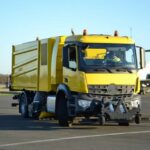
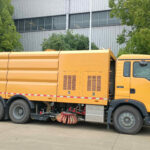
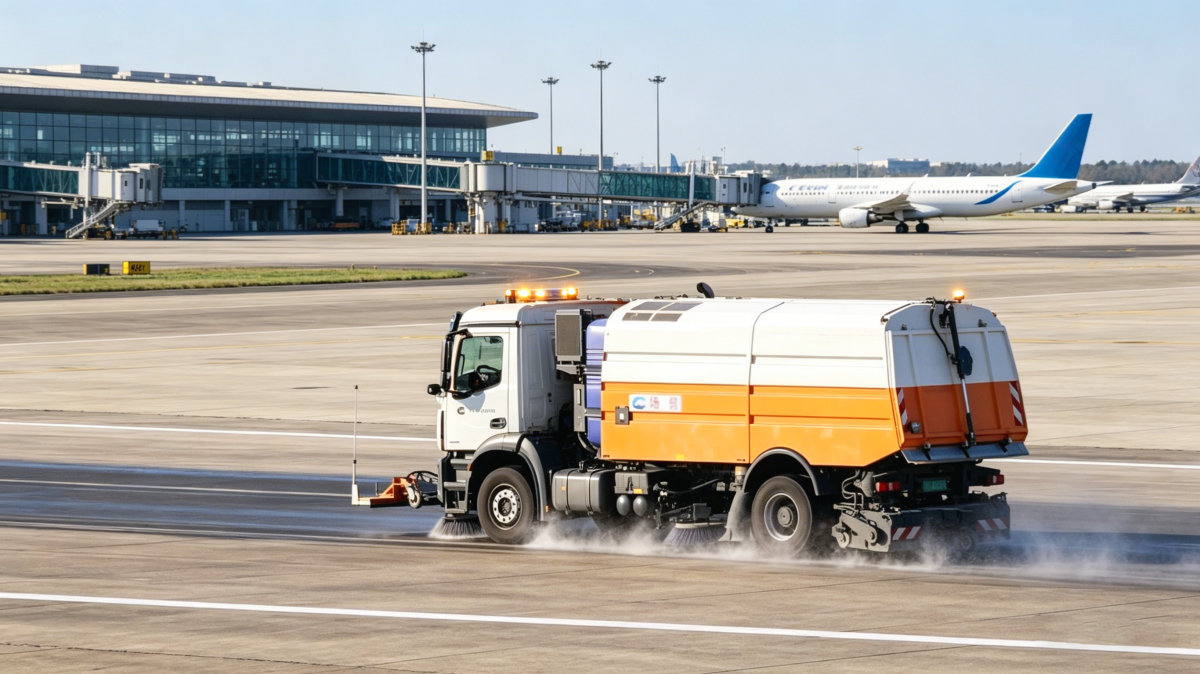
This is where airport sweepers come in. But these are not ordinary street sweepers. Airport sweepers must meet demanding performance requirements that extend far beyond municipal cleaning. From suction power to electromagnetic compatibility, every feature is engineered for one purpose: zero tolerance for FOD.
What Makes Airport Sweepers Different?
A standard road sweeper removes dust, leaves, and litter. An airport sweeper removes threats. The difference lies in design philosophy. While municipal sweepers prioritize dust control and noise reduction, airport sweepers prioritize:
- Absolute debris removal – No particle larger than a specified size may remain.
- Non‑damaging operation – The sweeper must never create FOD itself.
- Extreme reliability – Runway closures are expensive; sweepers must work every time.
- Safety in hazardous environments – Fuel vapors and electrical systems demand explosion‑proof design.
Core Performance Requirements
1. High‑Intensity Vacuum and Filtration
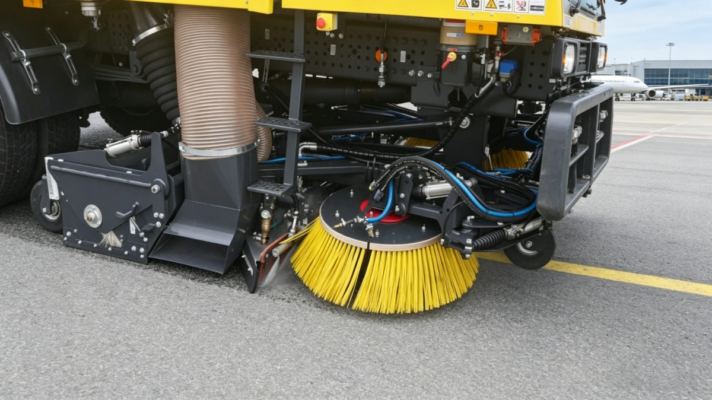
Airport sweepers use powerful vacuum systems capable of lifting heavy debris – metal fragments, rivets, chunks of rubber, and gravel. Unlike street sweepers that may rely on brushes to push debris into a hopper, airport sweepers often use pure vacuum or vacuum‑assisted sweeping to ensure that even particles lodged in pavement cracks are extracted.
Filtration is equally critical. The sweeper must capture fine particles without exhausting dust back onto the runway, where it could become airborne and damage engines. Multi‑stage filtration systems, including cyclone separators and high‑efficiency filters, are standard.
2. Magnetic Separation
Ferrous metal fragments are among the most dangerous forms of FOD because they can be drawn into engine cores. Many airport sweepers incorporate magnetic separation systems – either electromagnetic or permanent magnets – that extract iron and steel particles from the debris stream. Some models mount magnetic bars across the suction inlet to catch metal before it enters the hopper.
3. Non‑Marcating and Non‑Sparkling Construction
An airport sweeper must never become a source of FOD itself. This means:
- No loose bolts or detachable parts that could fall onto the runway.
- Non‑marcating tires – Special rubber compounds that do not leave black marks on pavement.
- Non‑sparking materials in areas that may contact the ground, preventing ignition of fuel vapors.
- Captured fasteners and redundant locking mechanisms on all panels and access doors.
4. Electromagnetic Compatibility (EMC)
Airports are dense with sensitive electronic equipment: navigation aids, ground radar, communication systems, and instrument landing systems. Airport sweepers must not emit electromagnetic interference that could disrupt these systems. This requires shielded wiring, suppressed ignition systems on diesel engines, and careful design of onboard electronics. Many airports require EMC certification before allowing a sweeper onto the airfield.
5. Rapid Deployment and High Travel Speed
Runway closures are scheduled in tight windows – often between flights. An airport sweeper must reach the runway quickly, complete its pass, and clear the area without delay. This demands:
- High road speed for transit between the maintenance yard and the runway.
- Quick‑start systems that bring the vacuum and sweeping mechanisms to full power in seconds.
- Wide sweeping paths to cover the runway width in minimal passes.
- Fast hopper dumping to unload debris and return to service.
6. All‑Weather Operation
Airports operate in rain, snow, fog, and extreme heat. Sweepers must perform reliably in wet conditions, where debris sticks to pavement, and in freezing temperatures, where water systems must be protected. Heated water jets, anti‑icing additives, and corrosion‑resistant materials are common features.
7. FOD Detection Integration
Increasingly, airports are equipping sweepers with onboard FOD detection systems. These use radar, lidar, or high‑resolution cameras to scan the pavement ahead, identifying debris that the operator might miss. Some systems log the location and type of FOD found, helping airports track problem areas and adjust maintenance schedules.
Specialized Applications
Runway sweeping requires the highest performance. Sweepers must remove FOD from the entire runway width, including the edges where debris often accumulates. Many airports use friction sweeper combinations that also measure pavement friction after sweeping, ensuring safe braking conditions.
Taxiway and apron sweeping demands maneuverability. Tight turns around parked aircraft, navigation around ground support equipment, and operation near fueling stations require compact dimensions and excellent visibility.
Winter operations add another layer: sweepers must remove sand and de‑icing residues without damaging pavement markings or lighting fixtures embedded in the runway.
Training and Maintenance
Even the best sweeper is ineffective without skilled operators. Airport sweeper training covers:
- FOD recognition – Identifying potential hazards that might not look like debris (e.g., loose pavement seals, broken edge lights).
- Runway safety protocols – Communication with air traffic control, proper entry and exit procedures, and emergency response.
- Daily inspections – Checking for loose components, worn brushes, and filter integrity.
Maintenance is equally rigorous. Filters must be changed on schedule; magnets must be cleaned; and hopper seals must be inspected to prevent dust leakage. Many airports require documented maintenance logs as part of their safety management systems.
The Cost of Failure
The consequences of inadequate sweeping are measured in more than money. A single FOD event can cause:
Engine damage – Repair costs for a damaged jet engine can reach millions of dollars.
Flight delays – Runway closures for FOD inspection and removal disrupt schedules.
Injury or loss of life – The worst‑case outcome of FOD ingestion.
By contrast, investing in high‑performance airport sweepers is a fraction of that cost – and an indispensable part of aviation safety.
If you are looking to equip your airport with FOD‑fighting sweepers that meet international safety standards, contact us. CSCTRUCK municipal delivers airport sweepers built for the toughest conditions – where every sweep matters.