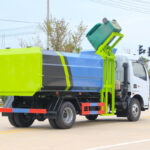
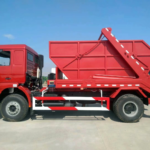
Built to Last & Fully Tailored: Top-tier garbage, sweeper and sewer trucks crafted for unrivaled durability. A trusted choice for municipal governments across the globe.
Argentina Modernizes Waste Sector with Compactor Garbage Truck Fleet
Argentina is undergoing a significant modernization of its municipal waste management system, with cities increasingly adopting compactor garbage truck fleets to replace older, less efficient collection vehicles. This shift is not just a routine equipment upgrade—it reflects a broader transition toward smarter urban infrastructure, improved public health standards, and more sustainable environmental practices.
From Traditional Collection to Mechanized Efficiency
For decades, waste collection in many cities relied on manual loading systems and simple transport trucks. Workers would physically lift and empty bins into open-back vehicles, a process that was slow, labor-intensive, and exposed workers to health risks.
The introduction of compactor garbage trucks changes this model entirely. These vehicles integrate hydraulic loading systems and onboard compression units, allowing waste to be collected, compacted, and transported in a continuous mechanized cycle.
This modernization helps municipalities address three long-standing challenges:
Inefficient collection routes due to low truck capacity
High operational costs from frequent landfill trips
Occupational safety risks for sanitation workers
How Compactor Garbage Trucks Work
At the core of these vehicles is a hydraulic compaction system, which significantly reduces the volume of collected waste. The process is continuous and highly automated, designed for maximum efficiency in dense urban environments.
1. Waste Collection and Loading
The process begins when the truck arrives at designated collection points. Waste bins are either manually or mechanically lifted into a hopper at the rear or side of the truck.
Once positioned, the bin is securely engaged by a lifting mechanism—typically hydraulic arms or automated clamps. The bin is then rotated and emptied directly into the loading chamber.
2. Transfer into the Compaction Chamber
After waste enters the hopper, it is guided into the main storage compartment. This area is designed to withstand heavy mechanical pressure and is sealed to prevent leakage, odor escape, and environmental contamination.
The design of the chamber is critical because it ensures that waste is not only stored but also prepared for compression.
3. Hydraulic Compaction Cycle
Once enough waste accumulates in the chamber, a hydraulic press plate (also called a compactor blade) activates. This plate moves horizontally through the container, compressing waste toward the rear.
This step is what distinguishes compactor trucks from traditional waste vehicles:
Waste volume can be reduced significantly
Air pockets are eliminated, maximizing load capacity
The truck can carry more waste per trip, reducing total journeys
The compaction cycle repeats continuously as more waste is added.
4. Storage Optimization During Transport
As the truck moves through its route, compaction continues intermittently. This ensures that available space is always maximized. Modern systems often include fill-level sensors that monitor capacity and help operators optimize route planning.
This level of efficiency is especially important in large metropolitan areas where waste generation is constant and high-volume.
5. Final Disposal and Unloading
Once the truck reaches a landfill or transfer station, the hydraulic system reverses operation. A powerful ejector plate pushes the compacted waste out of the container in a single controlled motion.
This eliminates the need for manual unloading and significantly reduces turnaround time at disposal facilities.
Operational Advantages for Cities
The adoption of compactor garbage truck fleets brings measurable improvements to municipal services:
Increased Route Efficiency
Because each truck can carry significantly more waste, fewer trips are required to disposal sites. This reduces fuel consumption and improves daily route coverage.
Reduced Labor Intensity
Workers are no longer required to manually lift heavy bins repeatedly. Instead, they oversee automated systems, improving both workplace safety and job quality.
Improved Urban Cleanliness
Faster collection cycles reduce the likelihood of overflowing bins and illegal dumping, leading to cleaner streets and better public hygiene.
Lower Operational Costs
Although compactor trucks require a higher upfront investment, they reduce long-term costs through fuel savings, reduced labor strain, and fewer fleet vehicles needed.
Environmental and Sustainability Impact
Beyond operational efficiency, compactor fleets contribute to broader sustainability goals. By reducing transport frequency, cities can lower overall fuel consumption and decrease greenhouse gas emissions associated with waste logistics.
Additionally, modern waste systems are often integrated with recycling separation programs, ensuring that recyclable materials are processed more effectively rather than being mixed with general waste.
For a country like Argentina, where urbanization is expanding and environmental pressure is increasing, these improvements are particularly important for long-term sustainability planning.
The Future of Waste Management in Argentina
The modernization of waste fleets is part of a larger trend toward smart city infrastructure. Future developments are expected to include:
GPS-based route optimization for real-time efficiency
Electric or hybrid compactor trucks to reduce emissions
Automated bin recognition systems
Data-driven waste management analytics for municipalities
These innovations will continue to reshape how cities manage one of their most essential public services: municipal waste collection.
Conclusion
The shift toward compactor garbage truck fleets represents a practical yet transformative upgrade in Argentina’s urban infrastructure. By combining mechanical efficiency with smarter logistics, cities are achieving cleaner streets, safer working conditions, and more sustainable waste management systems.
While challenges such as funding, maintenance, and infrastructure inequality remain, the direction is clear: waste management in Argentina is becoming faster, smarter, and more environmentally responsible.
Are you searching for dependable waste management vehicle solutions? CSCTRUCK Municipal provides high-performance compactor garbage trucks designed for efficiency, durability, and modern urban sanitation needs. We offer competitive pricing, customized configurations, and reliable global service support.