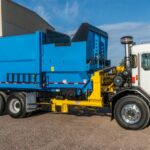
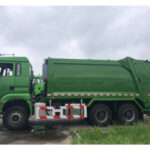
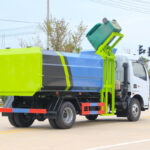
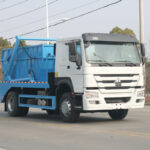
Built to Last & Fully Tailored: Top-tier garbage, sweeper and sewer trucks crafted for unrivaled durability. A trusted choice for municipal governments across the globe.
How Self-Tipping Garbage Trucks are Powering Smarter Waste Collection
The familiar rumble of the approaching garbage truck is a weekly ritual in communities worldwide. Yet, beneath this commonplace occurrence, a quiet revolution is transforming the efficiency, safety, and intelligence of residential and commercial waste collection. At the forefront of this evolution stands the self-tipping garbage truck, specifically the automated side loader (ASL) and its close relatives. These technologically advanced vehicles are rapidly replacing traditional manual collection methods, fundamentally altering how municipalities and waste haulers manage the ever-growing stream of refuse. By automating the most physically demanding and hazardous aspect of curbside pickup – the lifting and emptying of bins – self-tipping systems unlock a cascade of benefits, paving the way for truly smart waste disposal networks. This shift represents far more than mere convenience; it signifies a strategic move towards optimized resource management, enhanced worker safety, and data-driven environmental stewardship, reshaping the urban services landscape one automated lift at a time.
Beyond the Muscle: Understanding Self-Tipping Mechanics and Operation
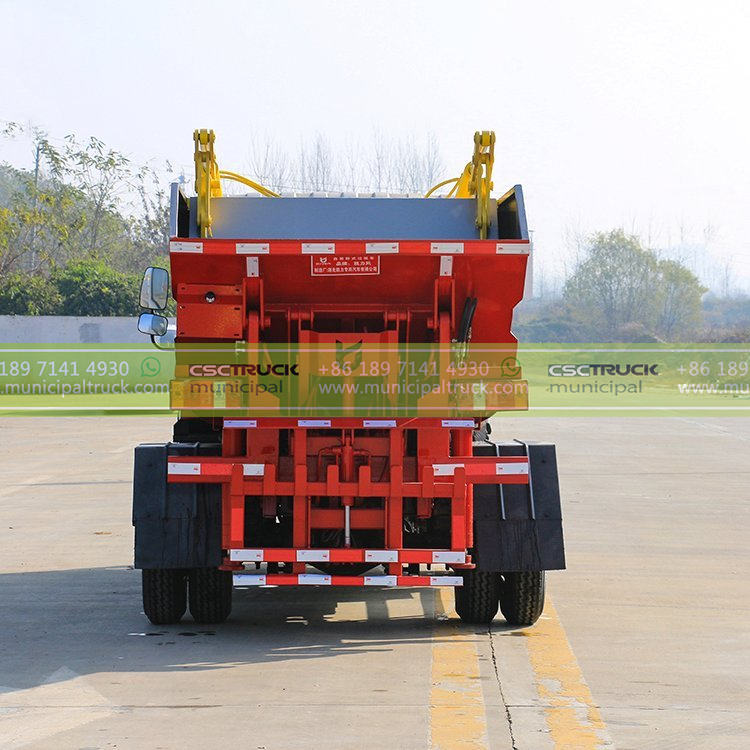
The core innovation of the self-tpping garbage truck lies in its sophisticated hydraulic system and specialized bin engagement mechanism, designed to minimize human intervention during the collection process.
The Automated Arm: Mounted prominently on the side of the truck, a powerful, articulating robotic arm is the defining feature. This arm is controlled precisely by the driver from the safety and comfort of the cab using a joystick or touchscreen interface. Sophisticated sensors guide its movement, ensuring accuracy and preventing collisions.
Standardized Cart Engagement: The system relies on residents or businesses using standardized wheeled carts equipped with specially designed lifting bars. As the truck approaches a cart positioned correctly at the curb, the driver extends and maneuvers the arm. Grippers or claws on the end of the arm securely latch onto the lifting bars of the cart.
The “Self-Tipping” Sequence: Once securely engaged, the hydraulic arm executes a pre-programmed sequence: it lifts the cart smoothly upwards, positions it precisely over the hopper, and then inverts it completely, ejecting the contents into the truck’s compaction body. The entire lift-and-dump cycle typically takes just seconds. The arm then gently returns the empty cart to its original position (or very close to it) at the curb.
Compaction and Transport: Following the dumping sequence, an internal compaction blade hydraulically pushes the waste towards the front of the truck body, maximizing payload capacity. Once the truck is full, it transports the compacted waste directly to a transfer station or landfill, operating similarly to traditional rear loader compactor trucks during this phase.
The Compelling Advantages: Efficiency, Safety, and Economics
The adoption of self-tipping garbage trucks delivers a powerful trifecta of benefits that directly address critical challenges faced by waste management providers and municipalities, translating into tangible operational and financial improvements.
Dramatically Enhanced Worker Safety: This is arguably the most significant driver for adoption. Eliminating the need for collection crews to manually lift heavy, often awkward bins drastically reduces the incidence of musculoskeletal injuries – chronic back strains, shoulder injuries, and acute trauma from slips, trips, or falls. Workers are no longer exposed to direct contact with potentially hazardous waste (needles, broken glass, chemicals, biological contaminants) or the dangers of moving traffic during each stop. The driver remains safely inside the cab throughout the collection process.
Substantial Operational Efficiency Gains: Self-tipping systems enable one-person operation for entire collection routes that previously required two or three crew members. This single change represents a massive reduction in labor costs, which typically constitute the largest expense in waste collection budgets. Furthermore, the speed of the automated lift-and-dump cycle (often 30-50% faster than manual collection per stop) allows a single truck to service significantly more households or businesses in a single shift, optimizing route density and reducing the number of trucks needed overall.
Reduced Long-Term Costs and Enhanced Predictability: While the initial capital investment in ASL trucks is higher than traditional rear loaders, the dramatic savings in labor costs, reduced workers’ compensation claims, and lower turnover due to safer working conditions lead to a compelling return on investment (ROI), often realized within a few years. Operational costs become more predictable, less susceptible to labor shortages or injury-related disruptions. Fleet management is also streamlined with fewer personnel to coordinate.
Improved Service Consistency and Aesthetics: Standardized carts ensure a uniform collection point and method. The automated arm places bins back neatly and consistently, reducing instances of bins left blocking sidewalks or rolling into streets. The enclosed compaction body minimizes litter and spillage compared to open-top hoppers on some manual trucks, leading to cleaner streets post-collection.
Enabling Smart Waste Ecosystems: Data and Sustainability
Self-tipping garbage trucks are not merely automated bin lifters; they serve as critical data-generating nodes within increasingly sophisticated smart waste management infrastructures, fostering significant environmental benefits.
Foundations for Pay-As-You-Throw (PAYT) and Waste Reduction: The use of uniquely identified carts assigned to specific addresses is fundamental to PAYT programs. By charging residents based on the volume or weight of waste they generate (typically using smaller carts for trash and larger ones for recycling), municipalities create a direct financial incentive for waste reduction and increased recycling participation. Self-tipping trucks, through their handling of assigned carts, make accurate billing for these programs feasible and efficient.
Route Optimization through Telematics: Modern ASL trucks are equipped with advanced telematics systems (GPS, onboard computers). This technology provides real-time data on truck location, speed, idling time, fuel consumption, and crucially, the number of lifts performed. Fleet managers can analyze this data to identify inefficient routes, optimize stop sequences, balance workloads, reduce fuel consumption, and lower emissions.
Bin Monitoring and Predictive Logistics: Integration of fill-level sensors in carts (using ultrasonic, infrared, or weight-sensing technology) takes smart waste management to the next level. These sensors transmit data on bin fullness to a central system. This enables dynamic routing – trucks are only dispatched to collect bins that are actually full, rather than running fixed schedules regardless of need. This drastically reduces unnecessary collection trips, fuel use, emissions, vehicle wear-and-tear, and associated costs.
Enhanced Recycling Performance: The requirement for standardized carts facilitates clearer separation of waste streams (trash, recycling, organics). Automated collection of these distinct streams using separate trucks or compartments ensures cleaner recyclables by reducing contamination compared to co-mingled manual collection, improving the quality and marketability of recycled materials. Accurate data collection also allows municipalities to track recycling rates more effectively.
Reduced Environmental Footprint: The combined effects of optimized routing (fewer miles driven), reduced idling (faster stops), potential for smaller fleets, and higher recycling rates contribute to a significantly lower overall carbon footprint for waste collection services. The inherent efficiency gains translate directly into environmental benefits.
Overcoming Implementation Challenges and Considerations
While the advantages are clear, transitioning to a self-tipping system requires careful planning and management to ensure a smooth and successful rollout, addressing both logistical and community engagement aspects.
Cart Standardization and Distribution: A successful system hinges on universal adoption of compatible, standardized carts. Procuring and distributing hundreds or thousands of carts to residents and businesses represents a significant upfront logistical and financial undertaking for the municipality or hauler. Robust cart maintenance and replacement programs are essential.
Cart Placement and Curb Management: For the robotic arm to function efficiently and safely, carts must be placed correctly at the curb on collection day – typically with the lifting bar facing the street, at least a few feet away from obstacles like parked cars, mailboxes, trees, or other bins. Public education campaigns are crucial to ensure consistent, proper placement. Challenges arise with narrow streets, dense urban environments, or properties with difficult access.
Initial Capital Investment: The higher upfront cost of ASL trucks compared to manual rear loaders can be a barrier, particularly for smaller municipalities or private haulers. Financing options, phased implementation plans, and clear demonstrations of long-term ROI are key to overcoming this hurdle.
Workforce Transition and Training: Shifting from manual collection to primarily driver-operated systems necessitates workforce retraining. Drivers need comprehensive instruction on operating the sophisticated arm controls, understanding the truck’s telematics, and performing basic maintenance checks. Effective communication and potential reassignment of former loaders are critical for a smooth transition.
Handling Bulky Items and Exceptions: Self-tipping systems are designed for standardized carts. Bulky waste (furniture, appliances, branches) typically requires separate collection arrangements or drop-off facilities, as it cannot be processed through the automated arm. Clear communication about procedures for these exceptions is vital.
The Future of Automation: Integration and Intelligence
The evolution of self-tipping garbage trucks is far from static; ongoing technological advancements promise even greater levels of efficiency, intelligence, and integration within smart city frameworks.
Enhanced Robotics and AI: Future iterations will feature even more sophisticated robotic arms with improved machine vision and artificial intelligence. This could allow for better obstacle avoidance, more precise cart placement in challenging scenarios, and potentially even the ability to handle slightly mispositioned bins autonomously, reducing driver intervention.
Deeper Telematics and Predictive Analytics: Telematics data will move beyond basic tracking and route optimization towards predictive maintenance (identifying potential truck failures before they happen based on operational data) and predictive fill-level modeling (using historical data and AI to forecast bin fullness even without physical sensors in every cart), further optimizing resource allocation.
Alternative Fuel Integration: The push for decarbonization is driving the development and adoption of electric self-tipping garbage trucks and those powered by renewable natural gas (RNG). These technologies significantly reduce noise pollution and eliminate tailpipe emissions during collection, a major benefit for residential areas and urban environments. Range and charging infrastructure remain key focus areas for development, particularly for demanding collection routes.
Seamless Smart City Integration: Self-tipping trucks, acting as mobile data platforms, will increasingly integrate with broader smart city infrastructure. Data on collection volumes, types, and locations can feed into city planning, resource recovery facility management, environmental reporting, and public information dashboards, creating a holistic view of urban metabolism.
A Foundational Shift Towards Intelligent Urban Services
The rise of the self-tipping garbage truck signifies a fundamental transformation in how society manages its waste stream. It transcends the simple automation of a physical task; it represents the integration of robust mechanical engineering, sophisticated hydraulics, sensor technology, and data analytics into the fabric of essential municipal services. By drastically improving worker safety, generating operational efficiencies that reduce costs and environmental impact, and providing the critical data infrastructure necessary for smart waste disposal initiatives like PAYT and dynamic routing, these vehicles are proving indispensable for modern waste management. They enable a more sustainable model, where waste generation can be measured, incentivized for reduction, and collected with minimal resource expenditure and environmental burden.
As urban populations grow and environmental pressures intensify, the intelligence and efficiency embedded within automated collection systems become paramount. Just as the sweeper truck maintains the final layer of urban cleanliness, the modern garbage truck, particularly the self-tipping automated side loader, forms the backbone of efficient, safe, and increasingly intelligent waste logistics. For municipalities and waste management professionals seeking to build resilient, cost-effective, and sustainable collection systems, understanding and leveraging the capabilities of this technology is no longer optional; it is essential. Resources and comprehensive fleet solutions, including the latest in automated side loaders, advanced telematics, and alternative fuel options, can be explored through platforms like Municipaltruck.com, providing the tools needed to navigate this pivotal shift towards smarter, cleaner, and safer waste management for the future.