In recent years, extreme summer heatwaves have become more frequent across many regions around the world. From Asia to Europe and the Middle East, cities are experiencing record-breaking temperatures, creating new challenges for urban management. Dense buildings, concrete surfaces, and large areas of asphalt absorb and store heat, making urban areas significantly warmer than surrounding environments. This phenomenon, known as the urban heat island effect, has become a major concern for modern cities.
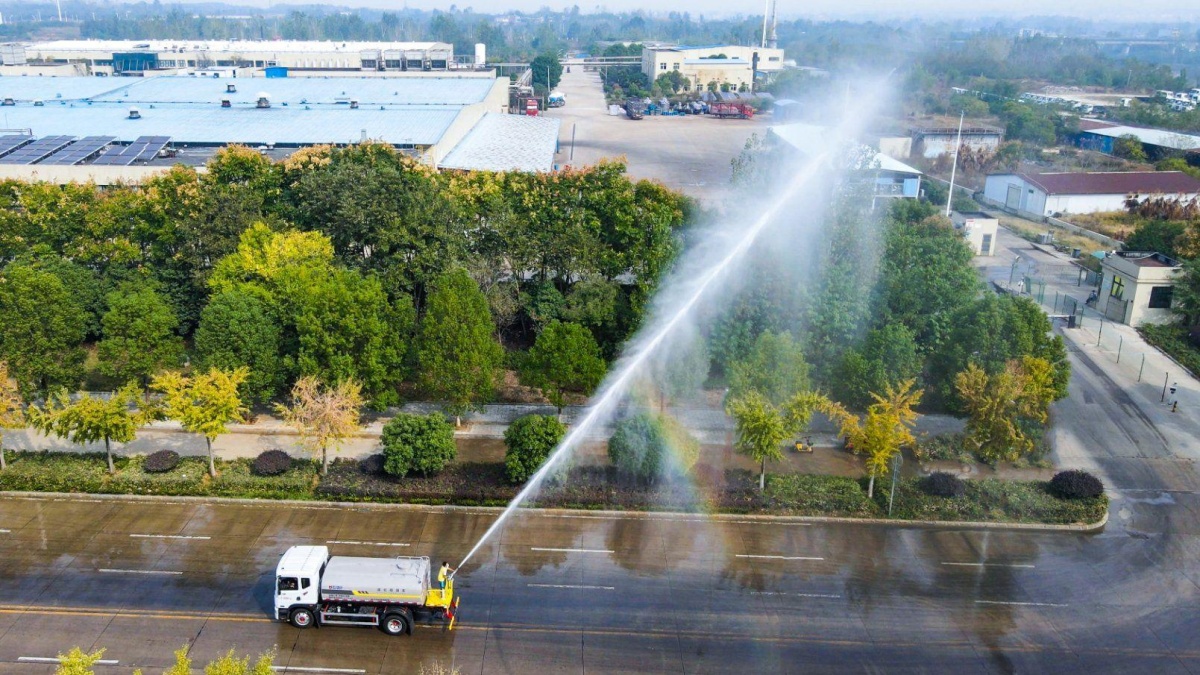
To reduce the impact of extreme heat, many municipalities are adopting practical and efficient solutions. Among them, water spray trucks have become an important tool for temporary urban cooling, road maintenance, and environmental improvement. By spraying water across streets and public areas, these vehicles help lower surface temperatures, reduce dust, and create more comfortable conditions for residents during the hottest periods of the year.
Why Cities Need Effective Heat Reduction Solutions
During a heatwave, urban infrastructure absorbs a large amount of solar energy throughout the day. Roads, parking areas, and sidewalks can become extremely hot, releasing stored heat even after sunset.
This creates several challenges:
- Higher outdoor temperatures
- Increased demand for air conditioning
- Greater energy consumption
- Reduced comfort in public spaces
- Increased health risks for vulnerable groups
For densely populated cities, managing heat is no longer only a weather issue—it has become an important part of urban planning and public safety.
Unlike large-scale infrastructure projects that require years of development, water spray trucks provide a flexible solution that can be quickly deployed whenever temperatures rise.
How Water Spray Trucks Help Cool Urban Areas
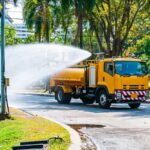
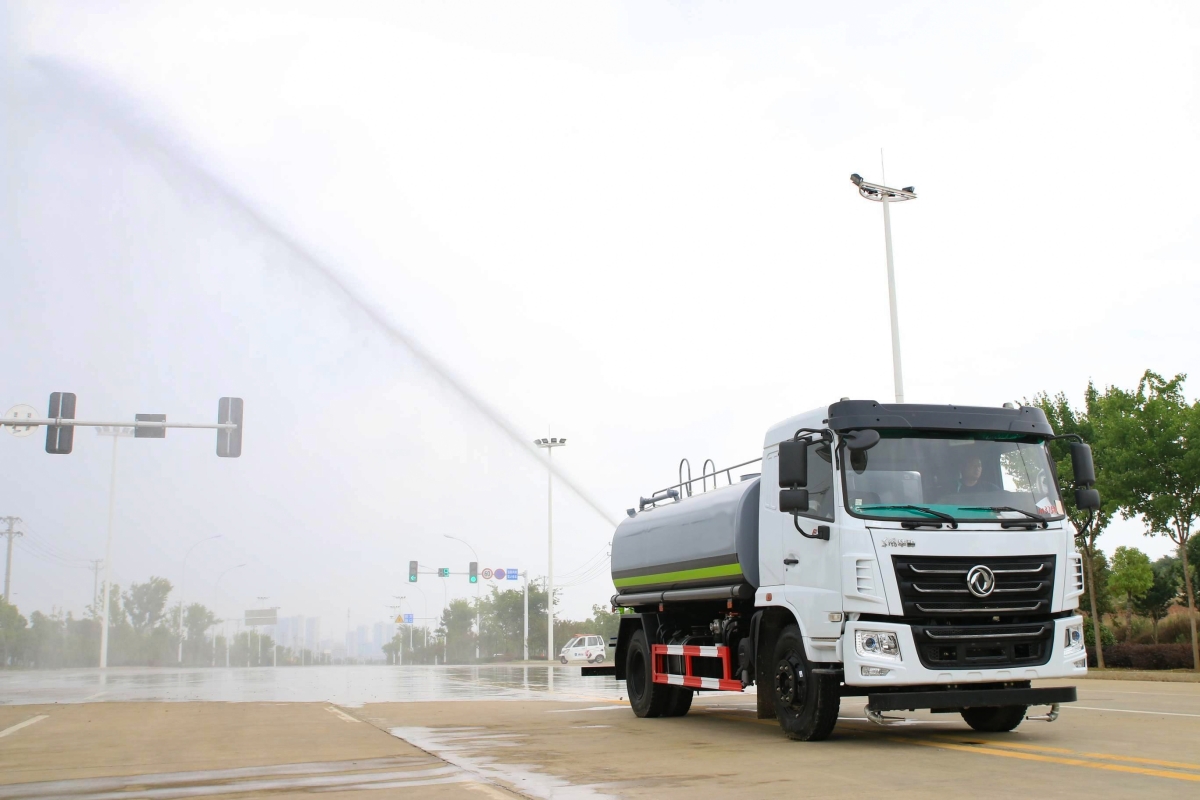
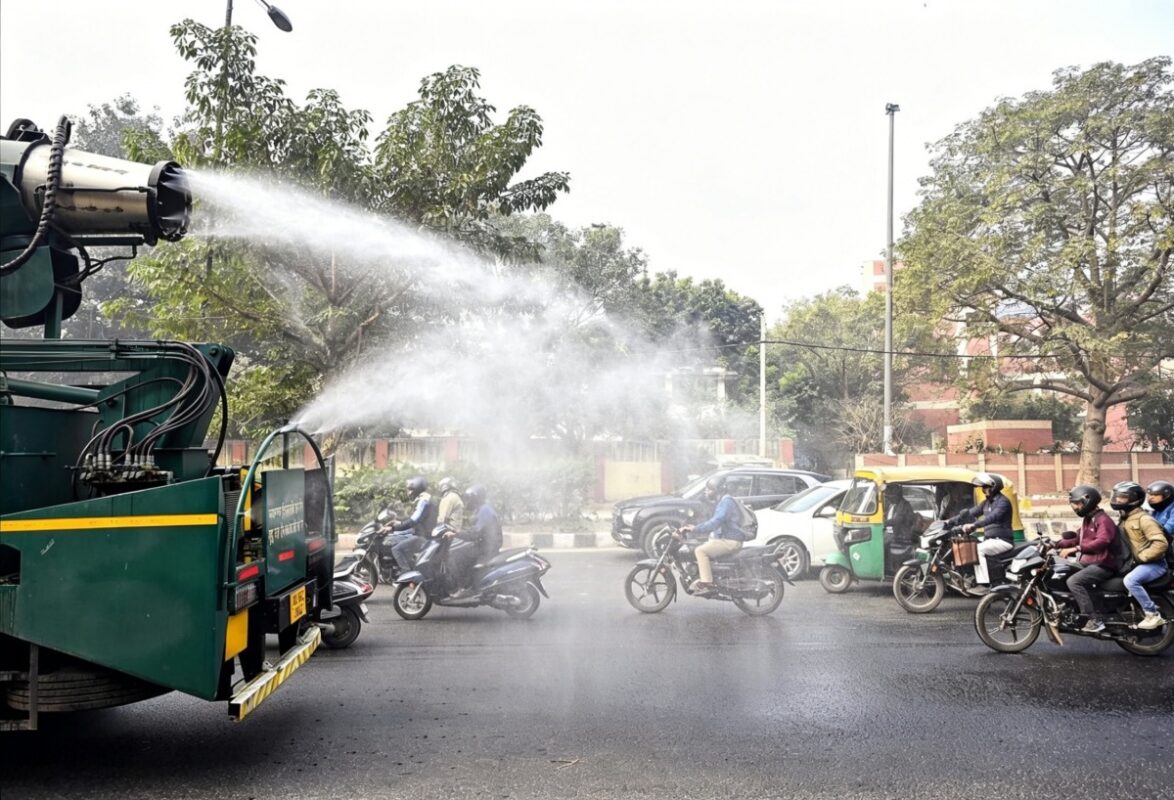
The basic principle behind a water spray truck is simple: water absorbs heat during evaporation. When water is sprayed onto hot road surfaces, it takes in thermal energy and gradually evaporates, helping reduce the temperature of the surrounding surface.
In many urban applications, road spraying operations can reduce surface temperatures by approximately 5–10°C, depending on factors such as sunlight intensity, humidity, wind conditions, and spraying frequency.
The cooling benefits include:
- Lower road surface temperature
- Reduced heat reflection from asphalt
- Improved pedestrian comfort
- Temporary relief during peak heat hours
Modern water sprinkler trucks are equipped with multiple spray modes, allowing operators to adjust water flow and coverage according to different urban conditions.
Global Cities Using Water Spray Trucks During Heatwaves
Many cities around the world have introduced water spraying operations as part of their heat management strategies.
Seoul, South Korea
During periods of extreme summer temperatures, Seoul has deployed water spray vehicles to cool major roads, pedestrian areas, and public spaces. These operations help reduce surface heat and improve outdoor conditions for residents.
Ulsan, South Korea
As an important industrial city, Ulsan uses spraying operations not only for cooling but also for dust control. Water spray trucks help reduce airborne particles in high-traffic and industrial areas while supporting urban environmental management.
Berlin, Germany
During unusually hot summers, European cities such as Berlin have explored different methods to reduce heat stress in urban areas. Water management solutions, including road spraying, have become part of broader strategies to improve public spaces during extreme weather.
These examples show that municipal water spray trucks are becoming an increasingly valuable solution for cities facing rising temperatures.
More Than Cooling: Multiple Urban Applications
Although heat reduction is becoming an important application, modern water spray trucks are designed for much more than temperature control.
These vehicles are widely used for:
Dust Suppression
Water mist helps capture airborne dust particles, making spray trucks valuable for:
- Construction areas
- Mining zones
- Industrial parks
- Busy roads
Road Cleaning
High-pressure water systems can remove dirt, mud, and surface pollutants, improving city cleanliness.
Landscape Irrigation
Side spraying systems can support roadside vegetation maintenance and urban landscaping projects.
Public Area Maintenance
Municipal departments can use these vehicles for cleaning squares, highways, and large public areas.
This multifunctional design allows one vehicle to support several environmental management tasks.
Advanced Technology of Modern Water Spray Trucks
Today’s water spray vehicles are becoming more intelligent and efficient. Manufacturers are improving these trucks with advanced systems that increase performance and reduce water waste.
Common features include:
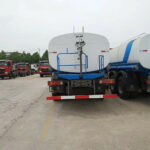
- Large-capacity water tanks
- High-efficiency pumps
- Adjustable spray nozzles
- Wide-area spraying capability
- Intelligent control systems
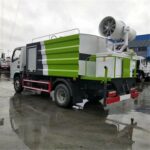
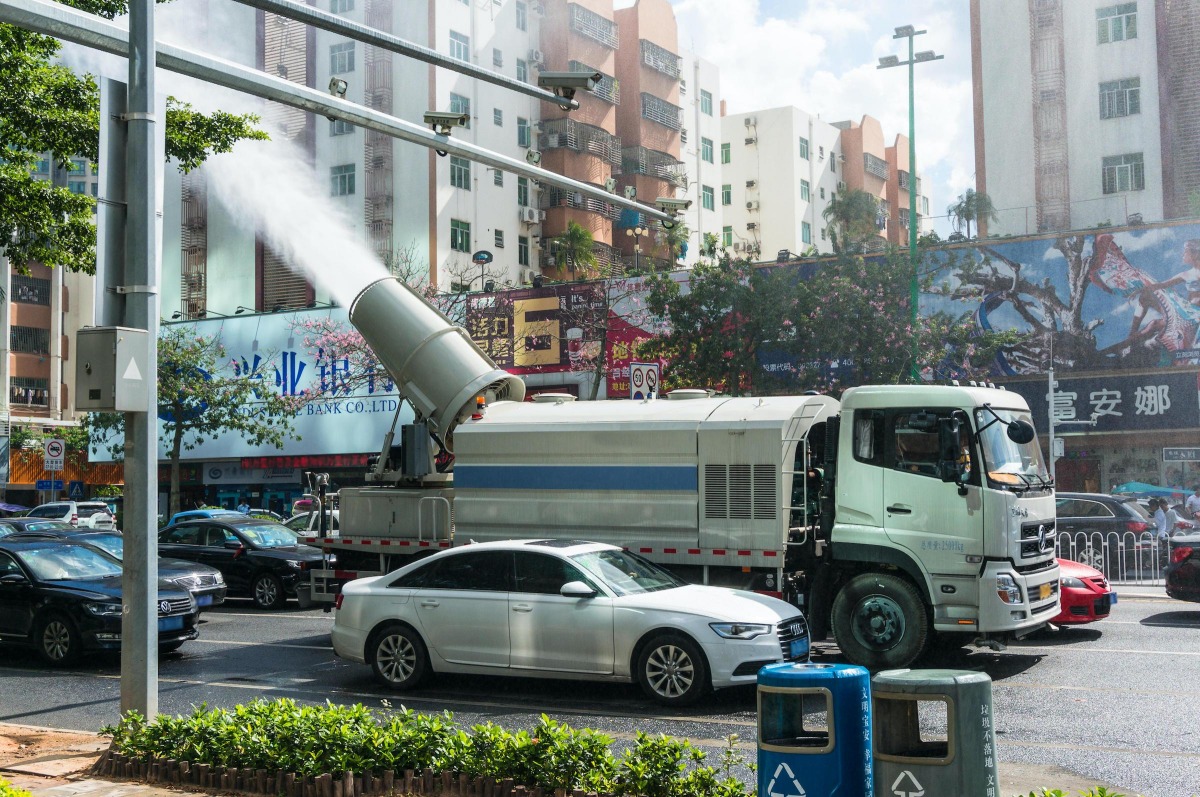
Some models can also be equipped with fog cannon systems, which create fine water particles and spray them over longer distances. These systems are especially useful for large-scale dust suppression and cooling applications in industrial areas and construction sites.
Supporting Future Climate-Resilient Cities
As climate change continues to increase the frequency of extreme heat events, cities need practical solutions that can be implemented quickly.
Water spray trucks provide several advantages:
- Fast deployment during heatwaves
- Flexible operation in different areas
- Combined cooling and cleaning functions
- Support for urban environmental management
While water spraying is not a replacement for long-term solutions such as urban forests, green buildings, and climate-friendly city planning, it provides valuable short-term support during extreme weather conditions.
Conclusion
As global cities face increasingly severe summer heatwaves, water spray trucks are becoming an effective tool for improving urban environments.
By combining cooling, dust suppression, road cleaning, and irrigation functions, these vehicles provide a flexible and efficient solution for modern municipal management.
From Seoul to European cities, the growing adoption of municipal water spray trucks demonstrates how practical equipment can help cities adapt to rising temperatures and create cleaner, safer, and more comfortable living environments.