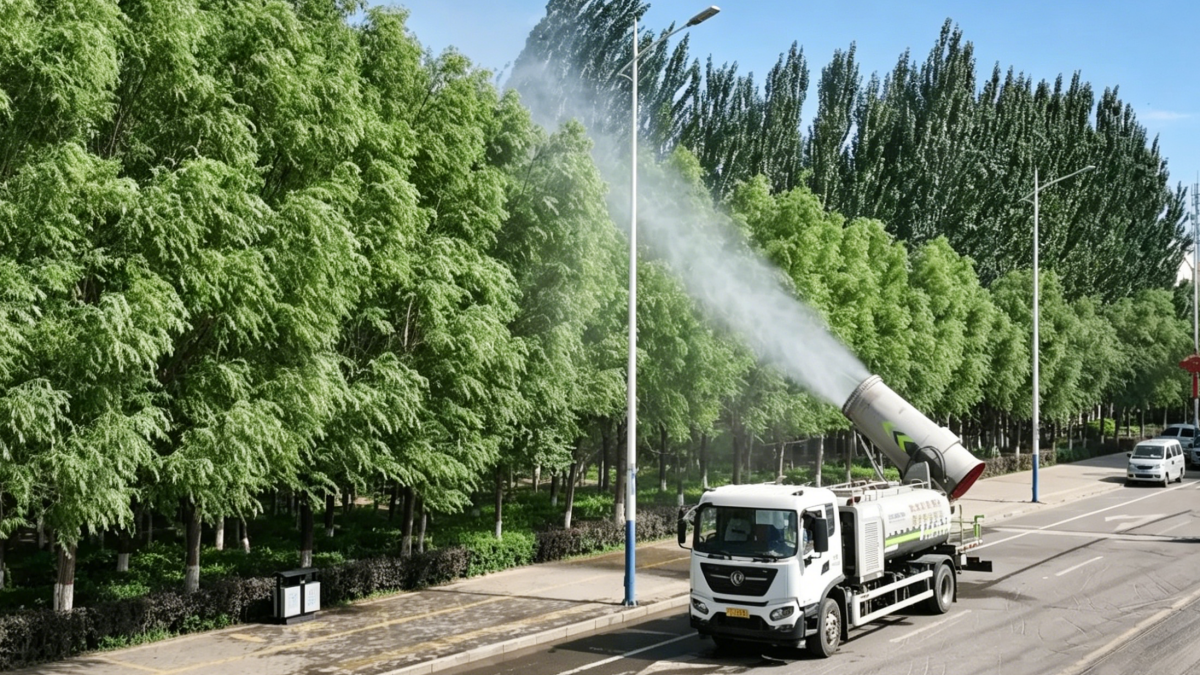
Dust is a major headache on construction sites, mines, demolition zones, and even city roads. Beyond being a nuisance, it poses serious health risks. Among the many solutions available, the water mist sprayer truck (also called a fog cannon) has gained global attention. But the real question is: Does it actually work? Let’s look at the science and real-world evidence.
What Is a Water Mist Sprayer Truck?
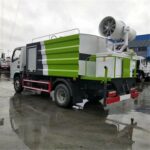
A water mist sprayer truck is a specialized vehicle designed to knock down airborne dust. Unlike ordinary water sprinkler trucks that dump large amounts of water on the ground, a water mist sprayer creates an ultra-fine mist that hangs in the air. This mist captures dust particles and brings them down to the ground.
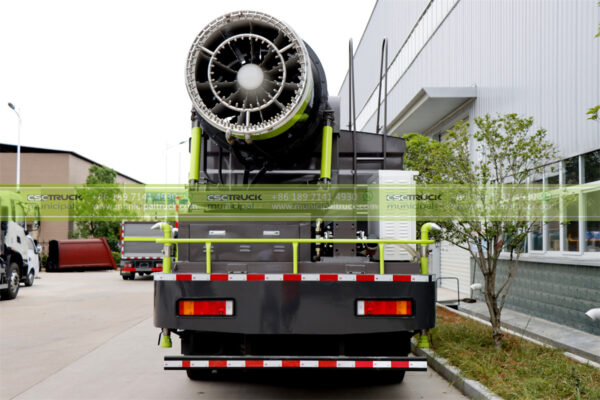
The core component is the “cannon” itself – a powerful fan combined with precision nozzles that can throw the mist over long distances and high into the air. For the same amount of water, a water mist sprayer truck can operate much longer than a traditional water truck, covering a much larger area.
How Does It Work? The Simple Science
The magic behind water mist sprayer dust suppression is a physical principle called agglomeration. Here’s what happens step by step:
- High-pressure atomization – Water is forced through special nozzles, breaking it into microscopic droplets. These droplets are many times finer than those from a garden hose or conventional sprinkler system.
- Fan projection – A large fan blows the mist into the air, creating a moving cloud that stays suspended rather than falling immediately.
- Collision and capture – Airborne dust particles (including the tiny, lung-damaging PM10 and PM2.5) collide with the water droplets. Because the droplets are similar in size to these particles, they “catch” them effectively.
- Weight gain and fall – Once a dust particle is wrapped in a water droplet, it becomes too heavy to stay airborne. Gravity pulls it quickly to the ground.
Traditional water sprinkler trucks only wet the surface, and when that surface dries, dust can rise again. A water mist sprayer truck directly tackles airborne dust while using far less water.
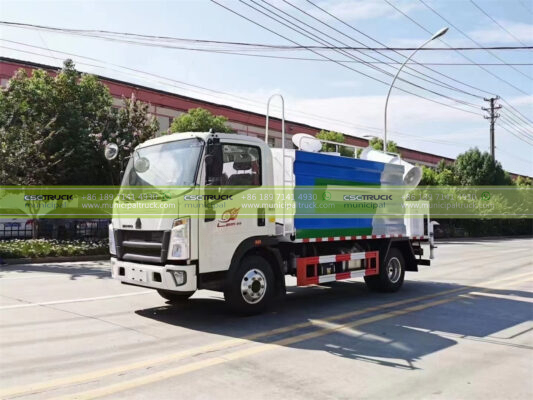
Does It Really Work? Evidence from the Real World
Yes, in most cases it does. Field tests and real-world applications have consistently shown significant dust suppression results.
On construction and demolition sites, water mist sprayer trucks can cut airborne dust by roughly three-quarters or more within minutes. In cement plants and material transfer points, the reduction is similarly dramatic. For urban road environments, cities using water mist sprayer trucks have reported clear drops in PM10 and PM2.5 levels year over year.
In mining operations, large-scale deployments of dust suppression trucks have cut dust significantly, helping mines meet environmental standards and improve community relations. In extreme cases, fog cannon systems have reduced dust levels to safe standards within minutes.
So the answer is clear: properly deployed water mist sprayer trucks are highly effective at suppressing airborne dust.
Water Mist Sprayer Truck vs. Sprinkler Truck – A Key Distinction
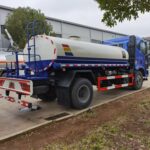
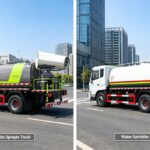
It’s important not to confuse the two. A sprinkler truck wets the ground. A water mist sprayer truck targets airborne dust. Their droplet sizes, range, and water efficiency are completely different.
If your problem is airborne dust control – from demolition, blasting, or material handling – you need a water mist sprayer truck. If your problem is only surface dust on haul roads, a water truck might still be enough.
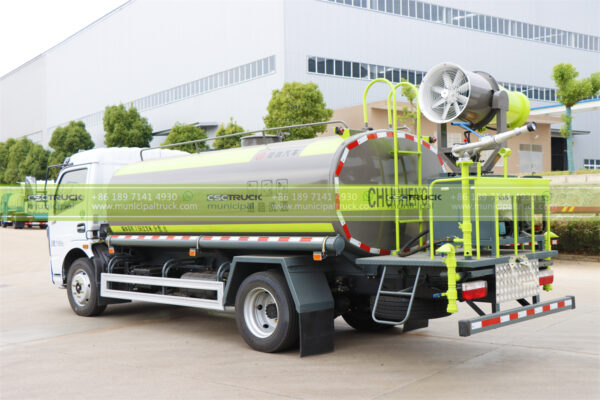
Smart Water Mist Sprayer Trucks: The Next Step
The newest models are no longer simple sprayers. Modern water mist sprayer trucks come with sensors that detect dust levels in real time. When PM2.5 or PM10 exceeds a set limit, the system automatically activates and adjusts spray angle and volume.
Some units can rotate 360 degrees and tilt vertically to cover complex work sites. Advanced dust suppression systems can even connect to city-wide monitoring networks for automated operation.
This intelligence improves efficiency and reduces water usage while maintaining strong dust control performance.
Limitations and Honest Caveats
No dust control system is perfect. Water mist sprayer trucks have some limitations:
- Wind matters – Strong winds can reduce mist spray effectiveness
- Temporary effect – Continuous dust requires continuous suppression
- Environmental factors – In high-pollution areas, careful operation is needed
- Water quality – Clean water helps maintain nozzle performance
These factors highlight the need for proper planning when using a water mist sprayer truck system.
When Should You Use a Water Mist Sprayer Truck?
A water mist sprayer truck is ideal for:
- Large construction sites (construction dust control)
- Open-pit mines and quarries (mining dust suppression)
- Cement plants and material transfer points
- Urban demolition projects
- Ports, stockyards, and logistics yards
- Airport construction
- Roadside air quality management
For best results, combine water mist sprayer technology with other dust control solutions.
The Bottom Line
Yes, water mist sprayer trucks really do suppress dust – and they do it very well when used correctly.
They are highly water-efficient, effective at capturing PM2.5 and PM10, and increasingly powered by smart automation. While not perfect, they remain one of the most effective tools for industrial dust control today.
If you’re dealing with serious airborne dust problems, investing in a water mist sprayer truck is a smart and practical solution.