Built to Last & Fully Tailored: Top-tier garbage, sweeper and sewer trucks crafted for unrivaled durability. A trusted choice for municipal governments across the globe.
The Silent Cloud: How Water Mist Sprayer Trucks Are Winning the War on Dust
If you have ever walked past a construction site on a windy day or driven by an open-pit mine, you know the enemy: dust. It gets in your eyes, coats your car, and more importantly, poses serious risks to both the environment and human health. For years, the standard solution was the water sprinkler truck—a large tank that sprayed water onto the ground to wet the dirt. But in the battle against airborne particulate matter, a new hero has emerged: the Water Mist Sprayer Truck.
These specialized vehicles look like something from a sci-fi movie, often featuring a massive cannon that shoots a powerful cloud of mist into the air. But beneath the impressive exterior lies sophisticated technology designed to tackle one of the biggest challenges of the industrial age: keeping our air clean.
In this blog, we will dive deep into what these vehicles are, how they work, where they are used, and why they have become an indispensable tool for environmental protection worldwide.
What Exactly Is a Water Mist Sprayer Truck?
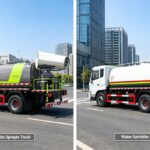
Simply put, a water mist sprayer truck is a specialized vehicle designed to control and suppress airborne dust. Unlike traditional water trucks that simply spray water on the ground to prevent dust from being kicked up, the mist sprayer truck targets dust that is already in the air.
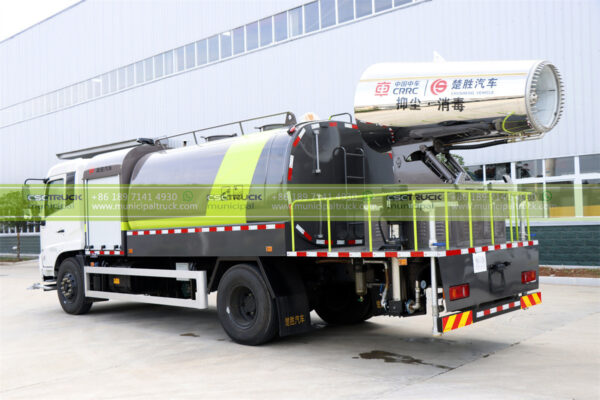
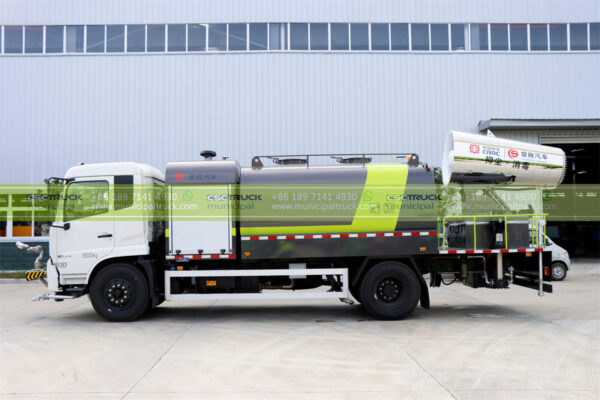
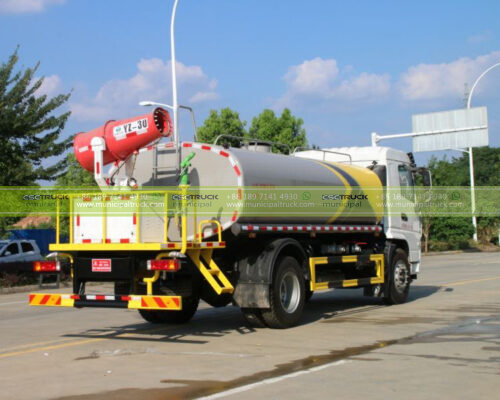
These trucks typically consist of three main components:
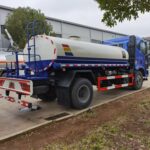
The Truck Chassis: A durable base that provides mobility to reach different sites.
The Water Tank: A large-capacity tank that stores the water.
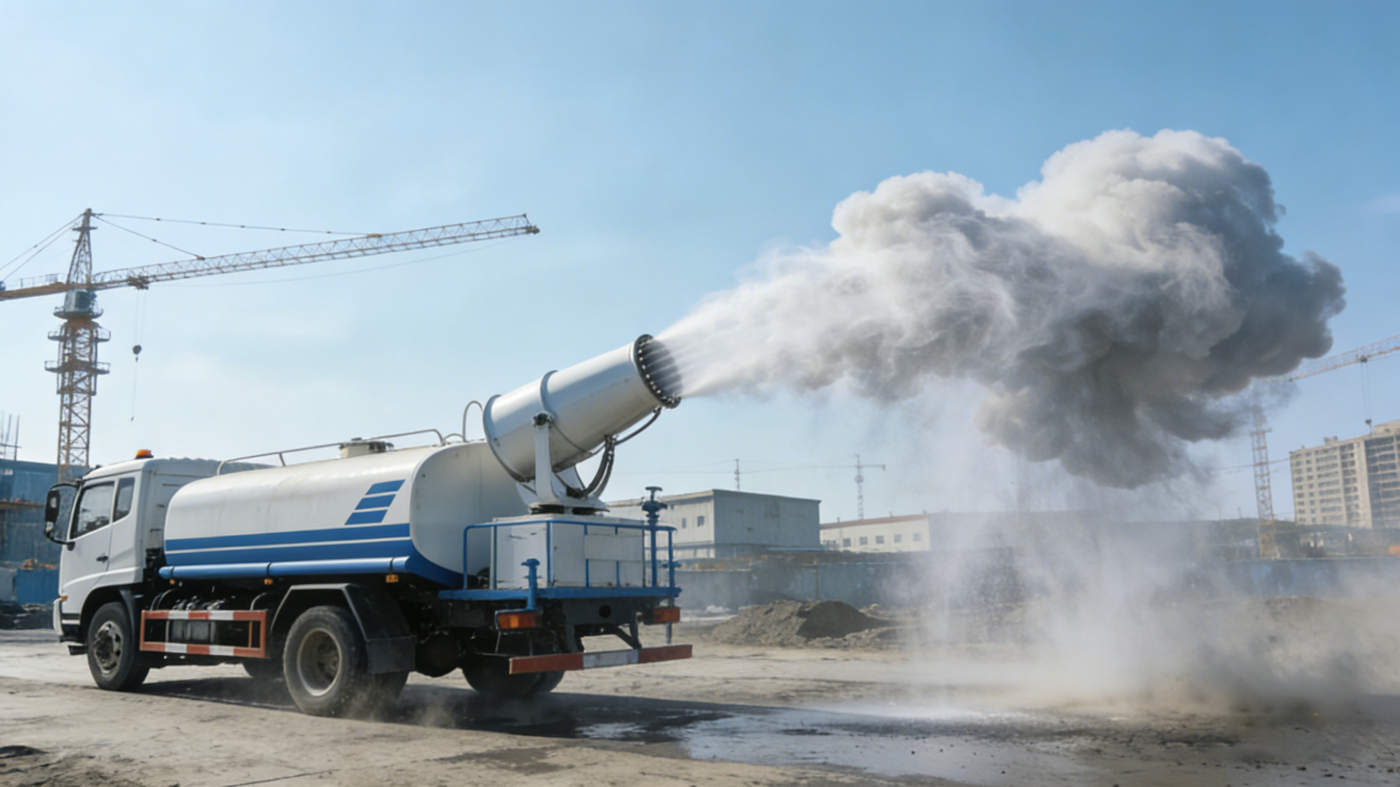
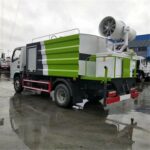
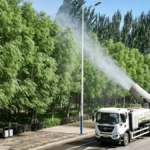
The Cannon: The most distinctive feature—a powerful, rotating nozzle system that atomizes water into a fine mist and propels it over long distances.
When in operation, these trucks look like they are spraying clouds. But that cloud is actually a carefully engineered curtain of water droplets designed to clean the air.
How Does It Work? The Science of Mist
You might think, “It’s just water sprayed into the air.” But the technology is more precise than that. The key lies in the size of the water droplets.
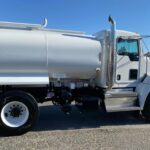
Traditional sprinkler trucks spray large water droplets that fall to the ground quickly. They are great for wetting soil, but useless for catching dust already floating in the air. Dust suppression vehicles, however, use high-pressure pumps and specialized nozzles to turn water into an ultra-fine mist. The goal is to create droplets that are comparable in size to fine dust particles.
Here is the science: Airborne dust and the water mist collide and bind together. Because the mist droplets are so tiny, they hang in the air longer, increasing the chance of them meeting a dust particle. Once the water and dust combine, the new particle becomes heavy enough to fall to the ground. This process is known as agglomeration.
The atomized mist generated by these fans is highly effective at capturing dust, covering vast areas with remarkable efficiency. A single high-powered cannon can project mist over impressive distances, covering an area equivalent to several large fields without the truck needing to move.
Where Are These Trucks Used?
The versatility of water mist sprayer trucks makes them invaluable across a wide range of industries. Because they can adjust the density and range of their spray, they are not just for dust control; they also contribute to cooling and odor management.
1. Construction and Demolition Sites
Urban construction is a major source of dust pollution. When old buildings come down, clouds of concrete dust billow into neighborhoods. Water mist trucks are now a standard sight at these sites, creating a protective barrier between the work zone and the surrounding community, ensuring that dust doesn’t affect local residents.
2. Mining and Quarries
In open-pit mines and quarries, dust isn’t just an annoyance; it is a serious health hazard for workers. Prolonged exposure to certain types of dust can lead to respiratory diseases. Heavy-duty mist cannons are used to suppress dust at excavation points, along haul roads, and over stockpiles.
3. Industrial Facilities and Ports
Factories, steel mills, and power plants often have large stockpiles of raw materials that are exposed to the wind. Ports that handle bulk materials face similar challenges. Spraying these stockpiles with a water mist prevents the material from being lost to the wind, saving money and protecting the environment.
4. Waste Management and Recycling
Landfills and recycling centers can generate dust and odors. By using mist cannons, operators can suppress dust during dumping and processing. Some advanced systems can even be used to spray deodorizing agents to keep the facilities more pleasant for workers and nearby residents.
5. Urban Smog Reduction
In many large cities around the world, mist cannon trucks have been deployed by environmental agencies to combat heavy smog. By spraying fine mist into the air, they attempt to “wash” the atmosphere and bring down particulate matter, providing a noticeable improvement in air quality during severe pollution episodes.
The Advantages Over Traditional Water Trucks
Why make the switch from a simple sprinkler to a fog cannon? The benefits are compelling:
Water Efficiency: Because the water is atomized, it covers a much larger area with significantly less water. This is crucial in regions where water conservation is a priority.
Targeting Airborne Dust: Ground sprinklers only prevent dust from lifting off. They do nothing for the dust already in the air. Mist cannons actively clean the air we breathe.
Extended Range: A single cannon can reach high altitudes and distant points without needing the truck to move, making it perfect for knocking down dust plumes at their source.
Mobility: While stationary systems exist, the truck-mounted version offers the flexibility to respond to problem areas instantly. If a particular part of a mine or construction site is generating more dust on a windy day, the truck can be there in minutes.
A New Perspective: A Note on Environmental Impact
While these trucks are heroes in the fight against visible dust, recent scientific studies offer a fascinating and important perspective on their use. As we strive to solve environmental problems, we must ensure we aren’t creating new ones.
Research has looked closely at the impact of mist cannon trucks on urban air quality. The studies found that while the cannons are excellent at suppressing coarse dust particles, they can have an unintended side effect regarding fine particles.
The research suggests that the massive increase in humidity caused by the mist cannon spray can interact with gases in the atmosphere to form new compounds. In some cases, the concentration of fine particles in the air was observed to change after spraying.
This doesn’t mean the trucks are bad—they are still highly effective at knocking down larger, visible dust. However, it highlights that environmental management is complex. It suggests that the best approach isn’t just to spray more, but to combine mechanical suppression like this with strict emission controls at the source for a truly healthy environment.
The Future of Dust Control
The technology behind water mist sprayer trucks continues to evolve. We are seeing a shift toward smarter, more automated systems. Modern trucks can now be equipped with remote controls, allowing operators to aim the cannon from inside a cab or even from a remote location.
Some advanced systems are moving away from the truck model entirely in favor of stationary, automated setups that activate based on real-time dust monitoring sensors. However, for flexibility and rapid response, the truck-mounted cannon remains the preferred solution in many industries.
Conclusion
Water mist sprayer trucks represent a significant leap forward in industrial hygiene and environmental protection. By turning water into a high-velocity, targeted mist, they can trap dust before it reaches our lungs, protect sensitive machinery from abrasive particles, and help industries comply with strict environmental regulations.
From dusty mining operations to the smoggy streets of major cities, these silent clouds are hard at work. They are a powerful reminder that sometimes, the best way to fight a problem as small as a particle of dust is to meet it with a cloud of innovation.
Of course, in the vast system of environmental protection and urban cleaning, the water mist sprayer truck does not fight alone. It works in coordination with many other specialized vehicles, together forming a solid line of defense to safeguard air quality. For example, the common road sweeper truck is its “perfect partner”: the sweeper is responsible for collecting dust and debris from the ground, reducing accumulated dust at the source; while the mist sprayer truck focuses on the air, capturing the fine particles that have already been raised. Additionally, the pre-wetting of roads by water trucks creates better conditions for both sweeping and dust suppression. These three—the “dust suppression” of the water truck, the “dust collection” of the sweeper, and the “dust settling” of the mist sprayer—form a three-dimensional, full-process cleaning solution that spans from the ground to the air, working together to bring genuine cleanliness and freshness to cities and industrial parks.