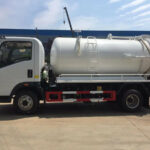
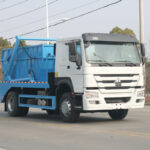
Built to Last & Fully Tailored: Top-tier garbage, sweeper and sewer trucks crafted for unrivaled durability. A trusted choice for municipal governments across the globe.
The relentless task of collecting and transporting waste, particularly from commercial, industrial, and large residential complexes, demands robust and efficient solutions. While various refuse collection vehicles exist, the hook loader garbage truck stands out as a uniquely versatile and powerful workhorse in the waste management fleet. Often overshadowed by the ubiquitous rear-loader or the compact front-loader, the hook loader system offers a distinct blend of strength, adaptability, and operational efficiency that makes it indispensable for handling demanding waste streams. This deep dive explores the engineering, functionality, advantages, and evolving role of these formidable vehicles in modern sanitation operations.
1. Understanding the Hook-and-Lift System: Core Mechanics
At the heart of the hook loader garbage truck lies its defining feature: the hook-and-lift mechanism. This isn’t just a different way to dump a bin; it’s a fundamentally different approach to container handling. Unlike systems integrated directly onto the truck chassis for lifting specific bin types, the hook loader is designed to handle standardized, detachable intermodal containers.
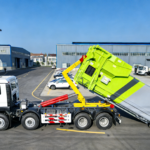
The Hydraulic Hook Arm: Mounted behind the cab or on the chassis frame, this robust, telescopic arm features a powerful hydraulic hook at its end. The operator maneuvers this hook to engage with the lifting points or latching mechanisms located on the upper front corners of a compatible container.
The Detachable Container: These containers come in various sizes, commonly ranging from 10 to 40 cubic yards, constructed from heavy-gauge steel for durability. They are designed specifically to interface with the hook arm system, featuring standardized lifting points and often a rear roll-off door for emptying.
The Lift-and-Tilt Sequence: Once securely hooked, the hydraulic system lifts the container vertically above the truck’s chassis. It then tilts it forward, allowing the contents to slide out through the rear door directly into the truck’s hopper. After emptying, the sequence reverses: the container is lowered and tilted back to its upright position before being gently set down on the ground or onto a waiting transport vehicle. This entire process is remarkably efficient, typically taking only a couple of minutes.
2. Engineering for Heavy-Duty Performance
The demands placed on a hook loader system necessitate exceptional engineering. These trucks are built to handle significantly heavier loads than standard residential collection vehicles.
Robust Chassis and Powertrain: Hook loaders are typically built on heavy-duty commercial truck chassis, often sourced from manufacturers known for durability in demanding applications. Powerful diesel engines provide the necessary torque to lift fully loaded containers, which can weigh several tons. Enhanced braking systems and reinforced suspensions are critical for safety and stability, especially when navigating urban environments or uneven terrain with a heavy container aloft.
Advanced Hydraulic Systems: The lifting and tilting operations are powered by sophisticated, high-capacity hydraulic systems. These systems generate immense force while requiring precise control for the safe maneuvering of large containers. Reliability is paramount, as hydraulic failure would render the truck inoperable. Modern systems incorporate features like load-sensing hydraulics and automated sequence controls to optimize performance and reduce operator strain.
Container Design and Compatibility: The containers themselves are feats of engineering. Constructed from high-tensile steel, they withstand constant loading, unloading, and exposure to corrosive waste materials. Standardization is key – containers built to specific dimensional and lifting point specifications (often based on established industry standards) ensure interoperability with different hook loader trucks, maximizing flexibility for waste companies. Reinforced corners, durable door mechanisms, and sometimes specialized liners for challenging waste types (like construction debris or liquids) enhance their utility.
3. Operational Advantages: Efficiency, Versatility, and Safety
The unique design of the hook loader system translates into tangible benefits for waste management operations.
Unmatched Container Handling Speed: The ability to lift, empty, and replace a large container in a matter of minutes drastically reduces collection times per stop compared to manually emptying numerous smaller bins or dealing with integrated compactors. This speed translates directly into increased route efficiency and reduced labor costs.
Minimized Physical Labor: The entire process of emptying the container is mechanized. Operators remain safely within the cab, controlling the lift via a console. This significantly reduces the risk of musculoskeletal injuries associated with manual bin handling and promotes a safer working environment.
Reduced Truck Wear and Tear: Unlike compactors integrated into the truck body, which subject the entire vehicle to compaction forces and vibrations, the hook loader system isolates the compaction process. Compaction typically occurs within the detachable container itself before lifting, or sometimes within the truck’s hopper after dumping. This separation means the truck chassis and body endure less stress, potentially leading to lower maintenance costs and longer vehicle lifespans.
Flexibility in Waste Streams: While highly effective for large-volume commercial waste, hook loaders are also adept at handling bulky items, construction and demolition debris, recyclables collected in large containers, and even specialized waste types when paired with appropriately designed containers.
4. Versatility Beyond Traditional Refuse: Diverse Applications
The true strength of the hook loader system lies in its remarkable versatility, extending far beyond standard municipal solid waste collection.
Construction and Demolition (C&D) Debris: This is a prime application. Hook loaders efficiently handle large volumes of heavy, bulky debris like concrete, wood, drywall, and metal generated at construction sites. Dedicated roll-off containers are placed on-site, filled by workers, and swapped out as needed without disrupting the truck’s ability to service other locations.
Industrial Waste Management: Factories and manufacturing plants generating consistent, large volumes of non-hazardous waste benefit significantly. Containers can be strategically placed near production lines, filled throughout a shift, and efficiently collected without requiring constant truck presence or complex bin maneuvering.
Recycling Collection: For large-scale recycling programs, particularly at commercial facilities or multi-family housing complexes, hook loaders can service sizable recycling containers. This facilitates the efficient collection of significant volumes of cardboard, plastics, or commingled recyclables.
Specialized Waste Handling: With custom containers, hook loaders can manage unique waste streams. This includes containers designed for green waste, appliances, tires, or even liquids (using sealed tank containers). The system’s adaptability makes it a valuable asset for diverse waste management challenges.
Intermodal Logistics: The standardized nature of the containers allows for efficient transfer between collection trucks and long-haul transport vehicles or rail cars, facilitating regional waste transfer and disposal logistics. A container filled at a remote site can be hauled by a sweeper truck (a tractor unit specifically designed for container transport) to a distant processing facility.
5. Considerations: Deployment and Maintenance
While highly advantageous, deploying hook loader systems requires careful consideration of specific operational factors.
Infrastructure Requirements: Effective use necessitates adequate space at customer sites for placing and swapping containers. This includes maneuvering room for the truck and a stable, level surface for the container to sit on. Urban environments with tight spaces can sometimes pose challenges.
Container Management Logistics: Waste companies must manage a fleet of containers alongside the trucks themselves. This involves tracking container locations, scheduling swaps based on fill rates, and maintaining the containers themselves. Container damage or theft needs to be managed.
Operator Training: While the lifting mechanism simplifies dumping, operators still require specific training. They must be proficient in maneuvering the truck and hook arm safely, especially in confined areas, understanding container compatibility, and performing pre-trip inspections on both the truck and the hydraulic system. Understanding load limits and proper engagement procedures is critical for safety.
Maintenance Focus: The hydraulic lift system is complex and requires regular, specialized maintenance to ensure reliability and prevent costly downtime. Bearings, hoses, cylinders, and the hook mechanism itself need vigilant inspection and servicing according to stringent schedules. Container maintenance – repairing doors, hinges, and structural integrity – is also an ongoing task.
6. The Future of Heavy-Duty Waste Collection: Evolving Technologies
The hook loader garbage truck is not a static technology; it continues to evolve, incorporating advancements that enhance performance, sustainability, and integration with modern waste management practices.
Telematics and Fleet Management: Integration of GPS, onboard diagnostics, and fill-level sensors (sometimes within containers) provides real-time data. This allows for optimized route planning, proactive maintenance scheduling based on actual usage data, and improved container swap logistics, maximizing operational efficiency.
Alternative Fuel Adoption: Like other heavy-duty vehicles, hook loaders are increasingly adopting alternative fuels. Compressed Natural Gas (CNG) and Renewable Natural Gas (RNG) versions are becoming more common, offering significant reductions in greenhouse gas emissions and particulate matter compared to traditional diesel. Electric drive systems, particularly for the lift mechanism or even full electric chassis for shorter urban routes, are emerging as viable options, paving the way for zero-emission waste collection.
Enhanced Automation: While still requiring skilled operators, features like automated lift sequences, semi-automatic hook engagement systems, and advanced camera systems for improved visibility during lifting and placement are enhancing safety and reducing operator workload. Further automation in container identification and tracking is also developing.
Integration with Waste Processing: The efficiency of hook loaders complements modern waste processing facilities. The rapid transfer of large container volumes streamlines operations at Material Recovery Facilities (MRFs) for recycling, transfer stations, and waste-to-energy plants. The standardization of containers facilitates automated handling at these facilities.
The hook loader garbage truck represents a pinnacle of heavy-duty, adaptable waste collection technology. Its unique hook-and-lift system, built upon robust engineering principles, delivers unparalleled efficiency in handling large volumes of diverse waste streams. From commercial refuse to construction debris and specialized materials, its versatility is unmatched. While requiring specific infrastructure and maintenance focus, the operational advantages in speed, reduced labor, and flexibility make it a cornerstone of modern, large-scale waste management operations. As technology advances, incorporating telematics, cleaner fuels, and enhanced automation, the hook loader system is poised to remain an essential, evolving solution for the complex challenges of waste collection and transportation. For professionals seeking reliable heavy-duty equipment, exploring the comprehensive range of garbage truck solutions, including advanced hook loaders, at resources like Municipaltruck.com can provide valuable insights for optimizing fleet performance.