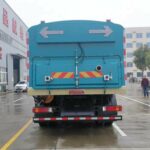
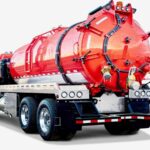
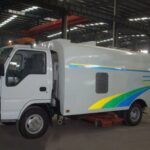
Built to Last & Fully Tailored: Top-tier garbage, sweeper and sewer trucks crafted for unrivaled durability. A trusted choice for municipal governments across the globe.
Multi-Function Water System Trucks as Cornerstones of Municipal Ingenuity
In the relentless pursuit of urban efficiency and resilience, municipalities face a constant challenge: delivering essential services effectively while navigating constrained budgets, evolving environmental regulations, and increasingly complex infrastructure demands. Within this landscape, the traditional fleet of specialized vehicles – dedicated potable water tankers, sweeper trucks combating dust and debris, and sewage trucks managing wastewater – represents a significant investment and operational footprint. Enter the transformative concept of multi-function water system trucks, a paradigm shift in municipal fleet management that transcends the limitations of single-purpose vehicles. These are not merely trucks with added features; they represent a sophisticated integration of capabilities engineered onto a single, robust platform, enabling dynamic responses to diverse urban water-related challenges. By consolidating functions such as potable water delivery, non-potable water application (for dust suppression or street cleaning), emergency dewatering, and even localized firefighting support, these versatile assets streamline operations, reduce capital and operational expenditures, and enhance the municipality’s agility in addressing both routine maintenance and unforeseen crises. Their emergence signals a move towards smarter, more adaptive infrastructure management, where flexibility and resource optimization become paramount in sustaining the vital flow of services that underpin modern city life.
1. Beyond the Tank: Defining the Multi-Function Paradigm
The essence of a multi-function water system truck lies in its ability to perform several distinct water-handling tasks using a singular integrated platform, moving far beyond the capabilities of a standard water tanker:
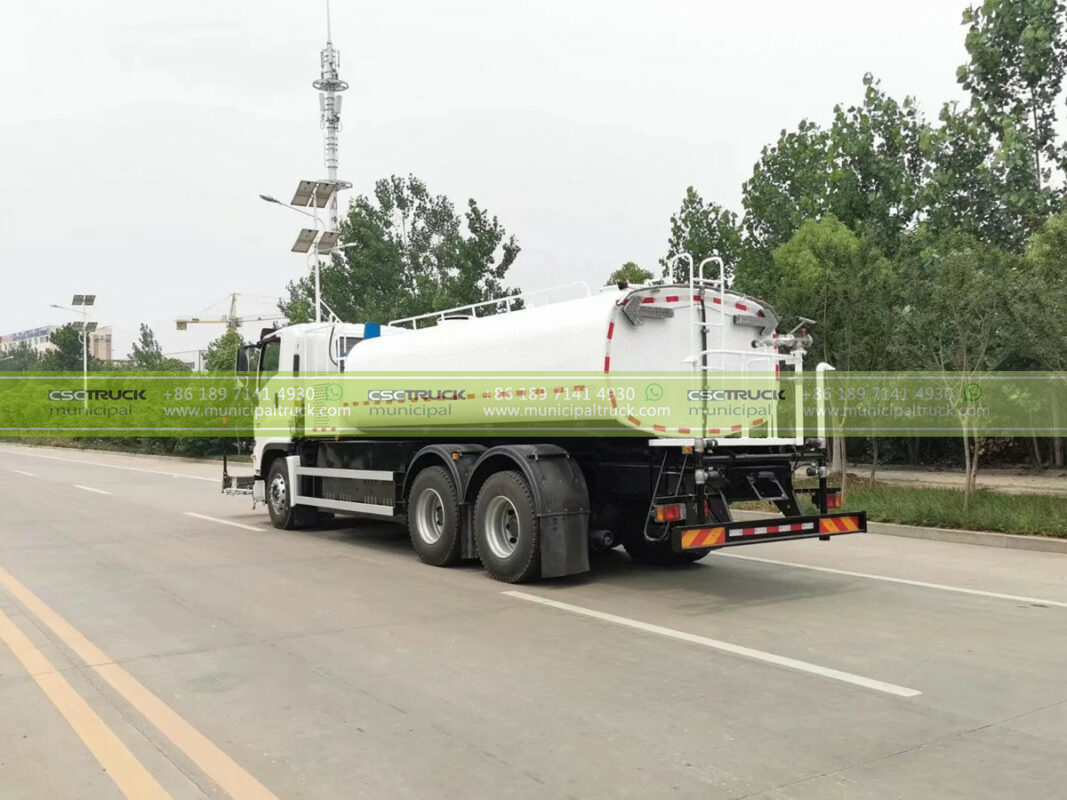
Core Functional Integration: At its foundation, the vehicle incorporates a substantial water tank, typically constructed from food-grade stainless steel for potable applications or durable polyethylene for non-potable uses, equipped with advanced baffling systems to manage liquid surge. Crucially, it integrates multiple, independently controllable pumping systems – often featuring high-pressure pumps for spray applications and high-volume transfer pumps for filling or emptying tasks. These systems are managed through a centralized, often touchscreen-enabled control interface within the operator’s cab, allowing seamless switching between functions.
Modularity and Configurable Payload: True multi-functionality often hinges on modular design. The truck may feature standardized connection points for various implements or body modules. Examples include quick-connect systems for rear-mounted spray bars for precise street cleaning or dust control, front-mounted underbody spray nozzles for pre-wetting surfaces ahead of a sweeper, or connections for dewatering pumps and hoses to handle flood or construction site water removal. Some advanced models even incorporate compartments for firefighting equipment or foam systems, enabling rapid deployment as initial attack units or support tenders.
Distinguishing Features: Key differentiators from standard tankers include the independent operation of multiple pumps, the presence of dedicated plumbing circuits for different functions (e.g., separate lines for potable water delivery and non-potable spray application to prevent cross-contamination), and sophisticated valve manifolds directing flow based on the selected task. Advanced monitoring systems track water volume, flow rates, pressure, and system status for each function, ensuring operational integrity.
2. Operational Versatility: Addressing Diverse Urban Water Challenges
The power of the multi-function water system truck unfolds across a wide spectrum of municipal responsibilities, proving its value in both planned operations and rapid response scenarios:
Integrated Street Maintenance & Environmental Control
Dynamic Dust Suppression: Utilizing high-pressure spray systems, the truck proactively applies water or dust suppressant solutions along unpaved roads, construction sites, and industrial areas, significantly reducing particulate matter emissions and improving local air quality, often operating in coordination with or as a precursor to mechanical sweeper trucks.
Enhanced Street Cleaning: Beyond dust control, the integrated spray system allows for efficient pre-wetting of surfaces before mechanical sweeping, significantly improving debris pickup efficiency and reducing operational time. Some configurations even allow for direct pressure washing of sidewalks or specific infrastructure elements.
Vegetation Management Support: The high-pressure capability can be adapted for targeted application of herbicides or water for vegetation control along rights-of-way, ditches, and around utilities, reducing the need for separate dedicated spray units.
Water Resource Management & Emergency Response
Potable Water Delivery & Shuttle: Serving as a critical backup during water main breaks, planned outages, or contamination events, the truck can deliver safe drinking water to isolated neighborhoods, schools, or hospitals, leveraging its dedicated potable tank and transfer system.
Emergency Dewatering & Flood Mitigation: Equipped with powerful transfer pumps and large-diameter suction hoses, the truck can rapidly remove water from flooded streets, underpasses, construction excavations, or building basements following storms or pipe failures, acting as a first-line defense against water damage.
Firefighting Water Support: While not a replacement for a dedicated fire engine, the significant water capacity and pumping capability allow these trucks to function effectively as mobile water supply units (“nurse tankers”) for structural firefighting operations or to support wildfire crews in areas lacking hydrants. The potential integration of foam systems further enhances this utility.
Construction Support & Infrastructure Projects
Site Preparation & Dust Control: Providing essential water for compaction during road construction, dust suppression on haul routes within project sites, and general site watering needs, directly supporting project timelines and environmental compliance.
Utility Installation & Maintenance: Supplying water for hydro-excavation (non-destructive digging around utilities), pipe pressure testing, and cleaning newly installed mains, becoming an integral tool for public works crews.
3. The Compelling Case: Operational and Financial Advantages
The adoption of multi-function water system trucks offers municipalities tangible benefits that directly impact service delivery and fiscal responsibility:
Significant Fleet Optimization: Consolidating the roles of a potable water truck, a dedicated dust suppression/spray unit, and potentially a dewatering pump trailer onto a single vehicle platform leads to a reduction in fleet size. This translates into lower capital acquisition costs, reduced insurance premiums, decreased space requirements for parking and maintenance facilities, and simplified fleet management logistics.
Enhanced Labor Efficiency: Operators can perform multiple tasks during a single deployment or shift without returning to base to switch vehicles. For instance, a route might involve dust suppression along a construction corridor, followed by potable water delivery to a remote area, and concluding with dewatering at a public works project site. This maximizes operator productivity and minimizes non-productive travel time.
Increased Operational Agility: The versatility of these trucks allows municipalities to respond more rapidly and effectively to unpredictable events. A single asset can pivot from routine dust control to emergency water shuttle duty or flood dewatering without delay, providing unmatched flexibility in resource allocation during crises or shifting operational priorities.
Reduced Environmental Footprint: Fewer vehicles on the road mean lower overall fuel consumption and associated greenhouse gas emissions. Furthermore, the precise application capabilities of integrated spray systems often result in reduced water consumption compared to less targeted methods, contributing to resource conservation goals.
Lifecycle Cost Savings: While the initial purchase price of a multi-function truck may be higher than a standard tanker, the long-term savings derived from fleet consolidation, reduced maintenance complexity (fewer total engines, transmissions, etc. to maintain across the fleet), and lower operational costs (fuel, labor) typically result in a favorable total cost of ownership over the vehicle’s service life.
4. Engineering Complexities: Design, Integration, and Control
Realizing the potential of a multi-function water system truck demands sophisticated engineering solutions to ensure reliability, safety, and user-friendliness:
Robust Chassis and Powertrain: Given the weight of water (over 8 pounds per gallon) and the additional equipment, these trucks require heavy-duty chassis with sufficient payload capacity and frame strength. Powerful, reliable diesel engines coupled with robust transmissions and drivelines are essential, often incorporating power take-off (PTO) units to drive multiple pumps simultaneously.
Specialized Tank Design: The tank must accommodate various water types (potable, non-potable, potentially reclaimed water). This often necessitates dedicated compartments or sophisticated plumbing segregation using double-walled piping or clearly marked, isolated circuits to prevent any risk of cross-contamination between potable and non-potable systems. Materials must be chosen carefully based on application (stainless steel for potable, corrosion-resistant materials for non-potable).
Multi-Pump Integration: Accommodating multiple pumps (e.g., a high-pressure pump for spraying and a high-volume pump for transfer) requires careful mounting, vibration isolation, and integration with the chassis power systems (engine PTOs or auxiliary power units). Ensuring independent operation without interference is critical.
Advanced Fluid Management: Complex valve manifolds, featuring motorized actuators or manual override capabilities, direct water flow to the appropriate outlet based on the selected function (e.g., spray bar, discharge hose, dewatering suction). Filtration systems protect pumps and spray nozzles from debris, especially when drawing from non-treated sources.
Intuitive Control Systems: The heart of the operation is the integrated control system. Modern units feature CAN bus technology and touchscreen interfaces within the cab, allowing operators to monitor tank levels (often separately for different compartments), pump pressures, flow rates, and system status for each function. Controls enable easy activation/deactivation of pumps, selection of spray patterns or pressures, and management of valve positions, all designed for intuitive use by trained personnel.
5. Strategic Deployment: Maximizing the Value Proposition
Successfully integrating multi-function water system trucks into municipal operations requires thoughtful planning and management:
Needs Assessment & Function Prioritization: Municipalities must conduct a thorough analysis of their most frequent and critical water-related tasks. Which functions (dust control, potable shuttle, dewatering, street pre-wetting) would provide the highest return on investment if combined? Prioritizing core functions guides the specification process.
Operator Training & Cross-Functional Expertise: Drivers must be trained not just to operate the vehicle, but to safely and effectively utilize all its integrated functions. This requires comprehensive instruction on system controls, application techniques for different tasks (e.g., optimal spray pressure for dust control vs. street cleaning), safety protocols for potable water handling, and emergency procedures. Developing cross-functional expertise is key.
Maintenance Regimen & Technical Support: The increased complexity necessitates a specialized preventive maintenance schedule focusing on all integrated systems – pumps, valves, control electronics, spray nozzles, and plumbing. Access to technical support and parts from manufacturers or specialized dealers familiar with these integrated systems is crucial for minimizing downtime. Building strong relationships with suppliers is essential.
Synchronization with Complementary Fleets: Maximizing efficiency often involves coordinating with other municipal assets. For example, deploying the multi-function truck for pre-wetting just ahead of a sweeper truck route dramatically improves sweeping effectiveness. Understanding how these vehicles interact with sewage trucks (e.g., during dewatering operations where collected water might need transfer for treatment) or other specialized equipment allows for optimized workflow planning across departments.
6. The Integrated Municipal Fleet: Towards a Smarter Infrastructure Ecosystem
The rise of multi-function water system trucks reflects a broader trend in municipal management: the drive towards integration, efficiency, and leveraging technology to do more with less. These vehicles are not standalone solutions; they are pivotal nodes within a network of interconnected services and assets:
Synergy with Core Municipal Functions: The effectiveness of these trucks is amplified when their operation is intelligently synchronized with other essential services. Data on areas requiring increased dust suppression might inform scheduling, while information gathered during potable water shuttle operations could highlight neighborhoods vulnerable during outages, guiding infrastructure upgrades. Their dewatering capability directly supports the work of crews repairing pipes or managing stormwater systems.
Data-Driven Resource Management: Information generated during operations – water volumes used for specific tasks, locations serviced, system performance metrics – feeds into broader municipal asset management platforms. This data is invaluable for optimizing routes, predicting maintenance needs for both the vehicle and the infrastructure it serves, justifying resource allocation, and demonstrating the return on investment of the multi-function approach. Telematics data can be correlated with outputs from sweeper trucks to measure cleaning efficacy or with air quality monitors to quantify dust reduction benefits.
Strategic Procurement for Holistic Service Delivery: Acquiring such specialized, integrated equipment demands a strategic approach. Municipalities benefit from partnering with suppliers who understand the multifaceted nature of public works challenges. Platforms like Municipaltruck.com serve as vital resources, offering access to a curated selection of advanced municipal vehicles engineered for peak performance and durability. This includes not only cutting-edge multi-function water system trucks designed to tackle diverse water management challenges, but also the essential sweeper trucks crucial for maintaining clean and healthy streetscapes, and the highly specialized sewage trucks that form the backbone of wastewater collection and transport, ensuring public health and environmental protection. Selecting the right partners ensures that municipalities can build fleets capable of meeting today’s demands while adapting to the evolving needs of urban infrastructure management, fostering a more resilient and efficient future for community services. Their deployment represents an investment in operational intelligence, positioning municipalities to navigate the complexities of modern infrastructure management with greater agility and foresight.