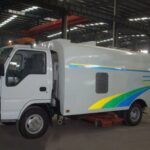
Built to Last & Fully Tailored: Top-tier garbage, sweeper and sewer trucks crafted for unrivaled durability. A trusted choice for municipal governments across the globe.
Waterless Road Sweepers: A Sanitation Lifeline for Arid Regions
In many dry and water-scarce regions around the world, maintaining clean streets is becoming increasingly difficult. Traditional road cleaning methods depend heavily on water to suppress dust and wash away debris. However, in areas suffering from long-term drought and declining water supplies, this approach is no longer sustainable. As cities search for greener and more efficient solutions, waterless road sweepers are emerging as a key innovation in modern urban sanitation.
These advanced sanitation vehicles not only reduce water consumption but also help improve air quality, lower environmental pollution, and support the development of smart cities and sustainable infrastructure.
The Growing Challenge of Water Scarcity
Across many parts of the world, including the Middle East, North Africa, Central Asia, and western China, water shortages have become a serious urban challenge. Rapid urbanization, climate change, and rising temperatures are placing enormous pressure on already limited water resources.
At the same time, cities still need to maintain clean roads, industrial zones, highways, and public spaces. Traditional street cleaning vehicles can consume thousands of liters of water every day, especially during summer months when dust levels are higher.
For municipalities operating in desert and semi-arid regions, reducing unnecessary water usage has become a top priority. This has accelerated demand for more sustainable cleaning technologies such as waterless road sweepers.
What Is a Waterless Road Sweeper?
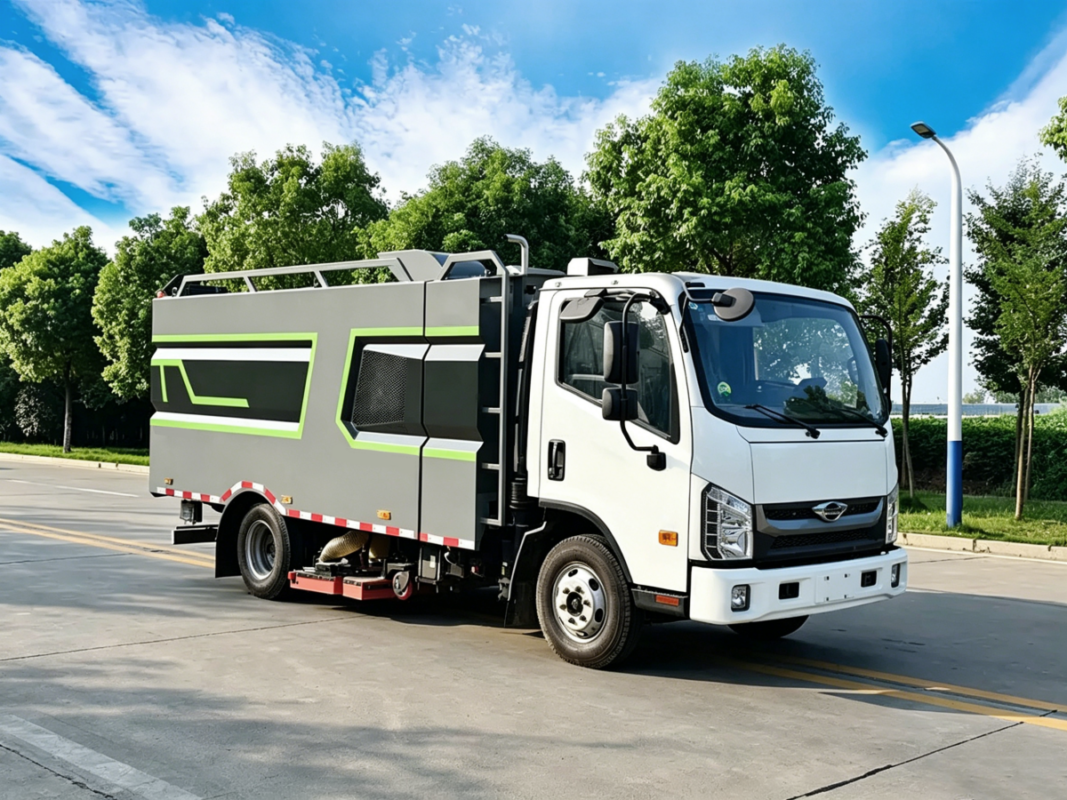
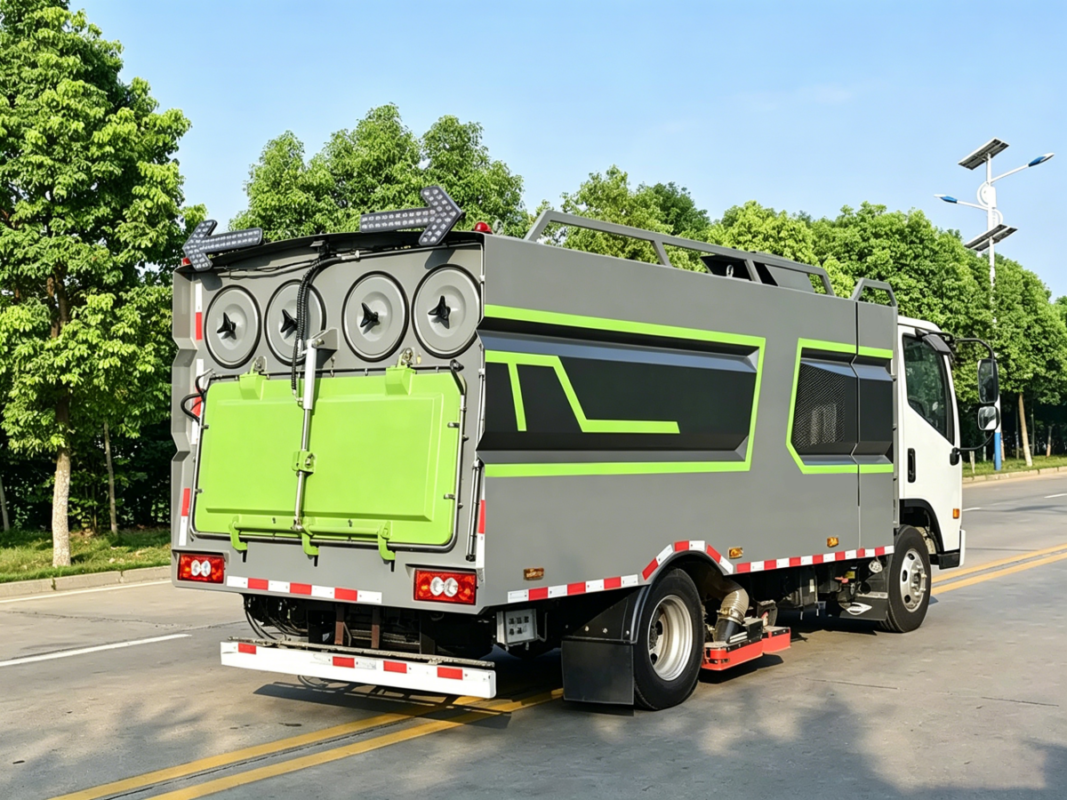
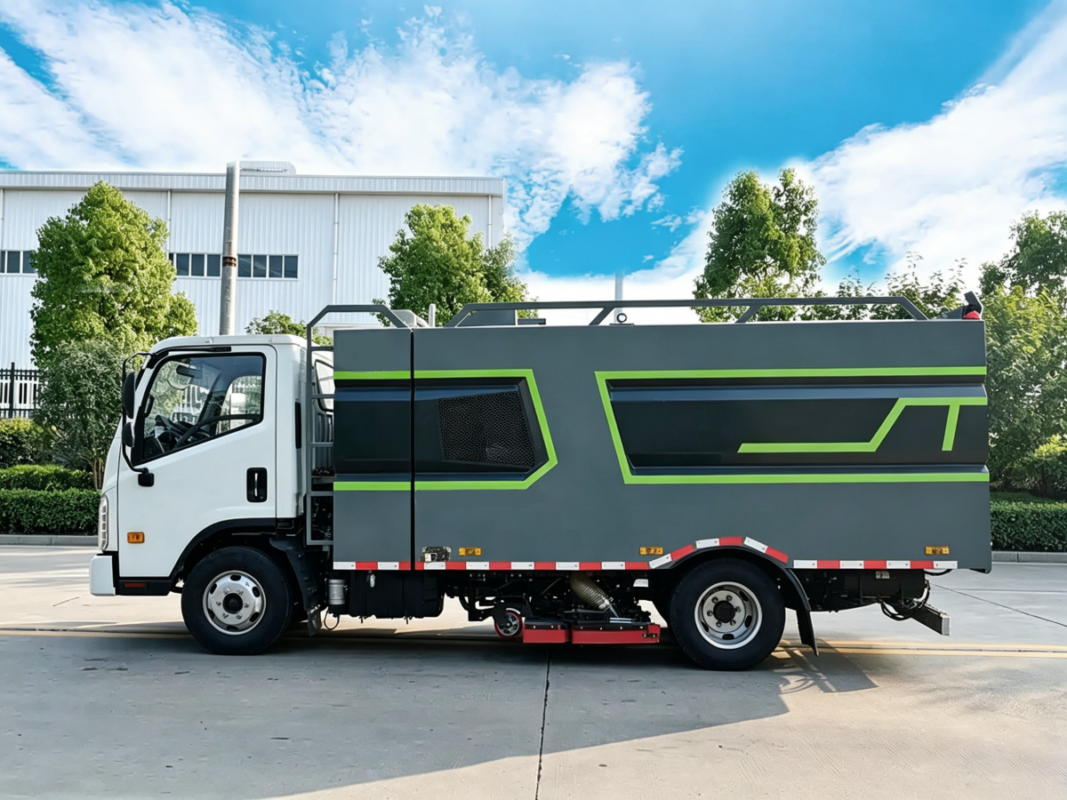
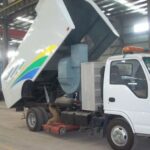
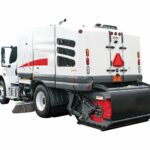
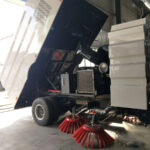
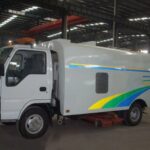
A waterless road sweeper is a specialized sanitation vehicle designed to clean roads without using water during operation. Instead of spraying water to control dust, the vehicle relies on powerful vacuum systems, rotating brushes, and advanced filtration technology to collect dust, sand, leaves, and debris directly from the road surface.
Modern waterless sweepers are typically equipped with:
High-powered suction systems
Multi-stage dust filtration devices
Rotating side brushes
Intelligent debris collection systems
Low-emission or electric power systems
Smart monitoring and route management technology
These technologies allow the vehicle to achieve efficient cleaning while minimizing dust emissions and environmental impact.
Compared with traditional road sweeper trucks, waterless models consume no water, produce less wastewater, and are better suited for dry environments and dusty working conditions.
Key Advantages of Waterless Road Sweepers
1. Significant Water Savings
The biggest advantage of a waterless road sweeper is its ability to operate with zero water consumption. In drought-prone cities, this can save millions of liters of water annually.
Water that would otherwise be used for street cleaning can instead support residential supply, agriculture, and emergency reserves. For governments facing growing water stress, this offers both environmental and economic benefits.
2. Better Environmental Protection
Traditional street washing methods often create wastewater runoff that carries oil, chemicals, and pollutants into drainage systems and nearby rivers.
By contrast, waterless sweepers use sealed collection systems that directly capture debris and dust. This reduces secondary pollution and improves overall environmental hygiene.
In addition, many newer models now feature electric power systems, helping reduce fuel consumption and carbon emissions.
3. Improved Air Quality
Dust pollution is a major problem in many industrial and dry-climate cities. Fine airborne particles such as PM2.5 and PM10 can negatively affect respiratory health and reduce urban air quality.
Advanced filtration systems used in waterless sweepers effectively capture these fine particles, reducing airborne pollution and helping create healthier urban environments.
This makes waterless sweepers especially valuable near residential communities, industrial parks, airports, and construction zones.
4. Lower Long-Term Operating Costs
Although some high-end waterless road sweepers may require a larger initial investment, they often provide lower long-term operating costs.
Cities can save money through:
Reduced water consumption
Lower wastewater treatment costs
Less winter maintenance caused by road icing
Improved operational efficiency
Reduced environmental compliance costs
As technology continues to improve, maintenance and energy efficiency are also becoming more cost-effective.
5. Suitable for Harsh and Dusty Environments
Waterless road sweepers are highly adaptable and perform well in challenging working conditions, including:
Desert cities
Industrial parks
Mining areas
Ports and logistics centers
Construction sites
Dry-climate highways
Large manufacturing zones
Their strong dust-control capability makes them particularly useful in areas where conventional water spraying is ineffective or impractical.
The Future of Smart Urban Cleaning
As global climate change and resource shortages continue to intensify, cities are rapidly moving toward sustainable sanitation technologies.
Many next-generation waterless sweepers now integrate:
AI-assisted cleaning routes
Intelligent dust monitoring systems
GPS fleet management
Fully electric or hybrid power systems
Automated operational controls
These innovations not only improve cleaning efficiency but also support the development of greener and more intelligent cities.
Governments around the world are increasingly recognizing that sustainable sanitation is an essential part of future urban planning.
Conclusion
Waterless sweepers are more than just modern cleaning machines — they represent a smarter and more sustainable approach to urban sanitation.
By combining efficient dust removal with zero water consumption, they help cities conserve valuable resources, improve environmental quality, and reduce long-term operating costs.
For arid and drought-prone regions, waterless road sweepers are not simply an alternative to traditional cleaning equipment — they are becoming a true sanitation lifeline for the future of sustainable urban development.