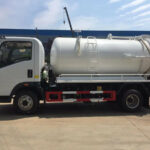
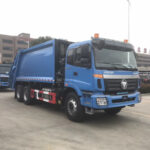
Built to Last & Fully Tailored: Top-tier garbage, sweeper and sewer trucks crafted for unrivaled durability. A trusted choice for municipal governments across the globe.
Inside a Compactor Garbage Truck: Chassis, Hopper, Blade & Hydraulic System Breakdown
Modern waste management depends on more than simple collection. As cities grow denser and environmental standards become stricter, sanitation fleets must maximize efficiency, durability, and operational precision. Among the various waste collection vehicles used worldwide, the Compactor Garbage Truck remains the backbone of municipal solid waste transport.
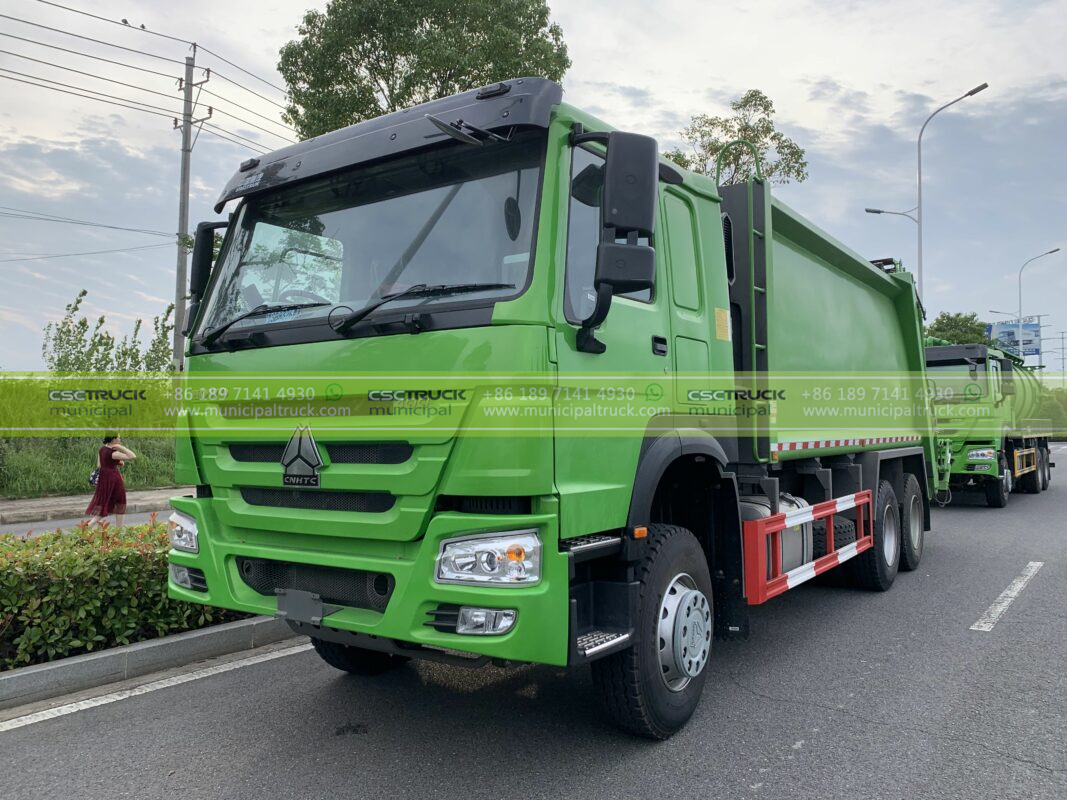
While these trucks are a common sight on urban streets, their internal structure is far more advanced than it appears. A compactor garbage truck is a coordinated engineering system built around four essential components: the chassis, hopper, compaction blade, and hydraulic system. Understanding how these elements work together reveals why this vehicle remains central to modern waste logistics.
The Chassis: Foundation of Strength and Stability
Every compactor garbage truck begins with a heavy-duty commercial chassis engineered to support substantial weight and repeated dynamic stress. Unlike standard cargo trucks, waste collection vehicles must withstand shifting loads, hydraulic pressure cycles, and frequent stop-and-go urban driving conditions.
To handle these demands, manufacturers integrate reinforced subframes between the compaction body and the main chassis rails. This distributes stress evenly and prevents long-term structural fatigue. Axle configurations and suspension systems are carefully selected to maintain maneuverability in narrow city streets while still supporting increasing load density as waste is compacted.
Compared with a Hook Loader Garbage Truck, which must manage interchangeable container weights during lifting and transport, a compactor garbage truck carries a permanently mounted compression body. This fixed integration allows optimized weight balance and structural rigidity, enhancing stability during daily routes.
The Hopper: Controlled Entry into the Compaction Cycle
At the rear of a typical rear loader compactor garbage truck lies the hopper, the loading chamber where waste first enters the system. Although simple in appearance, the hopper is engineered to guide waste efficiently into the compression chamber.
Its internal geometry prevents clogging while ensuring smooth material flow toward the compaction blade. Sealed sidewalls and reinforced steel panels minimize leakage, an important feature for maintaining urban cleanliness standards.
In contrast, a Side Loader Garbage Truck often features automated lifting arms that empty bins directly into a side-mounted chamber. While side loaders improve collection speed with reduced manual labor, they may not always match the compaction density achieved by heavy-duty rear loader compactor systems. Each design reflects different operational priorities within waste management logistics.
The Compaction Blade: Core Mechanism of Volume Reduction
The defining feature of a compactor garbage truck is its compaction blade. Driven by hydraulic force, this heavy steel panel moves in a controlled forward motion, pushing waste from the hopper into the main storage body.
As waste is pressed against previously compacted layers, its volume is significantly reduced. This compression allows the vehicle to carry substantially more material per trip compared to non-compacting trucks. The result is fewer transport cycles, lower fuel consumption, and improved route efficiency.
The blade must balance strength and precision. High-tensile steel construction ensures durability under repetitive force cycles, while calibrated hydraulic control maintains consistent pressure levels. Efficient compaction reduces air pockets within the waste mass, maximizing payload capacity without compromising structural safety.
The Hydraulic System: Power and Intelligent Control
Behind the movement of the compaction blade lies a sophisticated hydraulic system. A pump powered by the truck’s engine generates fluid pressure, which flows through valves and cylinders to create controlled linear motion.
Hydraulics are ideal for waste compression because they can generate high force within compact mechanical spaces. Operators can regulate pressure and movement speed to adapt to varying waste densities. Safety relief valves prevent overload, while pressure monitoring systems protect components from excessive strain.
This reliance on hydraulic precision is shared across many specialized waste vehicles. For example, Hook Loader Garbage Trucks use hydraulic hook arms to lift and tilt heavy containers onto the chassis. Skip Loader Garbage Trucks utilize hydraulic arms for container pickup. However, in a compactor garbage truck, the hydraulic system performs continuous compression cycles, making reliability and sealing integrity especially critical.
Advanced models may integrate electronic control modules to optimize compaction timing and reduce energy consumption. These intelligent systems improve operational smoothness and extend component lifespan.
System Integration and Operational Efficiency
When viewed as a unified system, the compactor garbage truck demonstrates how structural engineering and fluid power technology combine to create efficiency. Waste enters the hopper, the hydraulic system activates the compaction blade, and the storage body gradually fills with dense material. Once at the disposal site, an ejector mechanism—also hydraulically powered—pushes the compacted waste outward for rapid unloading.
Compared with other waste transport solutions, the compactor garbage truck excels in high-volume urban environments where daily household waste must be collected quickly and economically. Hook Loader and Skip Loader systems provide flexibility for containerized waste handling, especially in industrial or construction contexts. Side Loader Garbage Trucks enhance route speed through automation. Each vehicle type serves a strategic role within broader waste management logistics.
However, for dense municipal routes where maximizing payload per trip is essential, the compactor garbage truck remains the most efficient integrated solution.
Engineering for Durability and Long-Term Performance
Durability is a defining factor in waste collection fleets. Compactor bodies are built from wear-resistant steel to withstand abrasive materials and moisture exposure. Weld seams are reinforced to handle repetitive stress, and anti-corrosion treatments protect structural integrity over extended service life.
Maintenance accessibility is also engineered into the design. Hydraulic components, grease points, and inspection panels are positioned for efficient servicing. Reducing downtime is critical for municipal operations, where daily route interruptions can disrupt entire sanitation schedules.
By combining reinforced chassis systems, optimized hopper geometry, durable compaction blades, and precision hydraulic control, the compactor garbage truck delivers both strength and operational efficiency.
Conclusion
A compactor garbage truck is far more than a simple waste hauler. It is an integrated mechanical system engineered to compress, transport, and unload municipal waste efficiently. From its reinforced chassis to its high-force hydraulic blade, every component plays a defined role in improving urban waste logistics.
While other specialized vehicles, such as Hook Loader Garbage Trucks, Skip Loader Garbage Trucks, and Side Loader Garbage Trucks, address different collection strategies, the compactor garbage truck remains the cornerstone of high-density municipal waste management.
As cities continue to expand and demand smarter logistics solutions, the engineering behind these vehicles will become even more critical. Understanding their internal structure not only highlights technical sophistication but also underscores their essential role in building cleaner, more sustainable urban environments.