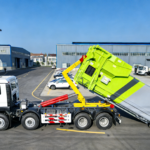
Built to Last & Fully Tailored: Top-tier garbage, sweeper and sewer trucks crafted for unrivaled durability. A trusted choice for municipal governments across the globe.
Garbage Compactor Lorry: How Does It Compress Waste?
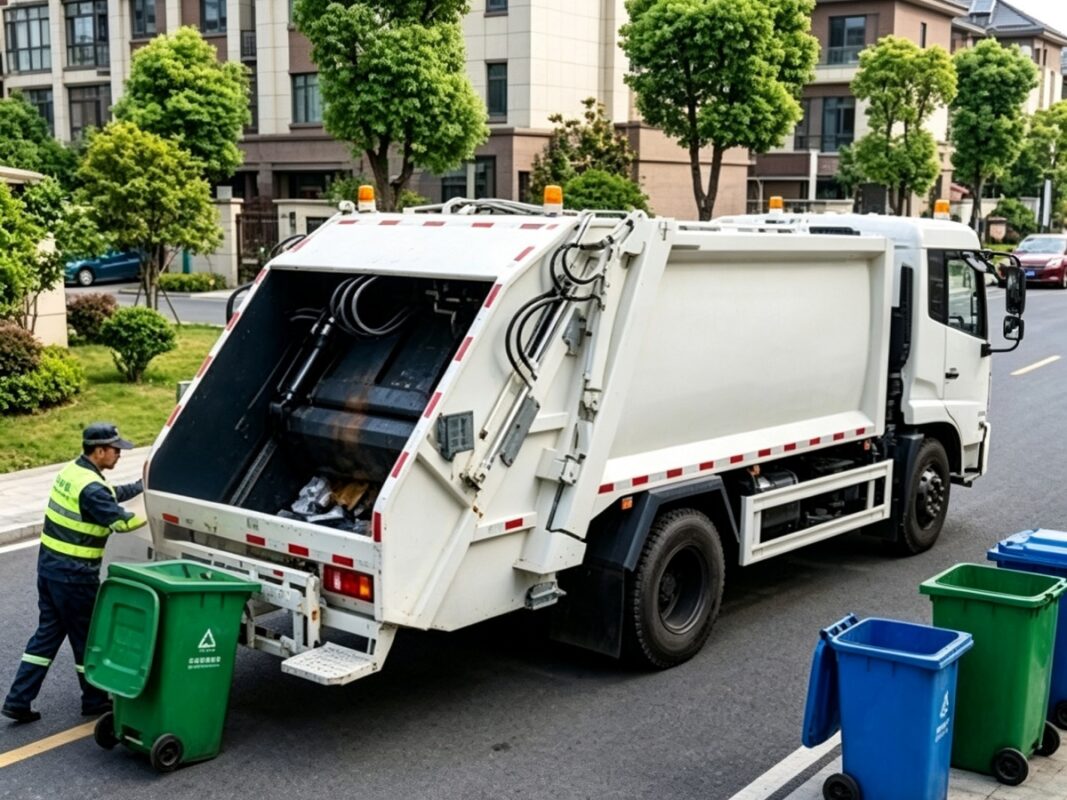
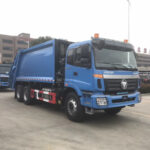
Have you ever wondered how a garbage compactor lorry can collect several tons of waste while appearing no larger than an ordinary truck? The answer lies in its hydraulic compaction system, which compresses loose waste into a much denser load before transportation.
Compared with conventional garbage trucks, a compactor lorry can significantly increase carrying capacity, reduce transport trips, lower fuel or energy consumption, and improve the overall efficiency of municipal waste collection.
In this article, we’ll explain how a garbage compactor truck works, explore its main components, and show why hydraulic compaction has become the standard solution for modern refuse collection.
Why Compress Garbage?
Household waste contains a large amount of empty space.
Plastic bottles, cardboard boxes, food containers, bags, and packaging materials are lightweight but occupy a large volume.
Without compression:
Trucks fill up quickly.
More collection trips are required.
Transportation costs increase.
Fuel or electricity consumption rises.
Labor productivity decreases.
By compressing waste, municipalities can carry much more refuse in the same truck body.
Most modern garbage compactor lorries achieve a compaction ratio of 3:1 to 4:1, meaning three to four cubic meters of loose waste can be compressed into approximately one cubic meter of compacted waste.
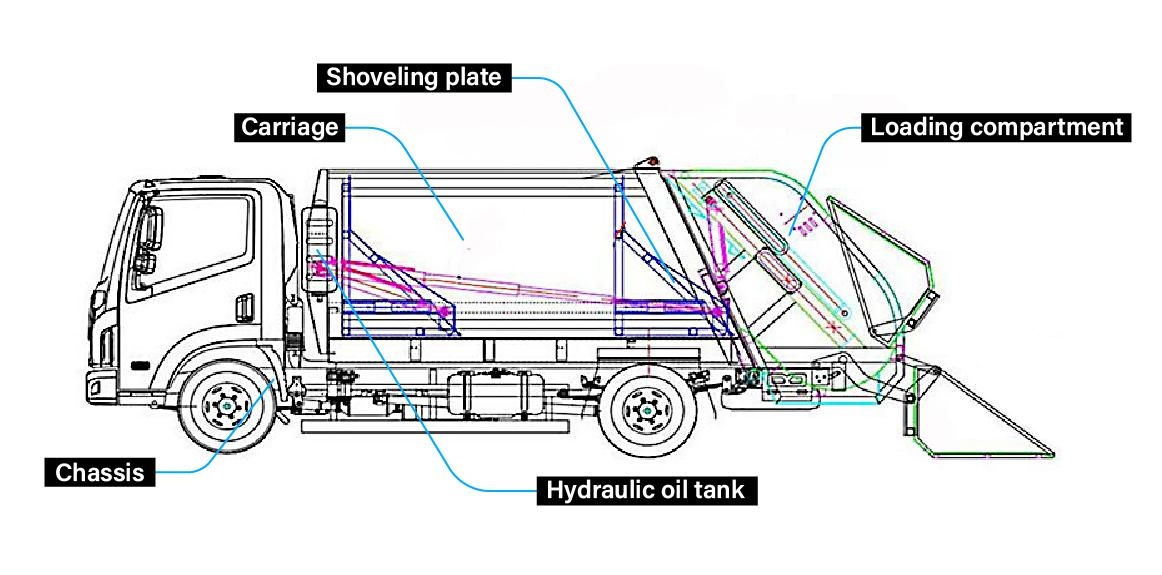
Main Components of a Garbage Compactor Lorry
Although different manufacturers use slightly different designs, most compactor trucks share the same basic structure.
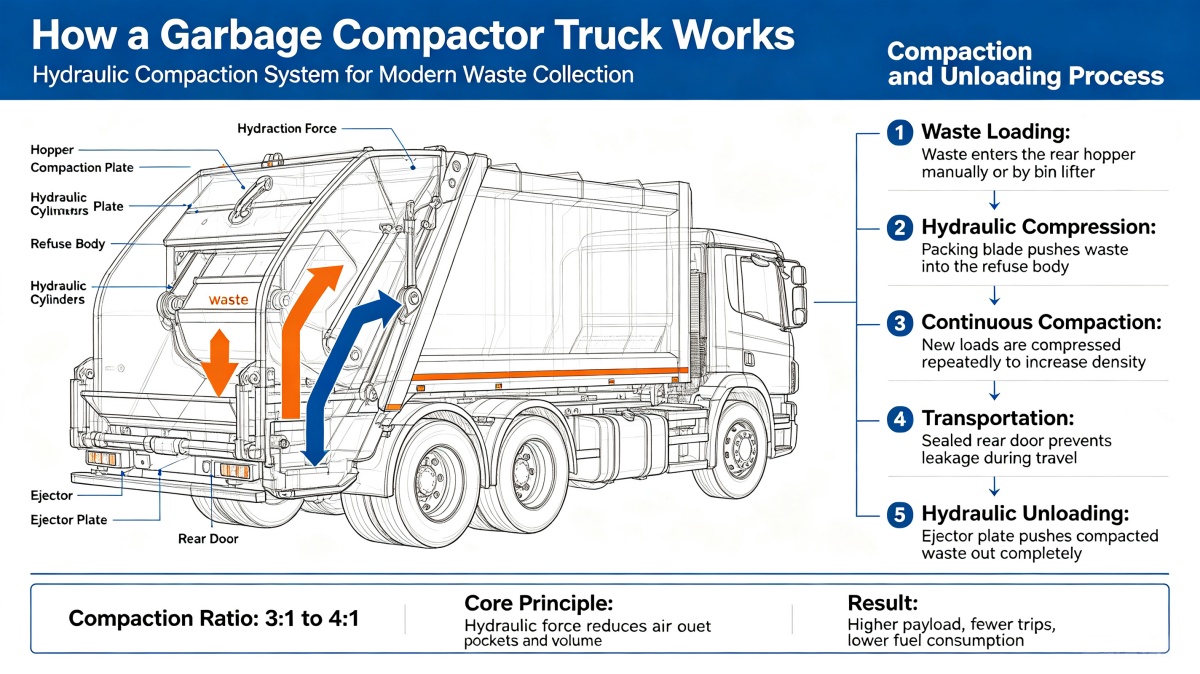
Hopper
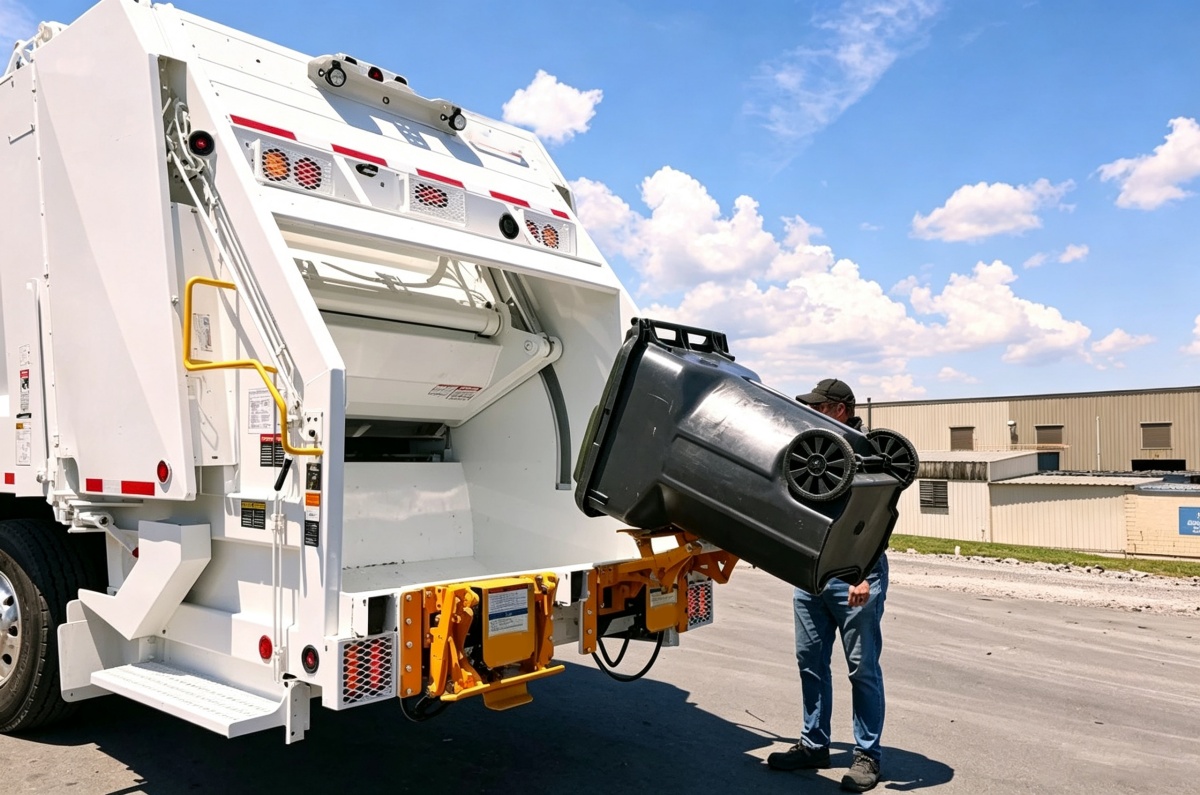
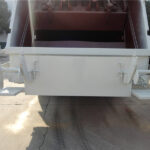
The hopper is located at the rear of the truck.
Workers or bin lifting mechanisms empty waste into the hopper, which temporarily stores refuse before compression begins.
Its wide opening allows fast loading while minimizing waste spillage.
Hydraulic Compaction Plate
The compaction plate (also called the packing blade) is the heart of the compression system.
Powered by hydraulic cylinders, it moves forward and downward, pushing waste from the hopper into the main body.
During each cycle, the waste is compressed against material already inside the body, removing air pockets and increasing density.
Hydraulic Cylinders
Hydraulic cylinders generate the enormous force required to compress waste.
High-pressure hydraulic oil powers the cylinders, allowing the compaction plate to move smoothly and repeatedly.
Modern systems are capable of producing compression forces exceeding 20–25 tons, depending on the vehicle size.
Refuse Body
The compressed waste is stored inside the sealed refuse body.
The body is usually manufactured from high-strength wear-resistant steel, enabling it to withstand repeated compression cycles and abrasive waste materials.
Its sealed structure also helps prevent odor, liquid leakage, and secondary pollution during transportation.
Ejector Plate
Once the truck reaches the landfill or transfer station, the ejector plate moves forward hydraulically, pushing the compacted waste completely out of the body.
This allows fast unloading without requiring manual labor.
Step-by-Step Compression Process
The operation of a garbage compactor lorry is highly automated.
Step 1: Waste Loading
Waste is deposited into the rear hopper either manually or by an automatic bin lifting mechanism.
Step 2: Hydraulic Compression
The PLC control system activates the hydraulic cylinders.
The packing blade moves through the hopper, forcing the waste into the main body while compressing it against previously collected refuse.
Air trapped inside the waste is squeezed out, greatly reducing its volume.
Step 3: Continuous Compaction
Every new load is compressed again.
As collection continues, the refuse body becomes increasingly dense.
This continuous compression process enables the truck to maximize payload without exceeding legal weight limits.
Step 4: Transportation
After the body reaches its maximum capacity, the rear door locks securely, preventing waste or leachate from escaping during transport.
The truck then travels to the landfill, transfer station, or waste treatment facility.
Step 5: Hydraulic Unloading
At the disposal site, the rear door opens automatically.
The ejector plate moves forward, pushing the compressed waste completely out of the truck body.
The truck is then ready for the next collection route.
Automatic vs Manual Operation
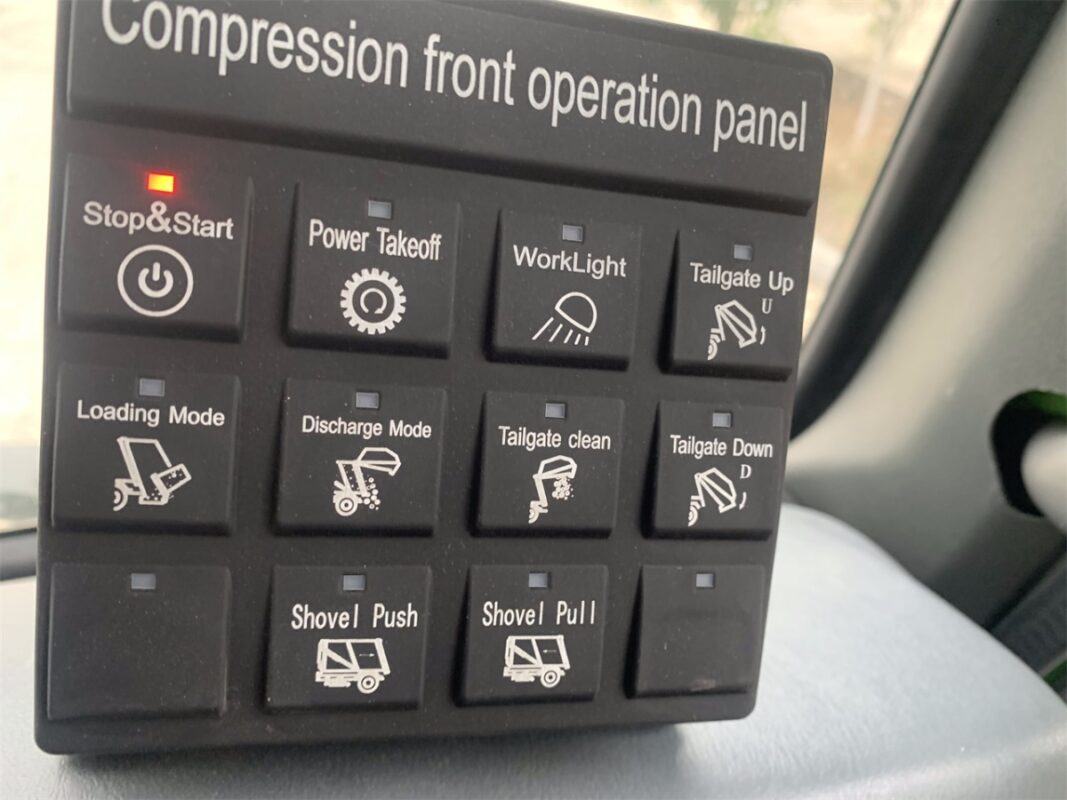
Modern garbage compactor lorries are equipped with intelligent electronic control systems.
Typical operating modes include:
One-button automatic cycle
Cab control
Rear control panel
Manual emergency operation
Automatic control reduces operator fatigue, improves safety, and ensures consistent compaction performance.
Many municipal fleets now operate the entire collection process with just one driver.
Benefits of Garbage Compaction
Hydraulic compaction offers several important advantages:
Higher Payload Capacity – Carries significantly more waste in each trip.
Fewer Collection Trips – Reduces transportation time and operating costs.
Lower Fuel or Energy Consumption – Improved efficiency means less energy used per ton of waste collected.
Reduced Labor Requirements – Automated systems enable single-operator collection.
A garbage compactor lorry uses a powerful hydraulic system to compress loose waste into a compact, high-density load, allowing municipalities to transport significantly more refuse with fewer trips. From the hopper and compaction plate to the hydraulic cylinders and ejector system, every component is designed to improve efficiency, reduce operating costs, and maintain cleaner urban environments.
As cities continue to generate more waste while facing stricter environmental standards, hydraulic compactor trucks have become an essential part of modern sanitation fleets. Whether powered by diesel or electricity, they provide a smarter, safer, and more sustainable solution for efficient waste collection.